

The Federal Government has said that
indigenous oil and gas companies now account for over half of Nigeria’s crude oil production, driven largely by divestment transactions by International Oil Companies (IOCs) that have opened up the upstream sector for local operators.
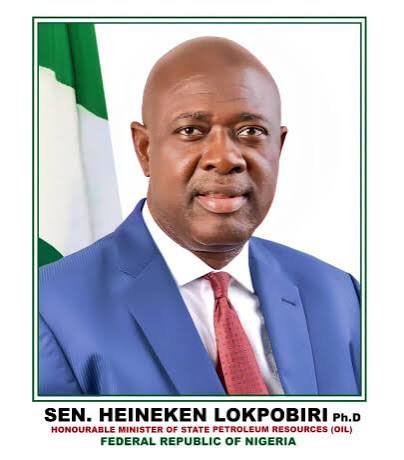
The Minister of State for Petroleum Resources (Oil), Senator Heineken Lokpobiri, said this on Wednesday at the maiden edition of the Petroleum Technology Development Fund (PTDF) Journal Summit 2026 in Abuja.
The Minister, who represented by his Technical Adviser, Engr. Emmanuel Sinime, said Nigeria’s crude oil output has increased from about one million barrels per day in 2023 to more than 1.7 million barrels per day, while the number of active drilling rigs rose from about 14 to more than 60.
According to him, the country has also said the country had attracted more than $10 billion in foreign direct investment in recent years.
“Significant progress has also been made in restructuring the industry by completing major divestment transactions involving international oil companies. These transactions are creating great opportunities for indigenous operators who now account for more than 50 per cent of Nigerian crude oil production, a historic milestone for our industry,” he said.
He emphasized that increased crude production must be supported by adequate infrastructure, efficient transportation and storage systems, expanded refining capacity and a competitive market capable of delivering value to consumers and investors.
He mentioned the emergence of the Dangote Petroleum Refinery and the growth of modular refineries, including Waltersmith and Aradel, as indications of the impact of private-sector investment on the downstream petroleum industry.
The Minister of State for Petroleum Resources (Gas), Ekperikpe Ekpo, said private capital, technical expertise and innovation remained critical to unlocking Nigeria’s vast gas resources.
He said the Federal Government was committed to creating an enabling environment for private-sector investment across the petroleum value chain, noting that the Petroleum Industry Act had provided a framework for regulatory certainty and institutional governance.
He explained that the Decade of Gas initiative was designed to position natural gas as a catalyst for industrialisation, job creation, energy security and economic diversification.
He said, achieving the objective would require sustained investment in gas processing, transportation and distribution infrastructure, as well as liquefied petroleum gas, compressed natural gas, petrochemicals and other gas-based industries.
“The Federal Government cannot achieve this objective alone. We must continue to deepen collaboration with private investors, financial institutions, technology providers and other stakeholders to mobilise the capital and expertise required to deliver these projects,” Ekpo said.
He mentioned infrastructure gaps, high financing costs, project development risks, regulatory bottlenecks and inadequate access to reliable energy infrastructure among the constraints to greater private-sector participation.
He also advocated the need for increased investment in indigenous technology, local manufacturing and skills development to strengthen domestic capacity across the industry.
The Executive Secretary of PTDF, Prof. Shuaibu Aliyu, explained that the summit was conceived to broaden the role of the Petroleum Technology Development Journal beyond research publication by providing a platform for dialogue, collaboration and practical solutions to challenges confronting the petroleum industry.
Aliyu said the growing participation of private investors in refining, gas processing, logistics, storage and petroleum product distribution presented opportunities for economic growth, employment generation, technology development and local capacity building.
He said PTDF was interested in ensuring that research outputs moved beyond publication to practical application, intellectual property development and commercialisation.
The PTDF boss called for stronger partnerships between industry and research institutions to address challenges involving financing, infrastructure, regulatory certainty, access to technology, market efficiency and technical capacity.
Also speaking, the Managing Director of Waltersmith Petroman Oil Limited, Mr Oladapo Filani, said PTDF had sponsored over 15,639 scholars across various programmes and higher institutions, while supporting more than 50,000 research projects and several collaborations involving industry and higher institutions.
Filani said the challenge before the industry was no longer simply producing skilled Nigerians but retaining the expertise and creating opportunities for professionals to deploy their knowledge in solving domestic problems.
He identified infrastructure deficits, human-capital and technical-capability gaps, financing constraints, commercial viability and investment uncertainty as major challenges confronting the midstream and downstream sectors.
He said constraints in gas gathering and processing, pipelines, storage and terminals, refining support infrastructure and product logistics continued to affect the efficiency and investment economics of the industry.
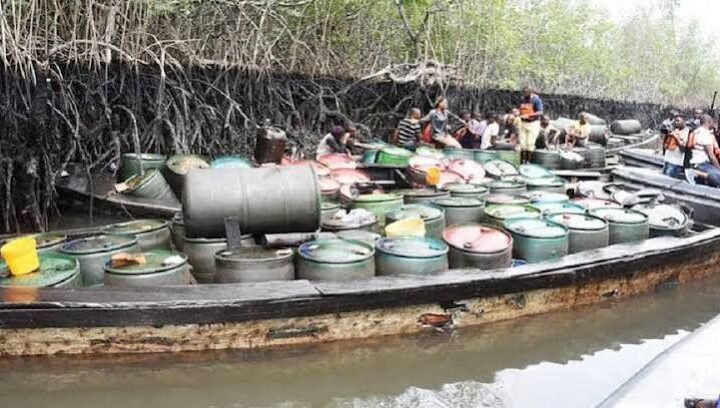
Filani also identified pipeline vandalism, oil theft and pipeline integrity issues as factors disrupting supply, while limited gas processing and evacuation infrastructure continued to constrain gas monetisation.