

Nigeria has urged the African Union and member states to intensify the fight against illicit financial flows fueling terrorism across the continent.
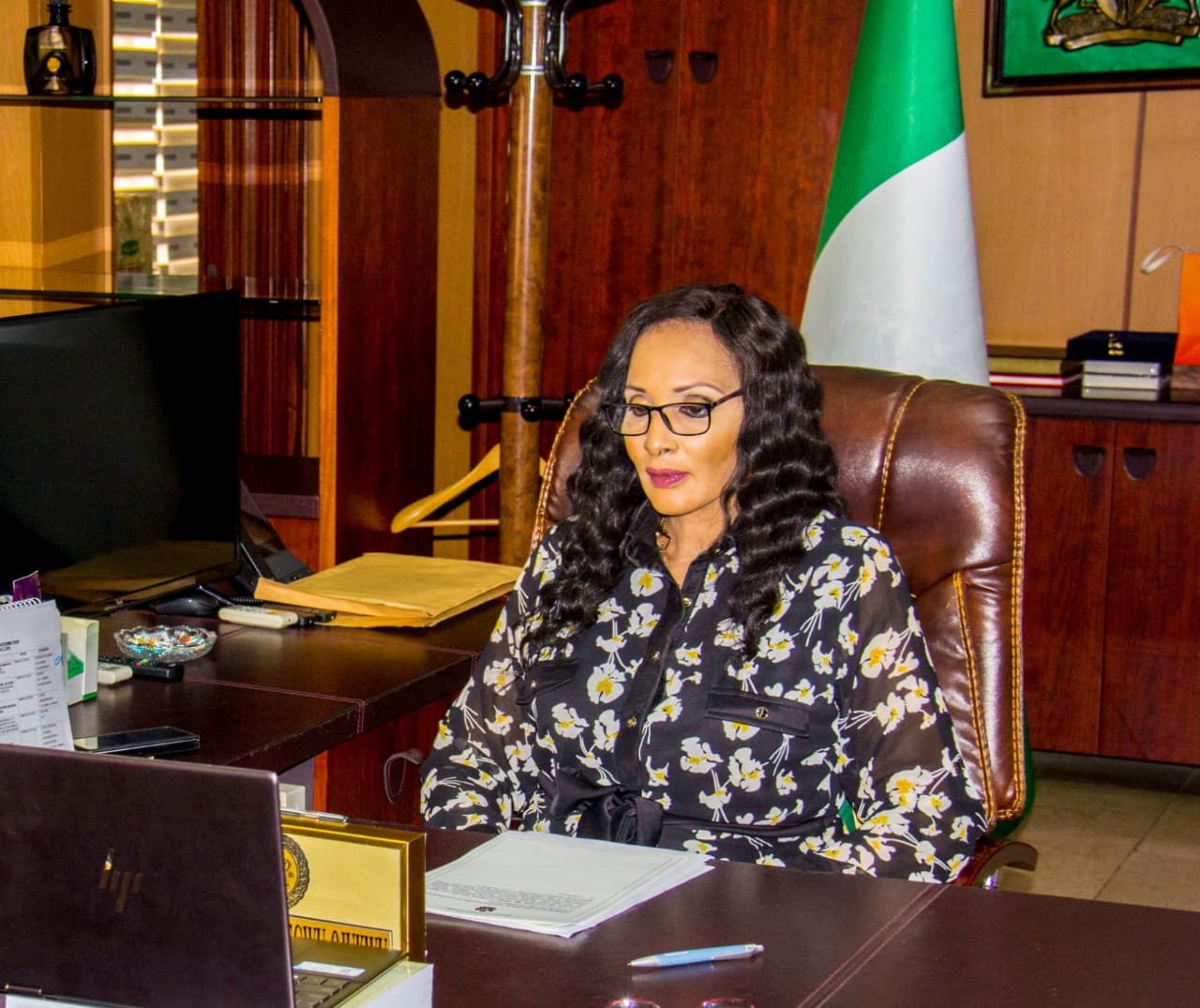
Minister of Foreign Affairs, Ambassador Bianca Odumegwu-Ojukwu, said this on Tuesday at the 1354th AU Peace and Security Council Ministerial Meeting held virtually.
She said illicit funds remain one of the biggest obstacles to ending terrorism in Africa, as they help terrorist groups recruit youths and buy weapons.
The Minister urged the AU to strengthen cooperation in preventing, tracing, and recovering proceeds of illicit financial flows from safe havens back to their countries of origin.
According to her Special Assistant on Communication, Dr. Magnus Eze, she also reaffirmed Nigeria’s commitment to stronger regional and international partnerships to tackle insecurity.
She noted that terrorist organisations across the continent were becoming increasingly resilient to conventional military operations, leveraging commercially available technologies such as drones and digital platforms, while generating revenue through kidnapping for ransom and illegal mining activities in territories under their control.
She condemned all acts of terrorism and violent extremism, expressing Nigeria’s solidarity with victims of terrorist attacks across Africa. She also paid tribute to members of the armed forces who continue to confront terrorist groups across the continent.
She warned that the growing spread of terrorism and violent extremism in West Africa had been used by military actors as justification for unconstitutional changes of government in some countries.
She advised the African Union to urgently translate into action the commitments made at the 2022 Malabo Extraordinary Summit on Counter-Terrorism and the resolutions adopted during the High-Level African Counter-Terrorism Meeting hosted by Nigeria in Abuja in 2024.
She also cautioned against portraying Africa as the global epicentre of terrorism, warning that such narratives could result in the profiling and mistreatment of innocent Africans at international airports and other destinations.
Speaking on Nigeria’s counter-terrorism strategy, she said the country had adopted a comprehensive approach that combines military operations with non-kinetic measures, including deradicalisation, rehabilitation and reintegration of former combatants, as well as investments in education, youth empowerment, infrastructure development and community resilience.
She added that Nigeria was working closely with neighbouring countries through the ECOWAS Regional Counter-Terrorism Strategy, the regional Early Warning and Response Network, and the Multinational Joint Task Force (MNJTF), which she described as a continental model for regional security cooperation.
She further endorsed deeper intelligence sharing, enhanced cybersecurity, stronger border security, disruption of terrorist financing networks, improved early warning systems, and the development of continental guidelines for the responsible use of artificial intelligence in counter-terrorism efforts.
She also urged international partners to adopt a zero-tolerance stance against terrorism by preventing non-state actors from acquiring arms, drones, dual-use goods and other sophisticated weapons produced within their jurisdictions.