

Discussions at the pre-summit dialogue ahead of the 32nd Nigerian Economic Summit, NES#32, have called for stronger collaboration between educational institutions and industry to expand entrepreneurship, innovation and workforce development in Nigeria.
The dialogue, organized in partnership with the Federal Ministry of Budget and Economic Planning on Thursday, stressed that bridging the gap from learning to earning goes beyond expanding access to education.
The virtual dialogue, with the theme, “The Missing Link: From Learning to Earning,” brought together stakeholders from the education, technology, philanthropy, entrepreneurship and youth development sectors to examine the gaps between learning, skills development and access to productive employment, while exploring practical pathways for connecting human capital development to economic opportunities.
Stakeholders noted that Nigeria needs an education and skills ecosystem that equips young people with relevant, adaptable and marketable capabilities. They also emphasized creating clear pathways that link graduates directly to employment, entrepreneurship and productive economic participation.
The engagement is part of wider consultations leading to NES#32. It aligns with the Summit’s focus on building an economy that creates opportunities, improves productivity and delivers shared prosperity.
Speakers further reinforced the need to place young Nigerians and human capital development at the center of conversations on the future of work and economic growth.
Speaking, Olapeju Ibekwe, Chief Executive Officer, Sterling One Foundation, noted that the engagement was designed to lay the groundwork for a focused and implementable agenda that moves Nigeria from diagnosis to delivery.
She appreciated the panelists, discussants and participants for their contributions and encouraged stakeholders to register for NES#32 and join the broader conversation on building an economy that delivers jobs, productivity and shared prosperity.
In her remarks, Mrs Obianuju Anigbogu, Director, Education Planning, Research and Development, Federal Ministry of Education, underscored the importance of strengthening education planning, research and development as foundations for building a productive and future-ready workforce.
She emphasised the need for stronger collaboration among government, the private sector and other stakeholders to ensure that education policies and interventions translate into meaningful outcomes for learners and the wider economy.
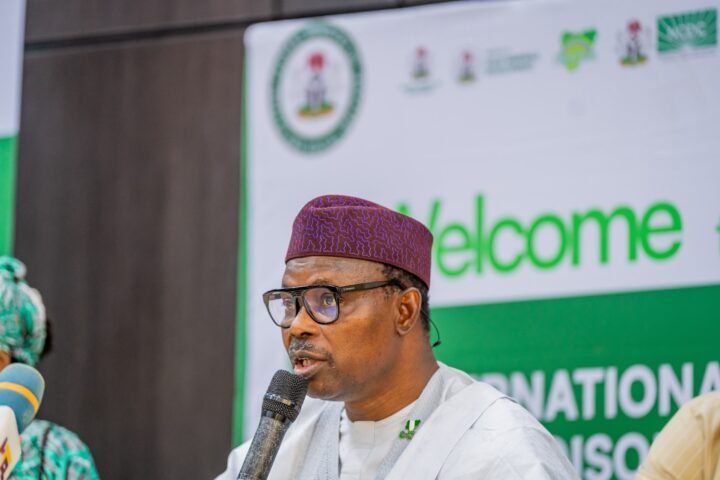
In his keynote remarks, Mr Abubakar Sulaiman, Managing Director and Chief Executive Officer of Sterling Bank, emphasised that the capabilities required to drive productivity and economic growth must begin to be developed from the school system.
He advocated the need for a shift from a pipeline focused primarily on certificates to an ecosystem that builds capability, productivity and opportunity, with transferable skills that enable graduates to contribute effectively across industries regardless of their fields of study.
Sulaiman noted that a graduate of History, English or Physics, for instance, should leave the education system with a meaningful component of the skills required to function effectively in the workplace.
He emphasised that building an adaptable workforce capable of responding to changing industry demands would be critical to strengthening the connection between education, employment and economic productivity.
During the panel discussion, Lawal Mohammed Faruk, Director, Research, Innovation and Information Technology, National Universities Commission (NUC), represented by Dr Ezinne Orisakwe, Assistant Director, Research, Planning and Administration, NUC, highlighted the need for effective systems to track graduates and out-of-school young people.
She noted that reliable data on the transition from education to employment would help government and other stakeholders better understand the challenges facing young people and design more responsive interventions.
Dr Orisakwe also called for stronger policy coordination and urgent capital investment to address the growing pool of graduates and skilled manpower seeking employment.
She stressed that closer alignment among government agencies and coordination units would help create the synergy required to translate skills and qualifications into productive economic opportunities.
Also contributing to the discussion, Oyindamola Egbeyemi, Director, Programmes and Coordination, Lagos State Employment Trust Fund (LSETF), emphasised the importance of ensuring that skills development programmes respond directly to labour-market demand.
She noted that programme design and implementation should be guided by clear economic outcomes, with interventions going beyond training and certification to create measurable pathways to employment, enterprise development, productivity and improved livelihoods.
Other panellists, including Femi Taiwo, Managing Partner, FATE Africa, and Olapeju Ibekwe, CEO, Sterling One Foundation, shared perspectives on the structural and practical barriers preventing many young Nigerians from converting education and acquired skills into sustainable livelihoods.
The 32nd Nigerian Economic Summit (NES#32) will be held under the theme “Growth that Works: Delivering Jobs, Productivity and Shared Prosperity” on 26–27 October 2026 at the Transcorp Hilton, Abuja.