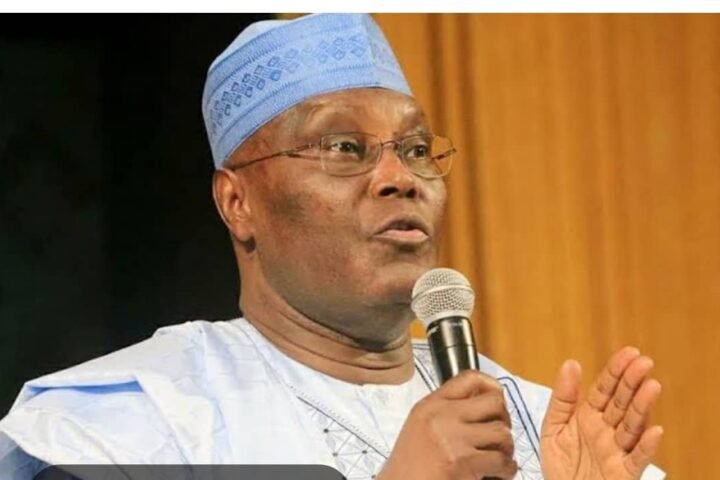

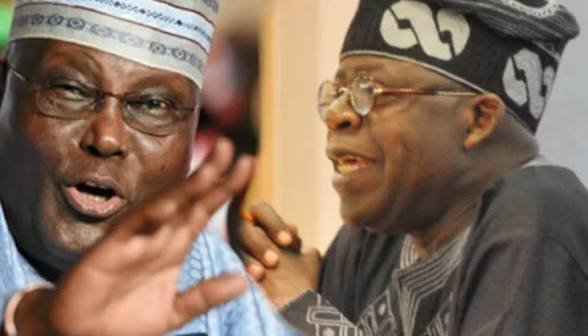

Former Vice President and African Democratic Congress (ADC) presidential candidate, Atiku Abubakar, has punctured President Bola Tinubu’s latest promise to work with state governors to reduce public transport fares.
In a statement on Friday in Abuja by his Senior Special Assistant on Public Communication, Phrank Shaibu, Atiku described the gesture as a belated response to the worsening cost-of-living crisis in Nigeria.
He also picked holes in the Federal Government’s reported conversion of about 120,000 vehicles to Compressed Natural Gas (CNG), saying the figure represents less than one per cent of the estimated 14 million vehicles on Nigerian roads.
The figure cited by the government, he maintained, exposes what he described as the poor performance of the administration’s CNG policy more than three years after the removal of petrol subsidy.
“If Tinubu’s grand strategy for cushioning the consequences of his reckless and poorly thought-out subsidy removal is CNG conversion, then the admission that only about 120,000 vehicles have been converted in more than three years is not an achievement. It is an advertisement of policy failure,” Atiku said.
According to him, the government could not reasonably present the conversion figure as a major achievement when compared with Nigeria’s estimated vehicle population.
“That is the government’s own number. That is Tinubu marking his own examination script,” he said, adding that Nigerians should not be expected to reward what he described as “monumental failure” with another four-year mandate.
Atiku also faulted Tinubu’s recent assertion that cheaper fuel should translate into cheaper transport fares, describing the statement as an admission that the administration’s energy policies had failed to adequately address the economic difficulties facing Nigerians.
He accused the government of removing petrol subsidy without putting in place sufficient measures to cushion the impact on households, businesses and commuters.
“Now that elections are approaching, and Nigerians are rallying behind Atiku Abubakar’s proposal for a production-based subsidy to immediately tackle the cost-of-living crisis created by Tinubu, the same government that ridiculed and criticised Atiku’s plan has suddenly discovered that Nigerians need cheaper transportation,” he said.
According to Atiku, the expansion of CNG infrastructure could reduce the operating cost of converted vehicles but would not, on its own, address the declining purchasing power of Nigerians.
“CNG can make a converted bus cheaper to operate. It cannot make a poor Nigerian richer,” he said.
He maintained that the country’s transportation crisis was closely linked to the broader cost-of-living crisis, noting that workers, traders, students and farmers were struggling with rising transport costs.
“At the motor parks, Nigerians are travelling less because they cannot afford to travel. Workers calculate whether transport to work will swallow their wages. Traders are buying less because transportation is eating into their capital. Students struggle with daily fares. Farmers pay heavily to move food from farms to markets,” Atiku said.
He questioned the effectiveness of a policy that makes buses cheaper to operate without ensuring that passengers have sufficient income to afford the fares.
“A cheaper bus without an affordable passenger is not economic recovery,” he said.
The former vice president further criticised the government’s reported plan to provide transport relief from October 1, arguing that Nigerians were already experiencing the impact of high transport and food costs.
“Nigerians are hungry today. Transport is expensive today. Food is expensive today. Businesses are dying today. Why must relief arrive by appointment?” he asked.
He said Nigeria’s transportation challenge could not be addressed solely by changing the fuel used by vehicles, insisting that the purchasing power of citizens must also be restored.
He proposed what he described as a targeted, transparent and fiscally capped fuel subsidy tied to domestic production, saying such an intervention should be independently audited and structured to ensure that its benefits reach consumers.
“Fuel subsidy must return for struggling Nigerians, not the rich friends of the President and multinational companies, but a targeted production intervention that is transparently budgeted, independently audited and guarantees that the benefit reaches consumers,” he said.
Atiku also pledged to support domestic refining, track petroleum production, reduce energy costs and ensure that any intervention benefits commuters, farmers, workers, traders and small businesses rather than politically connected intermediaries.
He accused the Tinubu administration of worsening the economic hardship of Nigerians while relying on palliatives to address the consequences.
“That is the difference between Tinubu and Atiku: Tinubu manufactures hardship and distributes palliatives. Atiku will attack hardship at its source,” he said.
Atiku declared that Nigerians had endured enough economic hardship under the Tinubu administration.
He added: “President Tinubu, Nigerians have paid enough for your economic experiment. Too little. Too inadequate. Too late. Your time is up. Prepare your handover. We are coming to make life affordable again.”