

Nigerians used 1.66 million terabytes of data worth N715.5 billion in July 2026, up 47 percent from 1.13 million terabytes in July 2025.
The Nigerian Communications Commission disclosed this in Abuja on Tuesday at the first Nigeria Digital Connectivity Investment Forum.
The figure, based on N431 per gigabyte, translates to 1.66 billion gigabytes consumed in one month.
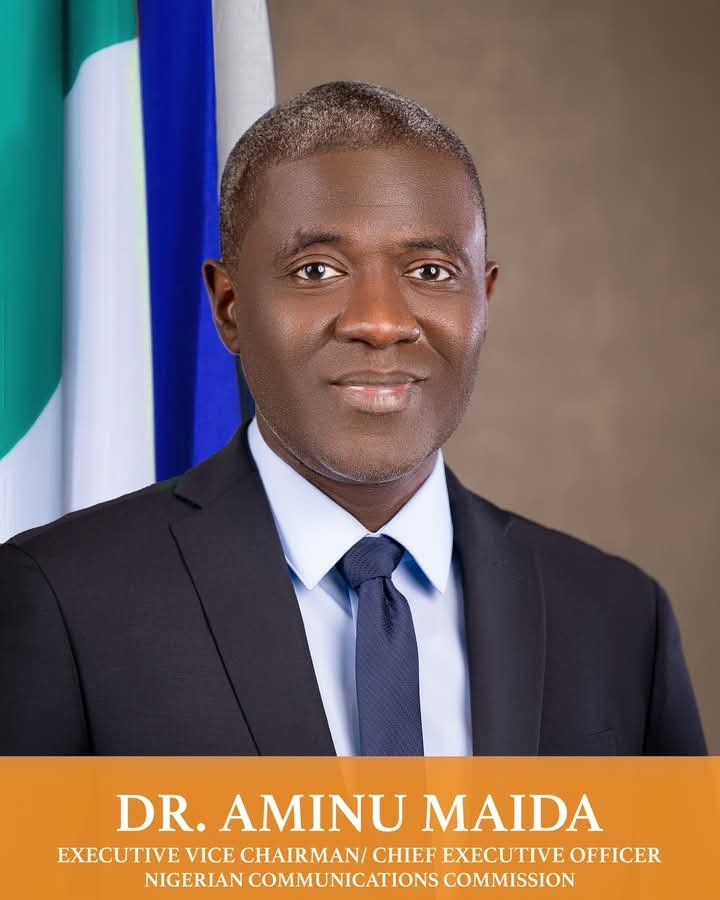
Declaring the two-day forum open, the Executive Vice Chairman/Chief Executive Officer of the NCC, Dr. Aminu Maida, explained that the Forum is designed to provide an honest, evidence-driven conversation about what it will truly take to expand networks, improve quality of experience, and close existing connectivity gaps across the country.
The Forum, organised in partnership with Swedfund and Ookla, brought together investors, operators, financiers, development partners, state governments, infrastructure companies, and technology leaders to identify bankable opportunities and the financing and partnerships required to deliver them.
Maida implored local and global investors to partner with government to build the resilient, inclusive connectivity Nigeria needs for its next phase of economic growth.
He noted that the Forum coincided with Nigeria’s commemoration of 25 years of GSM, recalling how policy reform and a transparent licensing process in 2001 gave private investors the confidence to enter a market where telephone access was then beyond the reach of most Nigerians.
“That experience still has much to teach us.The Nigerian Communications Act 2003 expressly recognises the importance of encouraging investment and gives the Commission a responsibility to facilitate it.
“We take that responsibility seriously, alongside our duty to protect consumers and promote fair competition,” Dr. Maida said.
He explained that the demands on networks today have fundamentally changed.
“A trader waiting for a payment to go through, a student joining an online class, and a business serving customers across the country all depend on a connection that works when they need it.
“As cloud services and artificial intelligence become more widely used, that dependence will deepen,” he said.
According to him, keeping pace will require sustained investment, both to expand networks and to improve the experience of people already connected,” he stressed.
He outlined deliberate steps the Commission and Federal Government have taken to improve the conditions for investment:
They include 2025 Tariff Adjustment, Critical National Information Infrastructure (CNII) and Right of Way (RoW) Engagement.
He said last year’s tariff adjustment has addressed financial pressures on operators and restored their ability to invest, with a clear regulatory expectation of better quality of service for consumers.
He also said President Bola Ahmed Tinubu’s designation of telecoms infrastructure as CNII has strengthened the legal basis for protecting telecom assets against vandalism and sabotage.
“Sustained engagement with state governments is helping to address deployment costs and bottlenecks that slow down fibre and site rollout.
“We know that investors need confidence in how rules will be applied and how decisions will be made.
“We also know that there is more work to do on the practical difficulties of deployment. This forum is an opportunity to discuss those difficulties openly with the people who can help resolve them,” Maida stated.
Central to the NCC’s new regulatory approach is evidence-based decision making, Dr. Maida announced.
“Our collaboration with Swedfund and Ookla is helping us build that understanding. It gives us independent insight into the connectivity people actually experience.
“We combine this with other network and market information to identify service gaps and areas that warrant closer investment assessment. Publishing our network performance reports helps make that evidence available to the wider market,” he said.
He also unveiled the progress of the Commission’s Consumer Data Lab, funded by the Gates Foundation and developed in collaboration with Innovations for Poverty Action (IPA).
The Lab, he said, integrates Ookla’s speed and coverage data, consumer complaints, and information on operators’ interventions into a single dashboard that allows the NCC to examine service issues by location and demographic group.
“This helps us investigate service problems and assess whether operators’ interventions have improved consumers’ experience.
“It also gives us a more useful picture of where further deployment or network upgrades may be needed. We want investors to benefit from that understanding, and from regulatory decisions that are clear, proportionate and supported by evidence,” Dr. Maida explained.