
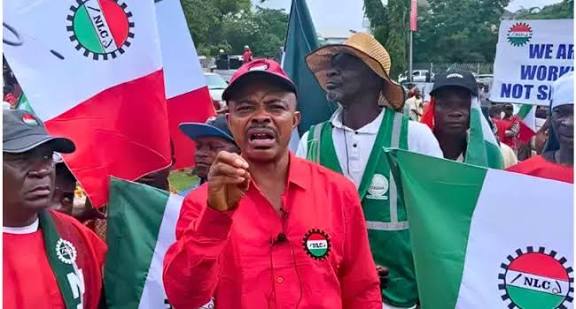

The Nigeria Labour Congress has again scored the privatisation of the country’s privatisation of the power sector low on account of its little or no impact on Nigeria.
It described the exercise as a fraudulent transfer of public wealth into the hands of a few speculators who lacked both the technical expertise and the financial backbone to manage the nation’s electricity assets.
Its President, Comrade Ajaero,also declared that the failed privatisation experiment has plunged Nigerian workers, women, youth, and industries into deeper energy poverty as the national grid continues to collapse while power distribution companies persistently reject Loads from the Transmission Company.
He lamented that over a decade after the much-celebrated privatisation of the power Sector, electricity generation remains comically stagnant at between 4,000 and 5,000 Megawatts; the exact same level as the pre-privatisation era.
“Instead of progress, we witness regression. Instead of light, we have darkness. The national grid collapses with the frequency of a faulty generator, sometimes plunging the entire nation into blackout. This is not the ‘turnaround’ we were promised; this is a well-orchestrated robbery of the Nigerian people,” Ajaero stated.
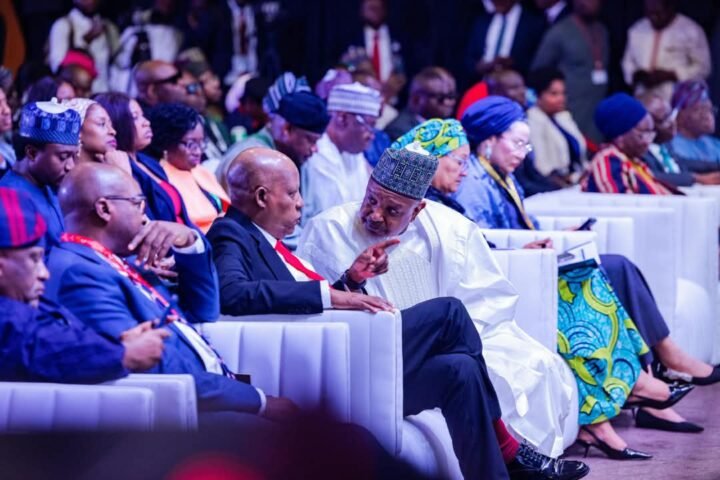
He spoke at the National Union of Electricity Employees’ (NUEE) Annual Conference of Women and Youth in Abuja, where he also said that the exercise remains shameful and demonstrates how stagnated Nigeria has become.
“The so-called investors did not buy these companies with their own money. No foreign exchange was brought in though the companies were touted to have come from outside our shores. They borrowed heavily from Nigerian banks, draining domestic credit and contributing to the depreciation of our Naira. They acquired the DISCOs and GENCOs on a shoestring budget and now expect Nigerian workers to pay for their loans through outrageous electricity tariffs,” he said.
He condemned the Band classification (A, B, C) as a capitalist tool designed to further impoverish the masses. He described the policy as a backdoor tariff hike that burdens citizens with cost-reflective billing without offering service-reflective delivery. Banding remains the institutionalization of extortion of Nigerians by the rich.
“Band A consumers pay through their noses but still receive epileptic power supply. This government is asking Nigerians to pay for darkness. We reject this segregation. Electricity is a right, not a commodity to be auctioned to the highest bidder while the poor are left in the dark,” he declared.
According to him, the electricity subsidy claim remains a phantom as the N3 Trillion is another ruse and goes nowhere.
He added:”We question the rationale behind the Federal Government’s alleged plan to pay between 2 and 3 trillion Naira to the GENCOs. We describe it as a clandestine move to “settle the boys” as the 2027 elections approach.
“We insist that there is no justification for such a massive bailout to private firms that have failed to deliver. If this government is serious about the welfare of Nigerians, it must stop using our commonwealth to enrich a cartel of failed investors. Every kobo of the treasury belongs to the workers and people of Nigeria.
He insisted that the state must return the power sector as a social service if Nigeria desires to make progress as a nation.
He disclosed that global examples shows that no nation has successfully run its electricity sector purely as a profit-driven enterprise without inflicting hardship on its citizens.
He added:”We call for the immediate return of the State as the primary driver of the Power Sector.Electricity is not a luxury for the rich; it is a social service essential for national development. It is only the state that can bear the huge capital investment required and the long gestation period for returns. The private sector has failed. It is time to take back the power for the people.
“We therefore call for a People’s Power Roadmap. While acknowledging the new Electricity Act which devolves power to the states.Decentralisation alone is not a magic wand. Without a clear, national, and worker-centred roadmap, the bottlenecks will persist.
“The NLC, therefore, demands a national stakeholders’ summit; not another talk shop, but a genuine convergence of workers led by their unions, manufacturers, and genuine experts; to draft a Power Sector Roadmap that prioritises: Affordable and stable electricity for all. A reversal of the failed privatisation model. Service-reflective tariffs, not cost-reflective extortion and Public investment in generation and transmission infrastructure.
“The Nigerian people cannot continue to pay for darkness. The NLC stands ready to work with the masses and within our networks to resist any further exploitation in the name of electricity reform. When Power is not available, it cannot be affordable. Power sector must be returned to the people.”