

Thirty State Houses of Assembly have approved the proposed constitutional amendment to establish State Police Services in the country.
The states that have approved the proposed amendment are Adamawa, Akwa Ibom, Anambra, Bauchi, Bayelsa, Borno, Delta, Ebonyi, Edo, Ekiti, Enugu, Gombe, Imo, Jigawa, Kaduna, Katsina, Kebbi, Kogi, Kwara, Lagos, Nasarawa, Ogun, Ondo, Osun, Plateau, Rivers, Sokoto, Taraba, Yobe and Zamfara
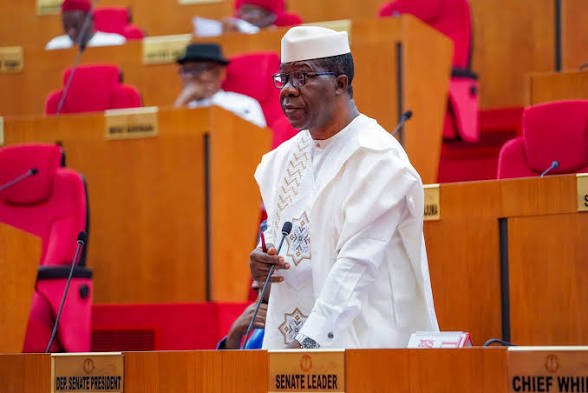
The Senate Leader, Senator Opeyemi Bamidele, announced this on Wednesday during plenary, expressing optimism that the outstanding six states would complete the approval process before Monday.
According to him, the 30 nods represented significant progress towards decentralising Nigeria’s policing system and providing the constitutional framework for state governments to establish their respective police services.
He explained that although the Constitution requires approval from at least 24 of the 36 State Houses of Assembly, the National Assembly was still expecting the remaining six states to formally communicate their decisions before the amendment could proceed to the final stage.
He said the constitutional amendment process involves three distinct stages: passage by the National Assembly, approval by at least two-thirds of the State Houses of Assembly and presidential assent.
He also said the National Assembly had completed its responsibility by passing the proposed amendment and forwarding it to the state legislatures for consideration.
“Let me explain again, for the avoidance of doubt, three keywords are used in the Constitution of the Federal Republic of Nigeria 1999, as amended. The first word is passage, the second word is approval and the third word is assent,” Bamidele said.
He explained that the requirement for approval by state legislatures was intended to ensure that constitutional amendments enjoyed broad acceptance among the different levels of government rather than being determined exclusively by the federal legislature.
“The reason the writers of our Constitution, our forefathers, put all these specific words is to ensure that no part of the Constitution of the Federal Republic of Nigeria can be easily amended without the buying in of all the critical stakeholders at all levels of governance,” he stated.
He said the 30 approvals already received exceeded the constitutional threshold of 24 states, describing the development as evidence of considerable support for the proposed reform among elected representatives.
“Two things that need to be emphasised here is that we needed two-thirds of the states at the very least for this to pass, and already two-thirds will be 24. So, as of yet, we already got 30 states, showing the popularity of this bill among Nigerians through the elected representatives in the State Houses of Assembly,” he added.
He, however, maintained that the National Assembly expected the remaining six states to communicate their positions before Monday.
“We believe that the remaining six states will still get back to the National Assembly before next week Monday, which is the deadline,” he added.
He described the development as encouraging for Nigeria’s democratic and constitutional reform process, expressing confidence that the exercise would be concluded within the stipulated timeframe.
Earlier, the Clerk to the National Assembly, Kamoru Ogunlana, had informed lawmakers that 29 State Houses of Assembly had submitted their approvals as of the close of business on Tuesday, November 3, 2026.
The notice, read on the Senate floor by the Deputy President of the Senate, Senator Jibrin Barau, disclosed that the National Assembly leadership was monitoring submissions from the state legislatures.
Bamidele’s subsequent announcement on Wednesday raised the number of approving states to 30.
The proposed State Police amendment is designed to introduce a decentralised policing structure that would allow state governments to establish and administer their own police services alongside the existing Nigeria Police Force.
The proposal comes amid persistent security challenges across the country, including banditry, kidnapping, terrorism and other violent crimes, which have intensified calls for a fundamental review of Nigeria’s centralised policing system.
Supporters of state policing have argued that decentralisation could improve intelligence gathering, enhance community-based security operations and enable law enforcement agencies to respond more effectively to local security threats.