
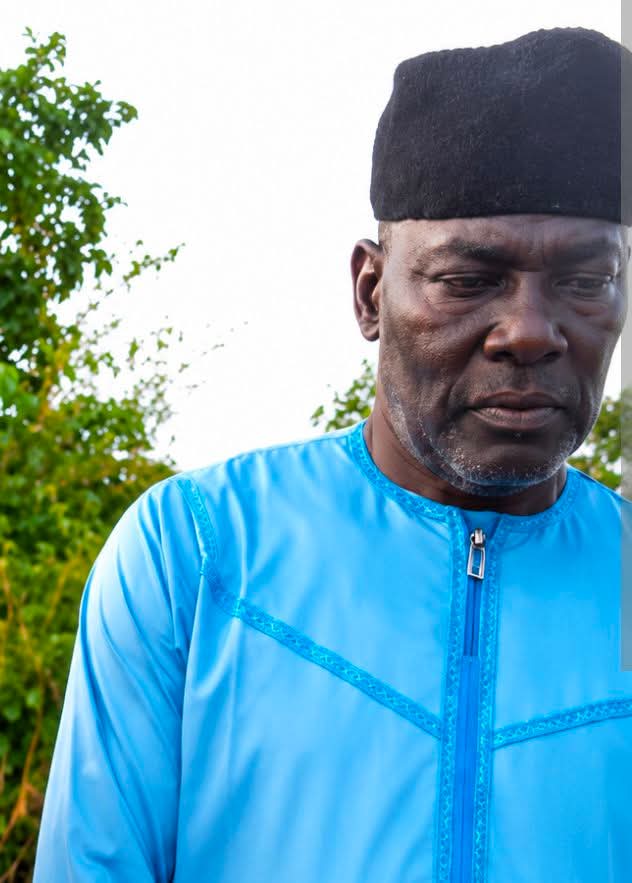

By Mallam Ibrahim Agunbiade
The tragic death of Retired Major General Rabe Abubakar while in bandits’ captivity is more than a painful incident; it is a disturbing reflection of the worsening insecurity confronting Nigeria.
When a retired senior military officer, a man who dedicated decades to national service and contributed to counterinsurgency operations, could be abducted and eventually die in captivity, Nigerians are compelled to ask a serious question: if those with experience and military background are vulnerable, what hope remains for the ordinary citizen?
The Katsina State Government described the incident as a dark moment and a reminder of the urgent need for a collective and stronger fight against criminal elements threatening our communities.
Behind every security tragedy is a human story. Beyond the official statements lies the suffering of families who are left in fear, uncertainty and grief. The reported abduction of the General alongside his wife presents a painful picture of how insecurity has continued to destroy the peace of innocent Nigerians.
Sadly, the case of the retired General is not an isolated one. An Islamic scholar, Alhaji Muhammad Maibarga, also reportedly died in bandits’ captivity in Kebbi State while his family and associates were making efforts to secure his release.
These incidents remind us that insecurity does not discriminate. Farmers, traders, students, religious leaders, traditional rulers, security personnel and ordinary citizens have all become victims of criminal attacks.
The Defence Headquarters explained that it withheld public comment on the abduction of the retired General because rescue operations were ongoing and promised that those responsible would be brought to justice.
While such explanations may be understood, the painful reality remains that another Nigerian life has been lost.
The bigger question is this: how many more Nigerians must die before insecurity receives the emergency response it deserves?
Nigeria cannot continue to treat insecurity as a normal occurrence. A nation cannot achieve meaningful development when citizens live in fear, communities are displaced and livelihoods are constantly threatened.
The solution requires more than military operations alone. It demands improved intelligence, stronger security coordination, better protection for vulnerable communities, and a united national commitment to defeating criminal networks.
It is also important to acknowledge that victims of banditry and terrorism cut across religious and ethnic boundaries. This is not a crisis of one region or one group; it is a national challenge that requires collective action.
The death of Retired Major General Rabe Abubakar should not become just another headline. It must serve as a wake-up call that every Nigerian life matters and that the protection of citizens must remain the highest responsibility of government.
May Allah continue to protect our communities, heal our land, and grant wisdom to those entrusted with securing our nation.