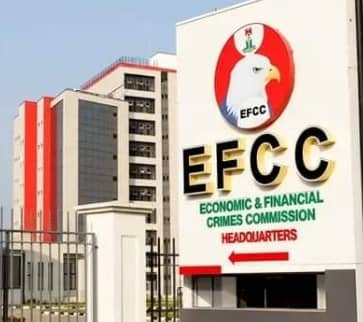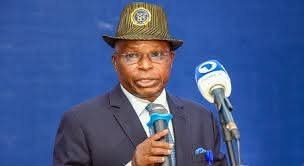



Economic and Financial Crimes Commission Chairman Ola Olukoyede says some governorship candidates are spending ₦20 billion to ₦30 billion to win elections in the country.
Olukoyede spoke on Wednesday at the University of Ilorin’s inaugural High-Level Guest Speakers’ Series, where he also lamented the massive spending has turned elections into transactions and poses a direct threat to Nigeria’s democracy.
The event was organised by the Centre for Peace and Strategic Studies, CPSS.
The EFCC chairman, who delivered a lecture titled “De-risking and Mobilising Critical Stakeholders for Peaceful and Credible 2027 Elections in Nigeria,” noted that politicians who invest such huge sums in elections often come under pressure to recoup their expenses after assuming office.
The excessive cost of contesting elections, he said, encourages the diversion of public funds and undermines accountability, as elected officials prioritise recovering their financial investments over delivering good governance and public service.
“The commercialisation of votes weakens the foundation of good governance because it compromises the political recruitment process. Leaders who buy their way into office are more likely to focus on recovering their investments rather than serving the public interest,” Olukoyede added.
He reaffirmed the commission’s resolve to curb vote-buying and other forms of financial inducement that threaten the credibility of elections across the country.
He disclosed that the agency had arrested several suspects linked to vote-buying and other electoral offences in previous elections, adding that a number of successful prosecutions had already been recorded.
According to him, those convicted for electoral misconduct include politicians, election officials and other individuals who participated in compromising the integrity of the electoral process.
He warned that failure to punish electoral offenders would encourage impunity and further weaken democratic institutions, insisting that no individual should be shielded from the enforcement of electoral laws.
He also revealed that the commission plans to deploy drones and other technological tools to improve surveillance and detect vote-buying and financial inducements during the 2027 general elections.
He urged political parties, candidates and their supporters to focus on issue-based campaigns and avoid inflammatory statements capable of inciting violence before, during and after elections.
He further advised the Independent National Electoral Commission (INEC), security agencies, civil society organisations, the media and other stakeholders to strengthen collaboration in ensuring peaceful, transparent and credible elections.
Speaking, the Vice-Chancellor of the University of Ilorin, Professor Wahab Egbewole (SAN), described electoral corruption as a serious challenge to Nigeria’s democratic development, stressing that credible elections are vital for national stability, economic progress and public trust in government.
The Director of the Centre for Peace and Strategic Studies, Professor G.A. Animasahun, said the lecture series was designed to encourage dialogue among policymakers, security experts, electoral officials and civil society groups on practical measures to safeguard the integrity of the 2027 general elections.