
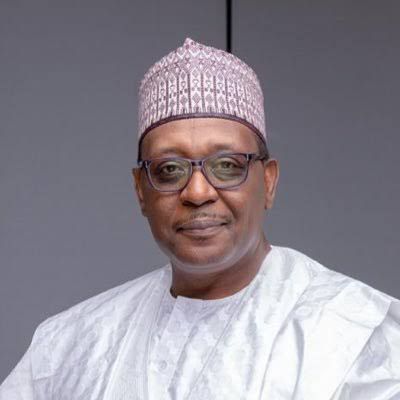

By Adebowale John
For years, Dr. Mohammed Ali Pate built a powerful reputation around one central claim — that his global connections, particularly with Gavi, the Vaccine Alliance, made him indispensable to Nigeria’s healthcare system and valuable to the Tinubu administration.
Today, that narrative is collapsing.
Across Nigeria’s health sector and political landscape, growing questions are emerging over two major issues surrounding the Minister of Health: the declining relevance of Gavi contributions to Nigeria under his watch and allegations of anti-democratic political interference in Bauchi State.
Combined, these developments are steadily eroding the very foundations upon which Ali Pate’s political and technocratic influence was built.
The Gavi Myth Is Fading
Ali Pate’s strongest selling point inside government circles has always been his international health connections, especially his long-standing relationship with Gavi, the Vaccine Alliance.
Nigeria remains one of Gavi’s largest historical beneficiaries, receiving billions of dollars in vaccine support, immunization financing, technical assistance, and health systems strengthening grants over the years.
But under Pate’s stewardship as Minister of Health since 2023, the reality is becoming difficult to ignore: Gavi’s direct contribution to Nigeria’s healthcare financing is declining.
Reports and analyses from organizations including Nigeria Health Watch, Campaigns Effectiveness, Pharos Global Health, DCVMN, and Gavi itself indicate that Nigeria is increasingly being forced to shoulder a larger share of vaccine financing while external support steadily tapers.
This trend has exposed what many now describe as the “Ali Pate illusion.”
Under Gavi’s transition framework, Nigeria has entered an accelerated transition phase expected to continue until around 2028. This means Nigeria must progressively finance its own vaccine programs while Gavi reduces its financial exposure.
The numbers tell the story.
Under current projections, the Nigeria-to-Gavi vaccine financing ratio is shifting dramatically toward heavier domestic funding. Older vaccines such as Pentavalent are expected to move almost entirely to Nigerian government financing by 2026, while newer vaccines like HPV, PCV, IPV, malaria, and rotavirus still retain temporary Gavi support.
Meanwhile, Nigeria’s domestic vaccine budget has surged from approximately ₦137 billion in 2024 to over ₦231 billion within a short period.
In simple terms, Nigeria is paying more while Gavi is paying less.
This completely undermines the long-held political perception that Ali Pate’s presence in government guarantees exceptional international healthcare financing leverage for Nigeria.
If anything, critics argue, Nigeria’s healthcare financing burden has increased significantly under his watch.
Even more troubling is that despite rising government spending, concerns remain over poor releases, implementation bottlenecks, weak absorption capacity, and persistent healthcare delivery failures across several states.
So the question many insiders are now asking is simple:
If Gavi support is declining anyway as part of a transition process, what exactly is the unique strategic value Ali Pate still brings to the Tinubu administration?
Bauchi Politics And Allegations Of Democratic Undermining
Beyond the healthcare debate lies an even more politically sensitive issue — allegations that Ali Pate has become deeply involved in efforts to undermine democratic processes in his home state of Bauchi.
Observers and political stakeholders in Bauchi increasingly accuse the minister of using federal influence and elite networks to interfere in local political structures and weaken opposition voices.
These allegations come at a dangerous time for Nigeria’s Northeast — a region already facing severe security challenges from terrorism, banditry, and political instability.
The United States and Nigeria continue to invest enormous security resources into stabilizing the Northeast. In such a fragile environment, accusations of democratic manipulation by a serving federal minister create serious reputational risks for the Tinubu government internationally.
For many analysts, the issue is no longer just about healthcare performance; it is about whether a federal minister is becoming politically toxic both locally and globally.
Tinubu’s Government Is Becoming More Performance-Driven
President Bola Ahmed Tinubu entered office promising reform, efficiency, and measurable outcomes.
Within that context, ministers are increasingly judged not by international résumés or elite networks but by tangible delivery.
And on that score, Ali Pate is facing growing scrutiny.
Nigeria’s hospitals remain overstretched.
Medical brain drain continues.
Primary healthcare infrastructure remains weak in many rural communities.
Drug inflation continues to hurt millions of Nigerians.
Immunization gaps remain significant.
And despite all the global branding around healthcare partnerships, ordinary Nigerians are seeing little transformational impact.
The political calculation inside Abuja may therefore be changing rapidly.
If Gavi’s declining contribution is part of a predetermined transition arrangement rather than a product of Pate’s influence, then his perceived international advantage becomes less politically valuable.
And if allegations of democratic interference in Bauchi continue to gain traction, he may increasingly become more of a liability than an asset.
The Bigger Political Question
Ali Pate’s challenge today is not merely administrative.
It is existential.
The very factors that once elevated him — global health connections and elite political access — are now being re-examined under a harsher spotlight.
For critics, the narrative is straightforward:
Nigeria is contributing more money to healthcare while external support declines; healthcare outcomes remain underwhelming; and accusations of anti-democratic conduct are growing louder.
In politics, perception often becomes reality.And increasingly, the perception within many political circles is that the Tinubu administration no longer needs Ali Pate the way it once thought it did.
Adebowale John writes from Festac, Lagos