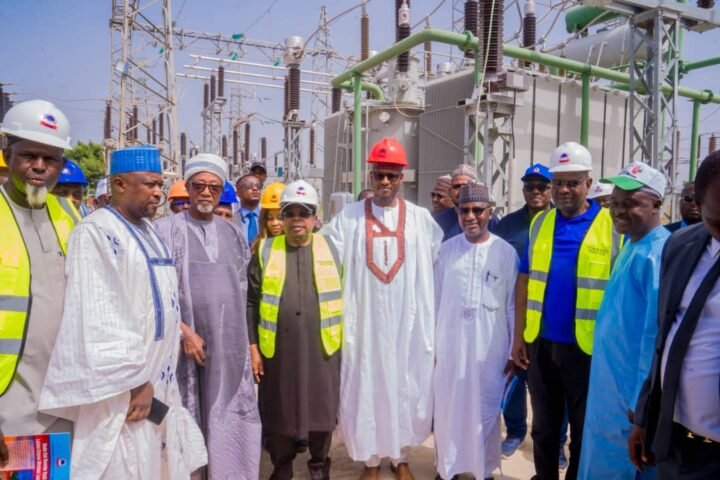



The Rural Electrification Agency (REA) has disbursed ₦3.2 billion to Zanoplus for the rapid deployment of solar mini-grid projects across strategic locations in Bauchi State, marking a robust continuation of the agency’s commitment to decentralized energy solutions.
This current financial milestone follows closely on the heels of a ₦7.4 billion disbursement to Ventura Logistics Services for a 7MW mini-grid initiative.
The two interventions are executed under the Distributed Access through Renewable Energy Scale-up (DARES) Program, a transformative partnership designed to catalyze private sector participation through the support of indigenous financial institutions.
The funding mechanism is rooted in a landmark Memorandum of Understanding signed in February between the REA and Lotus Bank, which established a ₦100 billion revolving credit facility.
Under this framework, developers can access up to ₦8 billion in equipment procurement financing with tenures of 18 months, alongside Lotus Bank providing up to 90% counterpart funding for projects approved through result-based financing.
The deployment by Zanoplus is set to transform the socio-economic landscape of Bauchi State by delivering a combined capacity of over 1.2MWp.
Specific allocations include 450kWp for Gabarin East, 400kWp for Futuk, 200kWp for Gangalawai, and 150kWp for Daburai (Gabarin West).
These systems operate as integrated local generation and distribution networks with capacities below 1MW, functioning independently of the national grid to provide reliable, clean energy directly to numerous end-users in isolated regions.
The Managing Director of the REA, Abba Aliyu, emphasized that the true success of these disbursements lies in the efficiency and integrity of the process.
He noted that the speed and transparency of execution demonstrate the vibrancy of the local financing capacity currently being catalyzed by the REA.
According to him, the momentum proves that a performance-based financing framework can effectively direct capital toward projects that are credible, ready for implementation, and strictly aligned with delivery milestones.
He further highlighted that this consistent flow of capital sends a powerful signal to the global and local investment community that the Nigerian renewable energy market is active and the underlying structures are working.
He commended the proactive role of Nigerian financial institutions, which are increasingly transitioning from mere participants to primary drivers of renewable energy infrastructure.
He expressed his agency’s determination to unlock the necessary scale to achieve universal energy access in Nigeria.