

The Federal Government on Thursday wooed local and foreign investors, declaring that ongoing reforms under President Bola Tinubu are designed to build a $1 trillion economy by 2030.
The Minister of Finance and Coordinating Minister of the Economy, Prof. Taiwo Oyedele, made the declaration at the 7th Africa Emerging Markets Forum in Abuja.
Oyedele said the administration had completed the “grueling foundational work” of economic stabilisation and was now shifting focus to converting macroeconomic gains into *investment, productivity, jobs and improved living standards.
He listed fiscal discipline, tax reforms and improved policy coordination as the key pillars driving the $1tn target.
“We have done the grueling foundational work of the first phase. Our task now is converting that stability into investment, investment into productivity, productivity into decent jobs, and decent jobs into incomes that Nigerian families can actually feel,” he said.
The minister argued that Nigeria’s reform programme shows African countries must take ownership of their economic transformation* rather than wait for global conditions to change.
Oyedele urged investors to position early to benefit from opportunities opening up across key sectors as government consolidates the reforms.
According to the minister, the administration inherited an economy burdened by structural distortions and opted for difficult reforms instead of postponing them.
He identified key reforms to include the unification of the foreign exchange market, removal of fuel and foreign exchange subsidies, fiscal consolidation and a comprehensive tax reform programme designed to simplify the tax system, eliminate nuisance taxes and improve the business environment.
Oyedele explained that the reforms were intended to make Nigeria more competitive rather than simply increase government revenue.
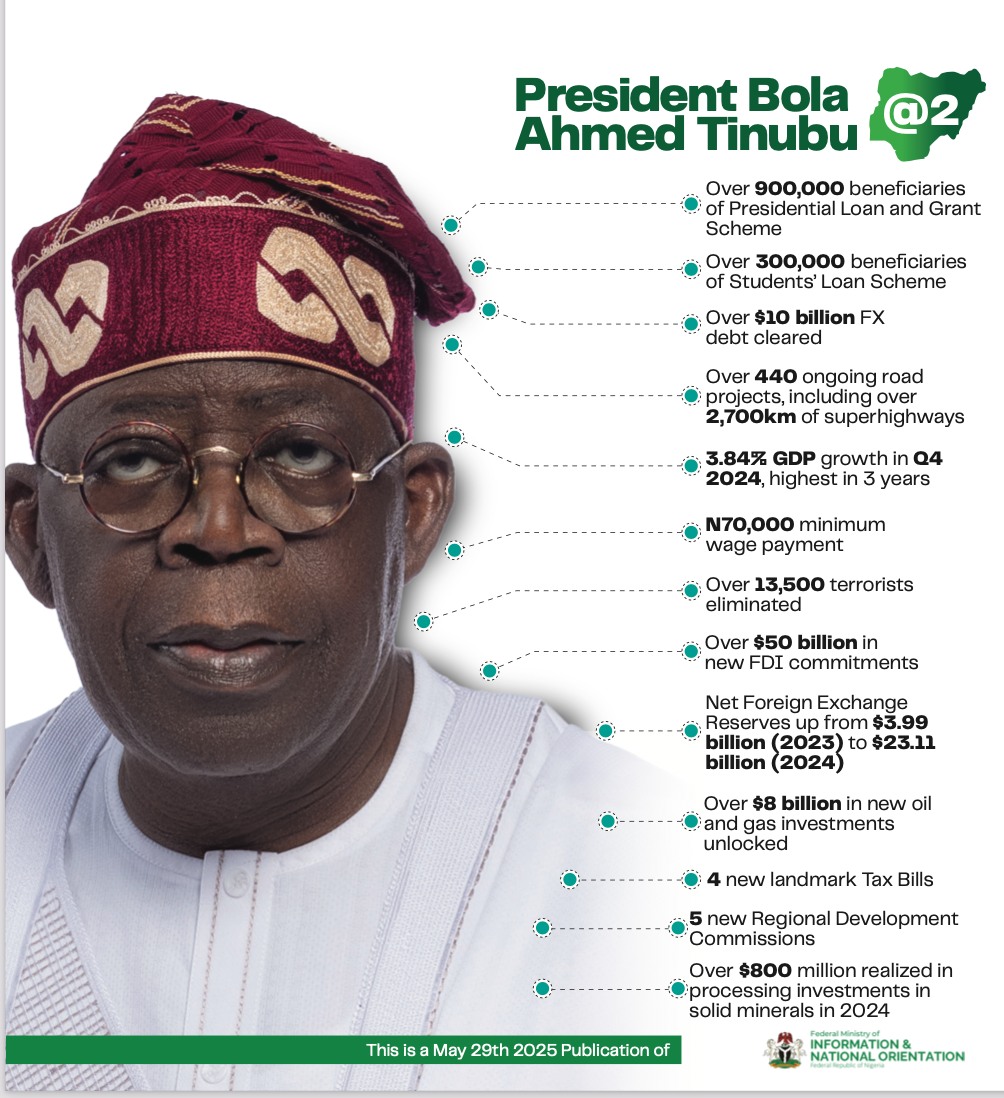
According to him, GDP expanded by 3.89 per cent in the first quarter of the year, while non-oil sectors grew by 3.94 per cent, reflecting increasing economic diversification.
He also said Nigeria’s external reserves had exceeded $50 billion, while banks collectively raised N4.65 trillion during the recent recapitalisation exercise, with over 70 per cent of the funds sourced from domestic investors.
The minister, however, acknowledged that macroeconomic stability alone was insufficient if Nigerians did not experience improvements in their daily lives.
He said the Federal Government had expanded cash transfers to 15 million vulnerable households, which he said had lifted an estimated 7.5 million Nigerians out of extreme poverty.
He also referenced recently launched programmes valued at over $3 billion to strengthen primary healthcare, basic education and support for displaced communities.
Speaking on concerns over the removal of fuel subsidies, Oyedele said government would soon publish a detailed account of how the savings had been utilised.
He explained that while subsidy removal generated fiscal savings, the primary objective was to eliminate economic distortions and corruption.
According to him, much of the fiscal space created by the reforms had been absorbed by higher debt servicing costs following the end of monetary financing, implementation of the new N70,000 minimum wage and funding of critical intervention programmes, including the Nigerian Education Loan Fund (NELFUND).
He also defended continued government borrowing despite improved revenue performance, explaining that higher-than-target revenue did not eliminate financing gaps where expenditure exceeded projected income.
On monetary policy, Oyedele disclosed that the Ministry of Finance and the Central Bank of Nigeria were strengthening coordination to ensure fiscal and monetary policies were driven by common economic assumptions.
He said the collaboration would prevent conflicting policy actions and improve macroeconomic management.
The minister further revealed that the government was developing a framework to reduce the cost of capital for businesses without introducing new subsidies.
He said high borrowing costs remained a challenge for economic growth but noted that inflation control remained a national priority.
Oyedele disagreed with suggestions that reforms had worsened long-term welfare outcomes, arguing that while subsidy removal temporarily reduced real incomes, the economy was beginning to recover.
He said government would henceforth measure economic progress using indicators such as multidimensional poverty, real per capita income growth and income inequality to ensure that growth translated into shared prosperity.
The minister also said the government was reviewing regulatory bottlenecks and excessive bureaucracy, noting that preliminary findings indicated that the economic cost of overregulation exceeded the combined revenue generated from company income tax, personal income tax and value-added tax.
He said removing regulatory disincentives would significantly improve Nigeria’s competitiveness without imposing additional fiscal costs.