


Mohammed Shosanya
Executive Director of Savannah Group,Wale Ajibade,has said that crude oil and petroleum products will continue to play prominent roles in the economy of Africa.
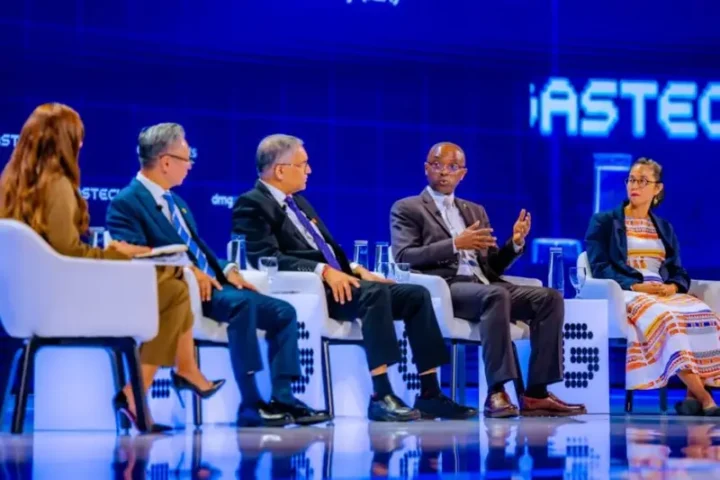
Delivering a presentation during the 2023 edition of the African Refiners & Distributors Association (ARDA) Conference,Ajibade emphasized that in order to meet rising demand, the supply of refined products within the continent needs to be optimized
Access Multimedia Content
Kicking off his presentation, Ajibade emphasized that projected growth trends in Africa indicate an increase in energy demand over the next few decades, with demand expected to be driven by industrialization and urbanization and is expected to coincide with the global energy transition.
He also said the rise in demand is projected to accelerate Africa’s deployment of downstream infrastructure to enable the continent’s energy independent and sustainability while serving to address energy poverty.
According to Ajibade, Africa faces five challenges across the downstream sector and lamented over-reliance on product importation, supply chain issues, oil theft and vandalism, fuel subsidy, and the energy transition.
He added that there are clear solutions to these challenges, which include, “investing in the construction of new refineries and the modernization and expansion of existing infrastructure; the creation of enabling environments for investment in infrastructure; leveraging technology to address pipeline theft and vandalism – such as drones and the internet of things –; regulating fuel subsidies; and pushing for gas to be used more predominantly including liquefied natural gas (LNG), liquefied petroleum gas (LPG) and compressed natural gas for power, energy and transportation while adapting existing refineries to the changing landscape.”
He offered insight into the viable solutions for the future of Africa’s energy sector. Drawing attention to natural gas while identifying the role solar, wind and hydro will also play, Ajibade stated that with roughly 13% of global natural gas reserves based in Africa, the continent is expected to embrace gas in the coming years.
According to Ajibade, while fossil fuels will continue to remain the major source of Africa’s energy demand, particularly through oil, it is expected that there will be a major shift towards a cleaner and more sustainable energy mix through the use of gas.
“In this scenario, natural gas will begin to play the role of bridging between more polluting fossil fuels and zero-carbon technologies, such as wind and solar. With factors such as a growing population, increased urbanization and economic expansion, as well as growth across the industry, commerce, manufacturing and agricultural sectors, Africa is projected to rely more and more on gas.
“However, challenges associated with a lack of investment, limited infrastructure, foreign exchange issues and limited knowledge on gas technologies continue to hinder resource maximization in some gas-rich countries such as Nigeria – which has put in place its Decade of Gas initiative to monetize resources”
Ajibade shared insight into Sahara Group’s operations and agenda, stating that as part of the company’s broader environmental, sustainability and governance initiatives,Savannah continues to make investments along the entire gas value chain.
On the upstream, the company invests in a gas-heavy portfolio and has begun the process of eliminating gas flaring across all its upstream assets.
On the midstream front, the company has stakes in several LNG and gas ventures including four LPG vessels with a focus on increasing LPG supply into West Africa. Meanwhile on the downstream and consumption side, gas demand to the company’s power plants is expected to increase significantly by 2026.
Ajibade said over the past two decades, global investment in renewable energy has grown rapidly,stressing that the continent Africa receives less than 3% of this investment.
He stated that in order to attract more investment and create enabling environments, a series of financial options can be implemented included blended finance, green bonds, risk mitigation instruments, innovation and carbon markets.
According to him,the creation of carbon markets in Africa could help countries develop mitigation projects while receiving climate-related investment, and with 24 countries already conveying an interest in this area, opportunities for trading carbon credit across several exchanges is in sight.