
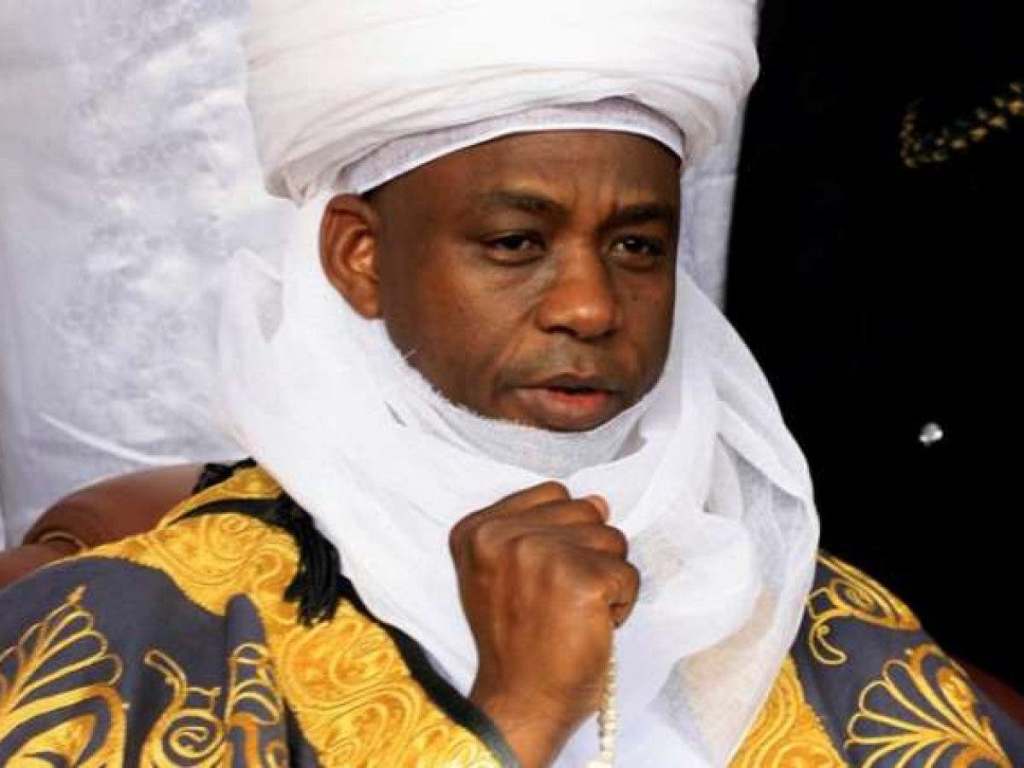

Muhammadu Sa’ad Abubakar, Sultan of Sokoto, has warned that Nigerians are currently hungry and angry as a result of government policies that have not alleviated their sufferings.
Abubakar spoke on Monday in Abuja at the National Conference on Livestock Reforms and Mitigation of Associated Conflicts in Nigeria organised by Kano State Government,
He warned the political class to desist from politicising the issues that have direct bearing on the lives of the people.
He noted that Nigerians people are hungry and angry, adding that the government needs to work to douse the tension in the country.
Abubakar, who spoke against the backdrop of the incessant herder-farmer clashes in the country, blamed the proliferation of small arms and light weapons in Nigeria and West African sub-region, called for their eradication as well as dialogue among critical stakeholders in the resolution of the crisis.
He argued that farmer-herder clashes were purely economic issues, and not tribal or religious crisis.
He said that the crisis has been exacerbated and politicized in the country.
He further called for the implementation of previous reports on the resolution of herder-farmer crisis.
Speaking, Governor of Kano State, Abdullahi Umar Ganduje, said government institutions have failed in addressing farmer-herder clashes.
Ganduje maintained that the controversial RUGA Settlement Policy remains the only option in resolving the crisis.
He also called for the review of ECOWAS Protocol on Free Movement of Persons and Goods to curtail proliferation of arms and ammunition in West Africa.
Vice President, Islamic Development Bank, Mansur Muhtar, said it is estimated that between 2016 till date, that over 4,000 people have lost their lives due to herder- farmer crisis.
Muhtar said apart from loss of lives, the crisis has increased the number of Internally Displaced Persons, thereby leading to the breakdown of family units, undermine agricultural productivity and exacerbate food insecurity as well as threaten national security in the country.
He identified the struggle for land, pasture and water between farmers and herders as the primary cause of the conflicts, adding that climate change, ECOWAS Protocol on Free Movement of Persons and Goods, legal and legislative inconsistencies also contributed to the lingering crisis.
He further called on state governments to show more commitment in the resolution of the crisis, while advocating more dialogue at the community level to build trust and find amicable ways of resolving the conflicts.