

The House of Representatives has failed to pass 87% of bills introduced bills introduced since the inauguration of the 10th National Assembly in June 2023.
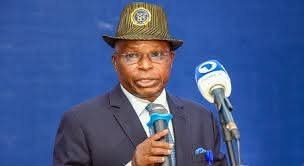
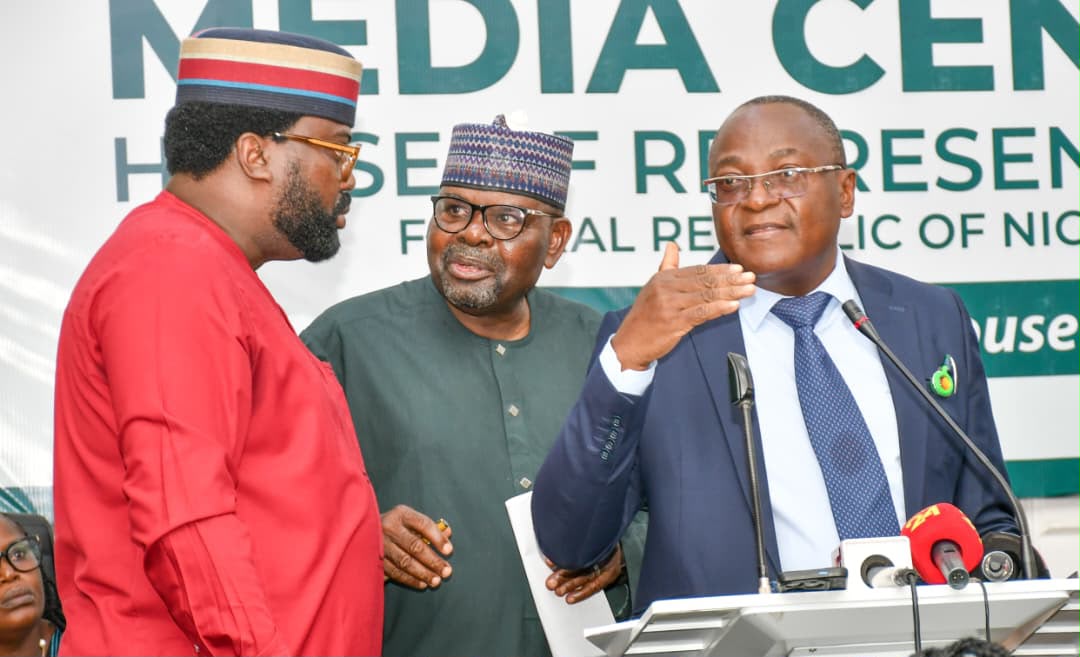
Briefing journalists at the National Assembly, Chairman of the House Committee on Rules and Business, Hon. Francis Waive, said the House introduced 2,747 bills but passed only 363.
According to him, 1,782 bills are awaiting second reading, 323 are tied up in committees, and another 185 are awaiting consideration.
He blamed the volume of 2,595 private members’ bills for the logjam, but argue that the bottleneck reflects poor prioritization and lack of political will to address pressing national issues.
A breakdown of the House’s legislative activities showed that 1,351 bills were introduced during its first legislative year, comprising 12 executive bills, 1,336 private members’ bills and three Senate bills.
The House passed 89 bills during the period, he said.
In the second legislative session, lawmakers introduced 912 bills, including 14 executive bills, 868 private members’ bills and 30 Senate bills.
He said a total of 148 bills were passed during the session.
Although fewer bills were introduced in the third legislative year, Waive said the House maintained a high level of legislative productivity.
He disclosed that between June 2025 and June 2026, lawmakers introduced 484 bills, comprising 31 executive bills, 391 private members’ bills and 62 Senate bills, while the House passed 126 bills during the period.
The House also intensified its oversight and representative functions during the third legislative session.
Waive said lawmakers considered 220 motions, of which 192 were referred to standing committees and 28 to ad hoc committees for further legislative action.
He added that 121 motions were treated as matters of urgent public importance, reflecting the House’s response to pressing national issues.
The Green Chamber also considered 48 public petitions during the period, reinforcing its constitutional responsibility of providing citizens with an avenue for redress.
Speaking on the Assembly’s major accomplishments, Waive said the House passed several landmark pieces of legislation during its third session, including the 2026 Appropriation Act, the constitutional amendment bill on state police, the Electoral Act 2026, the Tax Act, the Minimum Wage Act and the Nigerian Education Loan Fund (NELFUND) Act.
He said the measures represent some of the most consequential legislative interventions undertaken by the current Assembly.
“In this session we dealt with the 2026 Appropriation Act which was passed earlier this year. We made history with the amendment bill for the constitutional amendment for state police.
“In this session we also passed the Electoral Act 2026. Very important bills that we passed in this session. We also have the Tax Act which is a milestone and landmark legislation, the Minimum Wage Act, the NELFUND Act and several other pieces of legislation that touched the lives of ordinary Nigerians,” he added.
He maintained that the House had remained focused on its constitutional mandate, saying its legislative record demonstrates its commitment to serving Nigerians.
“The House of Representatives, the people’s House, we are working and this is our scorecard,” he said.
He also described the consideration of reports of the House Committee on Public Accounts (PAC) as another milestone of the 10th Assembly.
According to him, it is the first time since Nigeria’s return to democratic rule in 1999 that Public Accounts Committee reports have been presented, debated and adopted on the floor of the House.
“For Public Accounts Committee reports, this is the first Assembly where PAC reports are being presented, considered and passed on the floor of the House since the return to democracy. It is something the 10th Assembly is proud of,” he said.
On the proposed establishment of state police, Waive clarified that the constitutional amendment bill passed by the House is distinct from the executive bill transmitted by President Bola Tinubu, which seeks to establish the operational framework for state policing.
He explained that while the constitutional amendment creates the legal basis for state police, the executive bill deals with the administrative structure and operational relationship between the proposed state police services and the Nigeria Police Force.
He said:“The Constitution would simply allow state police, which is what we have done in the House. What the President sent, the Executive bill, does not have to do, in the strict sense, with the constitutional amendment. It has to do with the administrative structure, how the federal and state police would relate. That is the bill the President sent which we are also going to consider.”
He further disclosed that the House has commenced a review of its legislative agenda to identify areas requiring greater attention before the expiration of the current Assembly.
He said the legislative priorities of the House remain anchored on the agenda adopted at the inauguration of the 10th Assembly and that lawmakers are assessing implementation to ensure the remaining objectives are achieved before the end of their tenure.
Chairman of the House Committee on Media and Public Affairs, Hon. Akin Rotimi, said the briefing formed part of the House’s commitment to transparency, accountability and open governance by providing Nigerians with regular updates on its legislative activities.
“Rules and Business usually gives an account of its stewardship. This is a brief session to highlight the performance of the 10th House of Representatives at the expiration of its third year in office. This is within the broader context of open governance and accountability,” he said.
Rotimi disclosed that the House would, early in its fourth legislative session, take decisive votes on about 40 constitutional amendment bills.
He noted that many of the bills passed by the House constitute landmark legislation with lasting implications for governance and the welfare of Nigerians.
He further revealed that more than 300 constitutional amendment proposals were among the over 2,500 bills introduced since the inauguration of the 10th House, with many already advancing through different stages of legislative consideration, while others have been consolidated.
“Overall, we think there is still a lot of ground to cover and a lot to do, but we have also covered a lot of ground so far in our effort to fulfil our legislative agenda,” he said.
Rotimi added that the House leadership has continued to review its internal performance to ensure that legislative promises made to Nigerians are fulfilled before the end of the Assembly’s tenure.
“We have our internal mechanisms for tracking the promises that were made and we are engaging with the leadership to ensure that, over the last legislative year, those things that we promised would be prioritised so that their progression moves faster,” he said.
Describing the state police proposal as one of the priority constitutional amendments before the National Assembly, Rotimi said lawmakers would consider it alongside other far-reaching reforms.
“The state police bill is a priority bill, along with the other constitutional amendment bills that would be voted on very soon in the fourth session. In this fourth session, we are going to decisively vote on about 40 constitutional amendment bills which impact the lives of Nigerians,” he said.
Rotimi also commended the House Committee on Public Accounts, describing it as one of the most productive since Nigeria’s return to democratic rule in 1999.
According to him, the committee had recovered more than ₦61.6 billion for the Federal Government, in addition to over ₦520 million in unremitted Value Added Tax.
“As at 2025, we had recovered in excess of N61.6 billion for the Federal Government. In addition, we have also recovered more than N520 million in unremitted Value Added Tax. So, we have a very active Public Accounts Committee, an active Public Petitions Committee and an active Rules and Business Committee,” he said.
He added that the House would formally present its comprehensive three-year scorecard next week, describing Waive’s presentation as one component of the broader report focusing on bills, motions and public petitions.