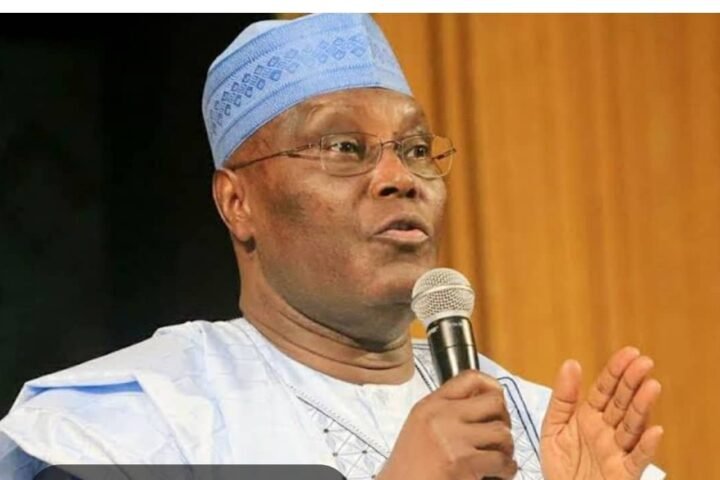

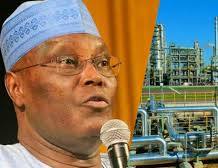

Former Vice President Atiku Abubakar has questioned Nigerian National Petroleum Company Limited’s deal with two Chinese firms to rehabilitate the Warri and Port Harcourt refineries, saying the companies lack the capacity and experience to manage complex crude refineries.
In a statement issued through his Senior Special Assistant on Public Communication, Phrank Shaibu, Atiku said independent assessments show the firms are ill-equipped for the job.
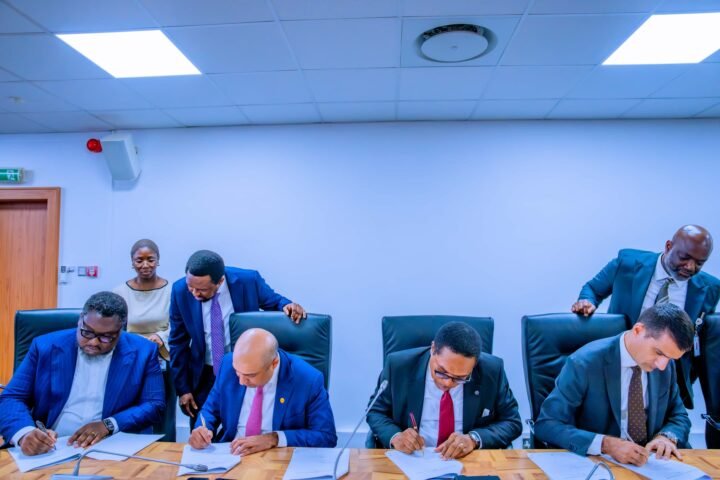
NNPC Ltd. recently signed a Memorandum of Understanding with Sanjiang Chemical Company Limited and Xingcheng (Fuzhou) Industrial Park Operation and Management Co. Ltd for the revival of the two refineries.
Atiku argued that Sanjiang Chemical is a downstream petrochemical manufacturer focused on surfactants and light hydrocarbon processing, not crude oil refining.
He said there is no public record of the firm building or operating a full-scale refinery of the scale of Port Harcourt or Warri.
“Processing petrochemical derivatives is not the same as running an aging national refinery burdened with decades of operational decay,” the statement read.
He described the second firm, Xingcheng, as an industrial park and infrastructure management company with no verifiable experience in petroleum engineering or refinery operations.
“By every available corporate and industry record, Xingcheng is essentially an industrial park and infrastructure management company — the equivalent of handing over a hospital’s intensive care unit to a real estate developer,” Atiku said.
Atiku questioned why the Federal Government and Nigerian National Petroleum Company Limited bypassed established refinery engineering and EPC firms with proven records to settle for companies whose backgrounds, he said, raise more questions than confidence.
He warned the Tinubu administration risks turning the refineries into “another expensive black hole of failed promises, reckless experimentation, and opaque transactions.”
The statement also flagged financial concerns around Sanjiang Chemical, citing reports of declining revenues, shrinking profitability, and liquidity pressure despite its Hong Kong listing. Atiku asked how a firm facing financial strain could shoulder the burden of reviving two of Africa’s most troubled refineries.
He demanded publication of the full MoU terms; a transparent technical due diligence report on both firms, disclosure of Nigeria’s financial commitments and liabilities, open competitive engagement with globally reputable refinery operators and a legislative probe into billions spent on past refinery rehabilitation without results
“The era where NNPC signs opaque agreements abroad and expects Nigerians to clap blindly is over. National assets are not toys for bureaucratic experimentation,” Atiku said.