
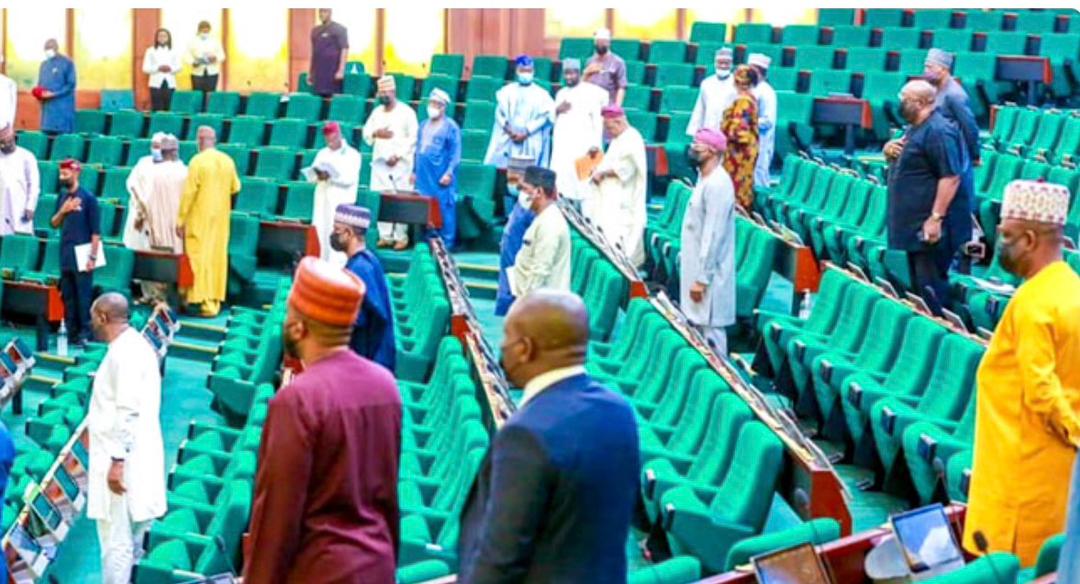

The House of Representatives Public Accounts Committee has approved a N248.6 billion debt relief and restructuring package for Kano, Jos and Ikeja Electricity Distribution Companies (DisCos).
Its decision was sequel to the adoption of a report by its technical subcommittee, which reviewed findings from the 2021 Auditor-General for the Federation’s report on the growing indebtedness of electricity distribution companies to the Nigeria Bulk Electricity Trading Company Plc (NBET).
The approved relief framework includes the restructuring of historical debts amounting to N120.06 billion over a period of up to 10 years, and the waiver of N128.57 billion in accrued interest covering the period from 2015 to September 2025.
Chairman of the technical subcommittee, Hon. Mark Chidi Obetta, said the recommendation forms part of legislative efforts to stabilise the electricity market and address long-standing financial obligations affecting the sector.
“This intervention is aimed at restoring financial stability in the electricity distribution segment and resolving legacy debt issues that have continued to weigh down the sector,” he said.
The breakdown of the figures indicated that Abuja Electricity Distribution Company recorded the highest debt profile at N275.16 billion, followed by Kaduna DisCo with N303.81 billion, while Jos, Kano and Ikeja DisCos accounted for substantial portions of the outstanding obligations.
The committee explained that its investigation was aimed at verifying the Auditor-General’s claims, determining the current debt status of the DisCos, and identifying the reasons behind their persistent inability to meet payment obligations.
It also confirmed that the reconciled liability of the eleven DisCos stood at N1 trillion as of the end of 2024, but rose sharply to N1.3 trillion by September 2025 due to continued accrual of interest.
A major point of controversy during the hearings was the legitimacy of interest charges imposed on outstanding invoices, particularly by Jos, Kano and Ikeja DisCos, which argued that such charges were not clearly provided for under existing market rules.
The Nigerian Electricity Regulatory Commission (NERC), in a directive issued in January 2026, instructed NBET not to apply interest on outstanding invoices between 2015 and 2020, but allowed interest charges from 2021 onward.
The regulator also directed that any interest associated with delays involving financial intermediary, MERISTEM, be excluded from the DisCos’ liabilities.
Following this directive, NBET was mandated to recompute the debts of the affected DisCos, including the N128 billion interest component initially accrued to Kano, Jos and Ikeja.
According to the committee’s report, “Jos and Kano Electricity Distribution Companies remain significantly indebted to NBET, with the interest component and obligations incurred during government receivership forming a major part of Kano DisCo’s liabilities.”
The report recommended that NBET and NERC allow the affected DisCos to restructure and repay their outstanding historical debts over an extended period not exceeding 10 years.
It further advised that liabilities incurred during periods of government intervention, particularly N13.39 billion linked to Kano DisCo, be transferred to the Nigerian Electricity Liability Management Company (NELMCO) in line with existing sector precedents.
It also urged the regulator to formally waive all applicable interest in line with its January 2026 directive, noting that the current market structure limits DisCos’ ability to recover costs or apply corresponding charges to defaulting customers, including government agencies.
Committee Chairman, Rep. Bamidele Salam, emphasised the need for strict compliance with market obligations going forward to prevent further accumulation of debt.
He added:“Without urgent restructuring and stronger regulatory enforcement, the sustainability of the electricity distribution sector will remain under serious threat.”
He explained that the relief measures are expected to provide a pathway for financial recovery while supporting ongoing reforms in the power sector.