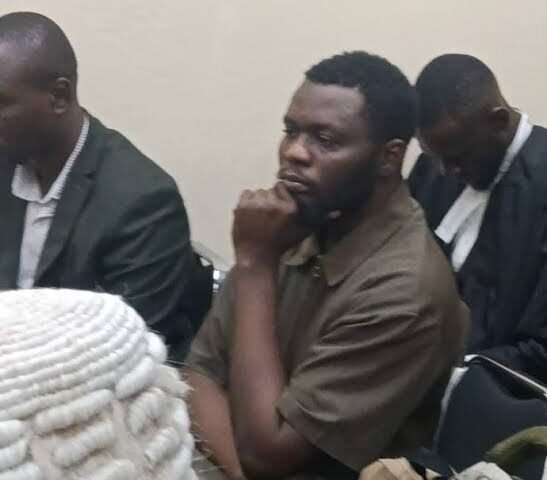



A Lagos State Special Offences court has sentenced a 63-year-old cleric, Chris Douglas to life jail for sexually abusing a teenage girl.
Justice Rahman Oshodi, in his verdict , held that the convict, Douglas, a pastor in charge of Peculiar Generation Assembly Church in Lagos, who was regarded as a “spiritual father,” abused his position of authority and trust to exploit the victim, who was 17 years old at the time of the incident.
According to the presiding judge, the prosecution established that the abuse took place within a religious environment where the victim and her family had relied on the cleric for guidance and support.
Besides, the court found that he repeatedly violate the teenager,and heard evidence of the devastating impact the abuse had on the victim during trial.
She reportedly suffered depression and experienced recurring suicidal thoughts, pointing to the lasting emotional damage caused by the incident, the court held.
The court also noted that the victim’s mother confronted the cleric at his church after discovering what had happened. However, the defendant denied the allegations and attempted to shift blame-an argument the court dismissed.
Rejecting claims that the relationship was consensual, the judge emphasized that the victim was a minor at the time and could not have given valid consent.
The court examined testimonial, medical and electronic evidence presented by the prosecution, alongside objections raised by the defence under the Evidence Act 2011.
The defence had urged the court to reject a medical report and related police referral documents, arguing non-compliance with statutory provisions.
The court agreed partially, holding that certain documents were improperly admitted and should be discountenanced.
The ruled that the oral testimony of the medical expert, Dr. Afada, remained admissible and could stand independently.
The judge held that expert testimony may still carry weight even where accompanying documentation is flawed.
A key flashpoint was the admissibility of electronic evidence. The defence challenged a document tendered from a storage device, arguing it failed to meet certification requirements under Section 84 of the Evidence Act.
The court rejected that argument, holding that the document was accompanied by a valid certificate and satisfied conditions for admissibility, including proof that the device was in regular use and functioning properly.
The judge noted that while the complainant alleged abuse at the church, she did not provide specific instances occurring before January 2018. As a result, the court held it could not conclude that any such acts took place while she was still legally a child.
The court found credible and corroborated evidence supporting allegations of abuse at a family residence and a hotel between September and December 2017.
The complainant gave a comprehensive account of an initial incident in September 2017, describing how she was allegedly drugged and raped. Her testimony was supported by her mother, who observed physical distress shortly after the incident.
Further allegations of repeated abuse at the family home in October and November 2017 were accepted as part of a continuing pattern of conduct, boosted by circumstantial evidence showing the defendant had access to the house and opportunity to commit the acts.
The court also accepted evidence of another incident in December 2017 at a hotel, where the complainant alleged further sexual assault.
The defendant, Douglas had denied any sexual relationship before 2019.
But, the court found this claim inconsistent with earlier statements and other evidence, including what it described as admissions made during a confrontation at a church meeting.
Witnesses testified that the defendant apologised when confronted, a development the court considered corroborative of the complainant’s account.