
Nigerians have expressed dissatisfaction with federal government’s transparency, procurement accountability, and the impact of the Renewed Hope Agenda (RHA) under President Bola Tinubu’s administration.
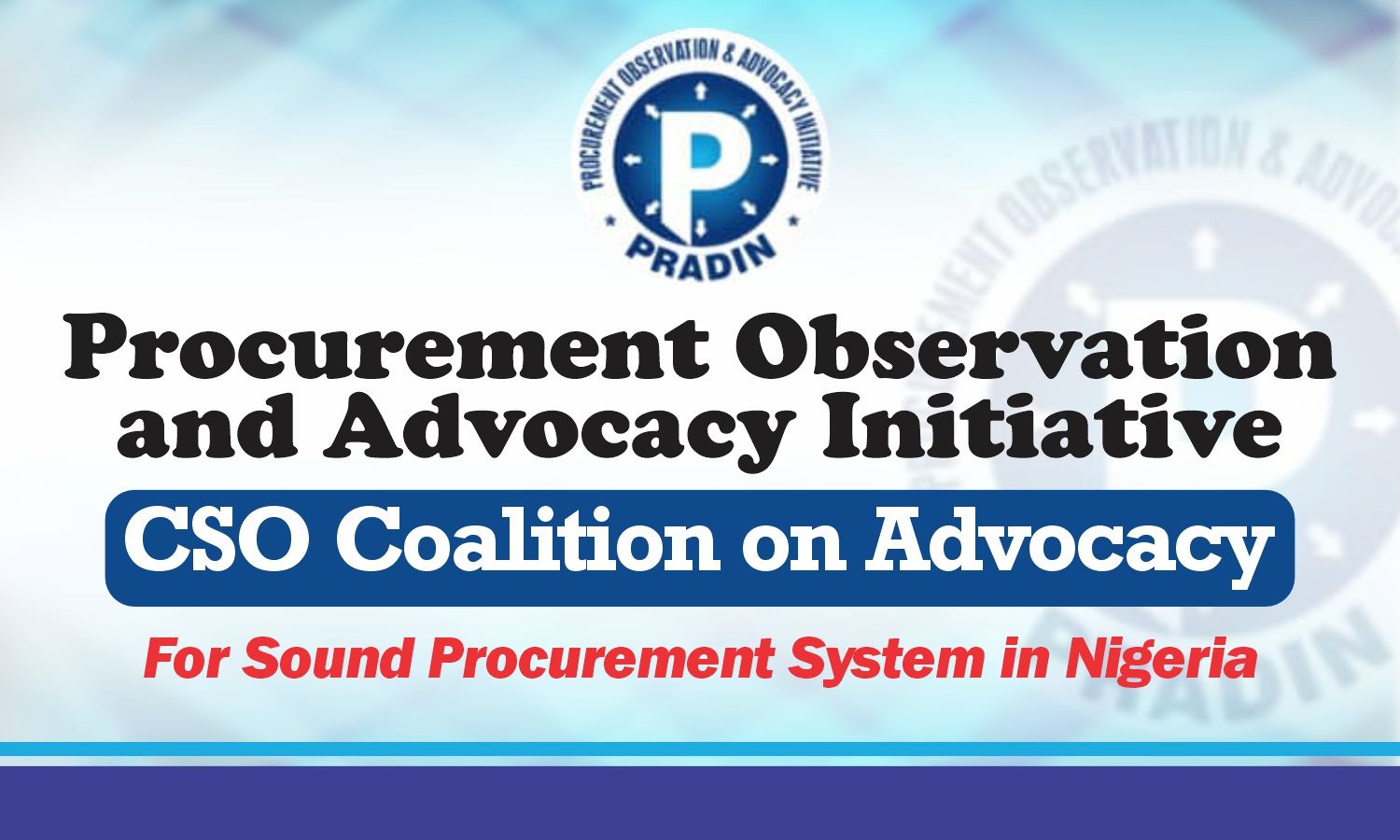
A recent survey by Public Procurement Observation and Advocacy Initiative (PRADIN) unveiled Nigerians lamentations in a statement made available to Premium News by the group’s National Coordinator, Mohammed Bougei Attah.
The survey of 34 respondents highlights serious gaps in governance, policy effectiveness, and socio-economic progress — signaling urgent reforms are needed to rebuild trust and foster inclusive development across Nigeria.
According to the survey, key highlights include procurement transparency crisis where over half of Nigerians (56%) describe federal procurement as “Not Transparent,” with only a small fraction (12%) believing processes are “Very Transparent.”
It added that rampant corruption, contract splitting, and bypassing due process remain major concerns.
Other areas include ineffective policy impact, the survey said, stressing that the flagship Nigeria First Policy is largely seen as ineffective, with 61% rating it poorly, and 70% observing no improvement in procurement accountability since May 2023.
The survey said one key area of major concerns is the Budget Failures to address poverty and development.
It stated that a majority (56%) feel federal budgets are failing to reduce poverty, while 68% report no real benefits reaching grassroots communities — highlighting a disconnect between budget plans and on-the-ground realities.
The Renewed Hope Agenda therefore faces public skepticism as over half (57%) rate the economic growth and inclusivity efforts under RHA as “Poor” or “Very Poor,” while 62% see no visible improvements in their communities, the survey said.
It also said fuel subsidy removal and inflation top concerns exacerbating hardships.
In the areas of Corruption, Governance, and Insecurity as Key Barriers, respondents identified systemic corruption (40%) and poor governance (20%) as major obstacles to achieving Nigeria’s Sustainable Development Goals, alongside insecurity and economic instability.
A respondent said:“Mistrust in procurement processes undermines national development. Transparency is not just an option — it is a necessity. We urge the government to enforce existing laws and open the doors for citizens to hold leaders accountable,” said a respondent working in the private sector.
“The Renewed Hope Agenda can only succeed if it is visible and felt by ordinary Nigerians”.
The group advocated the need for a people-centered approach where policies translate into real improvements in health, education, infrastructure, and livelihoods.
It also implored the federal government to urgently strengthen transparency and accountability in procurement and budget processes, enhance citizen engagement and civil society inclusion in governance.
It emphasized the need to prioritize effective policy implementation that delivers tangible socio-economic benefits.Introduce cushioning measures to protect vulnerable Nigerians from economic reforms.
It advised the government to launch systemic reforms to combat corruption and restore public trust.
“This survey reflects the voices of Nigerians demanding a government that truly works for its people,.Many of the respondents emphasized that without swift reforms and genuine engagement, Nigeria risks further erosion of public trust and stalled progress toward sustainable development”,Mohammed Bougei Attah quoted in the statement.