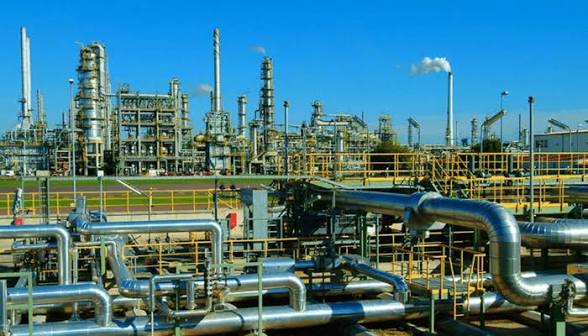



The Petroleum Products Retail Outlets Owners Association of Nigeria (PETROAN),has warned that Premium Motors Spirit could rise close to ₦2,000 per litre while diesel may approach ₦3,000 per litre if the ongoing Middle East war persists.
The National President of PETROAN, Billy Gillis-Harry, gave the warning on Monday in Port Harcourt while delivering a keynote address titled “Deconstructing Energy Trilemma,” organized by the Department of Petroleum Economics and Policy Studies, Ignatius Ajuru University of Education.
He also warned that continued fuel price increases would worsen inflation, cause job losses, deepen economic hardship, increase transportation costs, and raise prices of goods and services nationwide.
He said that before the crisis, Premium Motor Spirit (PMS) sold at ₦774 per litre but now sells above ₦1,000 per litre, representing an increase of about 30%.
According to him, Automotive Gas Oil (AGO), also known as diesel, previously sold at ₦950 per litre but has risen to ₦1,400 per litre and above, an increase of about 49%.
He tasked the Nigerian National Petroleum Company Limited (NNPC Ltd.) to urgently strengthen domestic refining capacity as a strategic step to prevent Nigeria from global petroleum market shocks.
He implored the Group Chief Executive Officer, Engr. Bayo Ojulari, to facilitate the immediate commencement of production at Nigeria’s local refineries, particularly the Area 5 Plant at Port Harcourt Refinery and the Warri Refinery, both of which previously operated briefly before shutdown for profit index evaluation.
He lamented that the ongoing conflict involving Israel, the United States, and Iran is pushing global petroleum prices to alarming levels. Sustained drone and missile attacks now threaten critical oil routes and infrastructure, creating uncertainty in global supply chains.
He noted that with no clear end to the conflict, petroleum product prices in both international and domestic markets are expected to rise sharply in the coming days.
He emphasized that rehabilitating Nigeria’s refineries for immediate domestic production is critical. Local refining, he said, would reduce exposure to international market volatility, especially as Nigeria has abundant crude oil resources under the custody of NNPC Ltd.
He added that government-owned refineries are less vulnerable to global supply disruptions compared to privately owned refineries dependent on imported crude.
He assured Nigerians that President Bola Ahmed Tinubu reform policies will ultimately bring relief to citizens and stimulate economic growth.
Why Dangote,Other Refineries Cannot Insulate Fuel Prices
Meanwhile, the Centre for the Promotion of Private Enterprise, CPPE, has shed lights on why the Dangote Refinery and other domestic refineries in Nigeria can’t insulate fuel prices in Nigeria.
Its Chief Executive Officer,Dr.Muda Yusuf, in a statement on Monday, explained that crude oil feedstock for refineries is priced using international benchmark prices and denominated in U.S. dollars, irrespective of the location of the refinery.
According to him, domestic refineries in Nigeria procure crude oil at prices that reflect prevailing global market conditions.
He said crude supplied by local producers or the national oil company is priced using international crude oil benchmarks, stressing that domestic refineries also pay a premium of about $3–$6 per barrel in order to secure crude supply.
He added:”Although domestic crude transactions may be settled in naira under special arrangements, the underlying valuation is still largely based on the naira equivalent of global crude prices. This means that domestic refining operations remain substantially exposed to global crude oil price movements with no price advantage in crude procurement.
“Therefore, while local refining can improve supply stability, it cannot completely shield the domestic market from global oil price volatility.”
The main cost advantage of domestic refining, he said, lies in reduced freight and logistics costs which becomes particularly significant during periods of global supply disruption, when shipping costs and freight rates tend to rise sharply.
With the expansion of local refining capacity, the need for large-scale fuel imports has declined significantly, he said, adding that the development has helped to conserve scarce foreign exchange, strengthen Nigeria’s external reserves position, and improve the country’s balance of trade.
He said:”In addition, domestic refining creates opportunities for Nigeria to export refined petroleum products to regional and international markets, thereby generating additional foreign exchange earnings.
“The transition from being a major importer of refined petroleum products to a potential net exporter of petroleum products represents a major structural improvement in Nigeria’s external sector outlook.”
How To Sustain Refining Investments
Yusuf emphasised the need for the policy environment to support investment in the indigenous refining sector.
He said government policy should continue to encourage domestic refining through a coordinated mix of trade policy, fiscal policy and monetary policy measures.
He reasoned that priority areas should include ensuring reliable crude supply arrangements, strengthening petroleum distribution infrastructure, introducing tariff protection, encouraging additional refining investments, and promoting export competitiveness for refined petroleum products.
He added :”While domestic refining may not completely eliminate the effects of global oil price volatility, it significantly reduces the risks of supply disruptions, conserves foreign exchange, strengthens the balance of trade, and enhances national energy security.”