

The Media Rights Agenda (MRA) has disclosed an increasing attacks against journalists and violations of freedom of expression across Nigeria, with Lagos State and the Federal Capital Territory (FCT), Abuja, recording the highest number of incidents in 2025.
In a new report titled “The Reign of Impunity”, the group documents 86 separate cases of attacks on journalists, media houses and citizens in 27 states and the FCT during the year under review.
It said the findings paint a disturbing picture of a shrinking space for free expression in Nigeria, worsened by the absence of accountability for those responsible for the attacks.
The 147-page annual report on Freedom of Expression in Nigeria noted that none of the documented cases led to a successful investigation or prosecution, even in situations where the actions of the perpetrators amounted to criminal offences.
It said:“A total of 86 incidents of attacks against journalists, media houses and citizens were recorded in 2025, showing a deteriorating environment for freedom of expression and a growing culture of impunity,” the organisation stated.
Lagos State recorded the highest number of attacks with 16 incidents, while Abuja followed closely with 14 cases, making the two locations the most dangerous places for journalists during the year.”
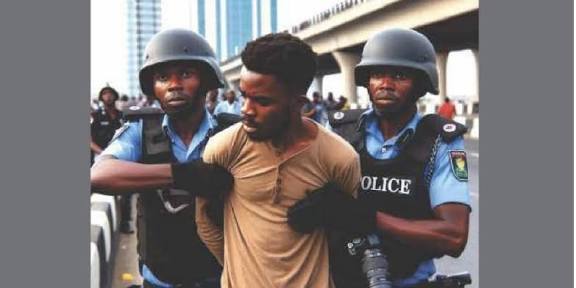
A major finding of the report is that arrest and detention were the most common methods used to suppress media freedom and free expression. MRA documented 38 cases of arrests and detentions, representing over 44 per cent of all reported incidents.
Physical violence was also widespread.
Besides, the report recorded 21 cases of assault and battery, accounting for more than 24 per cent of the total incidents.
This made physical attacks the second most common form of violation against journalists and media workers.
The report documented two killings. One was the death of a journalist who was killed in the line of duty, while the other involved a woman murdered over alleged blasphemy. The report also recorded one case of kidnapping and one instance where a media organisation was shut down.
On the identity of perpetrators, the report named the Nigeria Police Force as the worst offender.
It said the police were responsible for 41 incidents, representing nearly 48 per cent of all the attacks documented in the report.
It identified the Department of State Services (DSS) was identified as the second highest offender, linked to about seven per cent of the cases. Together, the two security agencies accounted for more than half of all recorded violations.
The report also highlighted emerging trends in the pattern of attacks. One of such trends is the continued use of the Cybercrimes (Prohibition, Prevention, Etc.) Act of 2015, as amended, to target journalists and government critics.
MRA noted that the law was increasingly being “weaponised” to silence dissent and punish critical reporting. It also observed the growing use of digital surveillance tools and spyware to monitor and track journalists.
The MRA stated that security agencies often failed to act when journalists were attacked by non-state actors. In some cases, officers allegedly ignored such attacks even when they occurred in their presence.
The report also accused law enforcement agencies of actively participating in the violent suppression of peaceful protests and demonstrations, during which journalists were frequently targeted while carrying out their professional duties.
MRA Executive Director, Mr. Edetaen Ojo, said in the preface of the report that despite rapid changes in the media landscape driven by digital technology, the basic problems facing journalists in Nigeria remained largely unchanged.
He described these challenges as political, legal, economic and social in nature. According to him, they include attacks on journalists, misuse of laws and regulatory powers, shrinking civic space, harsh economic conditions and increasing digital threats.
He warned that the persistent culture of impunity posed one of the biggest dangers to media freedom in the country.
“The culture of impunity remains one of the gravest threats to media freedom in Nigeria, emboldening perpetrators and deepening fear and self-censorship within the media community,” he said.
MRA called on the Federal Government and relevant authorities to ensure that all attacks against journalists and citizens are promptly and transparently investigated. It also urged that the outcomes of such investigations should be made public.
The group further implored the government to issue clear directives to security agencies, prohibiting harassment, intimidation, arbitrary arrests and other forms of attacks against journalists for performing their professional duties or against citizens for peacefully expressing themselves, particularly online.
It recommended that the Federal Government should establish a national mechanism or policy framework dedicated to the safety and protection of journalists.
It further warned that unless decisive steps are taken, attacks on journalists and restrictions on free expression may continue to rise, further weakening Nigeria’s democratic space and the public’s right to information.