
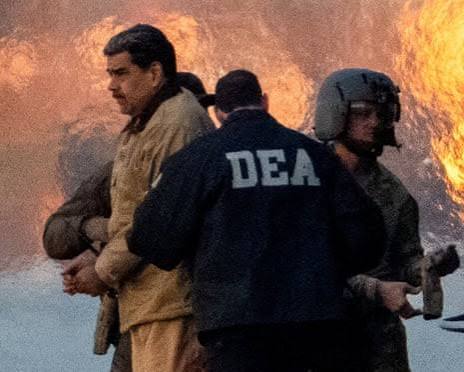

The world woke to news that felt ripped from a geopolitical thriller: U.S. special forces executed a precision operation and captured Nicolás Maduro, the Venezuelan strongman who had long defied Washington. Overnight, alliances splintered, condemnations flew from Moscow and Beijing, and the United Nations struggled to navigate the political fallout.
Debates over sovereignty, head-of-state immunity, and international law have set scholars and diplomats abuzz, but for the business and energy community, the immediate drama plays out on the oil trading floor.
Within hours, Brent crude rocketed to $62 per barrel. Traders raced to price in potential supply disruptions, regional instability, and retaliatory actions. By January 7, prices had moderated to around $60, yet the persistent risk premium—fueled by tanker seizures, export restrictions, and geopolitical uncertainty—reminded everyone that volatility is the new normal.
For investors and upstream operators, these swings are more than news: they are opportunities for strategic positioning, hedging, and portfolio recalibration.
Venezuela is not just any oil producer—it sits atop the world’s largest proven reserves, exceeding 300 billion barrels. Yet under years of mismanagement, sanctions, and economic decay, production plunged from over 3 million barrels per day to roughly 800,000. With Maduro removed, the horizon could shift dramatically.
Analysts project that with targeted investment, production could rise by 500,000 barrels per day within two years. Full-scale rehabilitation of pipelines, refineries, and offshore assets may require $100–180 billion—a monumental but lucrative challenge for forward-looking investors. The return of Venezuelan heavy crude could reshape the global supply landscape, capping prices and intensifying competition among exporters.
For Nigeria, this moment is a wake-up call. Venezuelan heavy crude directly competes with our Bonny Light and other benchmarks. Renewed competition could compress margins, reduce revenues, and challenge budget assumptions that rely on higher oil prices. Currency volatility and fiscal pressure may intensify.
But while the risk is real, so too is the opportunity: the global market shakeup underscores why Nigeria must move decisively to fortify its upstream and downstream sectors, diversify energy revenue streams, and maximize domestic value creation.
The path forward is clear. In the upstream sector, Nigeria must accelerate policy reforms to attract foreign direct investment, increase exploration, and enhance production efficiency.
On the downstream side, operationalizing the Dangote Refinery, expanding modular refining projects, and building integrated supply chains are critical to capturing more domestic value and reducing import dependence.
Beyond oil, Nigeria’s diversification into agriculture, critical minerals, technology, and manufacturing is no longer optional—it is strategic.
Enter the Nigeria International Energy Summit (NIES) 2026, set for February 2–5 in Abuja. Under the theme “Energy for Peace and Prosperity: Securing Our Shared Future,” NIES 2026 is positioned as Africa’s premier oil and gas gathering.
It brings together ministers, regulators, National Oil Companies, multinational investors, and industry leaders to debate, deliberate, and drive actionable partnerships across the continent’s energy value chain.
A key focus this year will be midstream and downstream infrastructure. The summit will spotlight how Nigeria and African nations can process, refine, and consume their own resources, enhancing energy security, industrial competitiveness, and domestic wealth creation.
In practical terms, discussions will explore modular and large-scale refineries, gas-to-power projects, regional pipelines, and strategic distribution networks—all under the lens of boosting investor confidence and regional trade.
The Signature Session—“Balancing Commercial Growth with National Development”—promises high-level debates on how African NOCs can leverage partnerships, technology, and capital to achieve economic resilience.
For investors, this is a front-row seat to emerging opportunities: joint ventures, cross-border projects, technology integration, and new business models that position Africa as both a supplier and innovator in the global energy market.
Nigeria’s moment is now. Maduro’s capture serves as both a warning and a call to action. It reminds energy leaders and investors that geopolitical shifts can instantly reshape the global oil landscape.
Those who act decisively—diversifying portfolios, investing in domestic infrastructure, and engaging with forward-looking policy frameworks—stand to gain the most. For the business community, the message is clear: navigate volatility with strategy, seize disruption as opportunity, and invest in Africa’s energy transformation.
The summit will not only provide insights but also connect capital with opportunity, offering delegates direct engagement with African ministers, regulators, NOCs, and private sector leaders. For financiers, policy shapers, and corporate executives, NIES 2026 is more than a conference—it’s the launchpad for Africa’s next energy frontier.
Maduro’s capture is history in motion.For Nigeria, it’s a reminder: adapt boldly, diversify relentlessly, and lead Africa’s energy future with confidence.
The choices made in boardrooms, policymaking chambers, and forums like NIES will determine whether this geopolitical shock becomes a catalyst for growth or a cautionary tale.
By Kunle Odusola-Stevenson
Public Relations Expert & Energy Issues Commentator, Lagos