



The Executive Secretary of the Nigerian Content Development and Monitoring Board (NCDMB), Engr. Simbi Kesiye Wabote, has highlighted opportunities that could be realized by the Nigerian oil and gas industry against the African Continental Free Trade Agreement (AfCFTA).
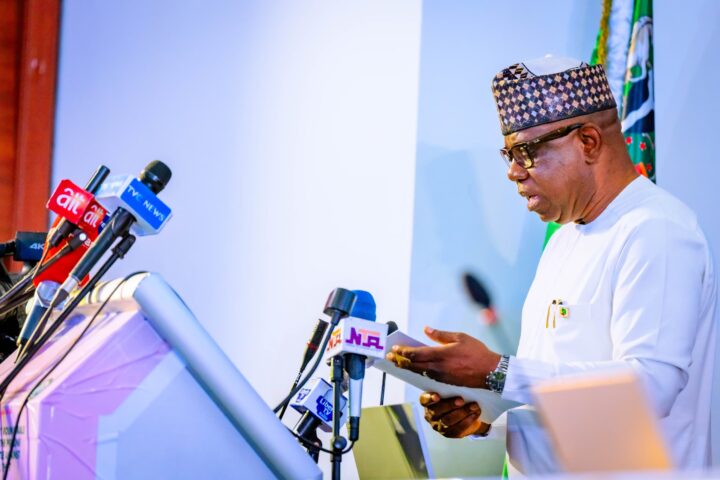
He spoke in Lagos at the RealNews Magazine 9th Anniversary Lecture, disclosing that Africa’s industrialization agenda is at the heart of AFCFTA and oil and gas remains a key part of the energy mix required for industrializing the continent and revenues obtained from selling the resources constitute key drivers of the economies of the African oil and gas producing countries.
He added that technological advancements in the African oil and gas industry and proceeds from operations will play significant roles in industrializing the continent and actualizing the goals of the African Continental Free Trade Agreement (AfCFTA).
He stated that the African oil and gas landscape provides huge opportunities for cross-border infrastructure to unlock development of stranded assets or bring energy closer to the people and such infrastructure also leads to lower unit development costs.
According to him, infrastructure like the West Africa Gas Pipeline (WAGP) and ongoing AKK gas transmission infrastructure can serve regional markets in West Africa and the Sahel region, while the SHI-MCI yard in Lagos can serve the wider African market being the only FPSO integration yard infrastructure in Africa.
He clarified that Local Content was not opposed to trade liberalization, stressing that no nation is blessed with the full list of natural resources, and can produce every product it requires. He added that “a country must be allowed to protect its areas of comparative advantage so that it can be utilized to trade for what it lacks. Discouraging local content laws and practice in the name of free trade is like fostering one-way trading which is not sustainable.”
According to him, Nigeria had established collaborations with countries like Angola, Ghana, Siera Leone, Senegal, Kenya, Mali, Mozambique, Niger Republic, Uganda in furtherance of Local Content development in the countries.
He spoke in energy transition and the threat that investments on hydrocarbon development projects could be withdrawn, saying it as a challenge for oil producing countries to address.
He also advocated the need for investment-friendly law such as the Petroleum Industry Act (PIA) 2021 to attract much needed funds for project developments and for an increased in-country hydrocarbon resource utilization through massive refining and production of petrochemicals.