


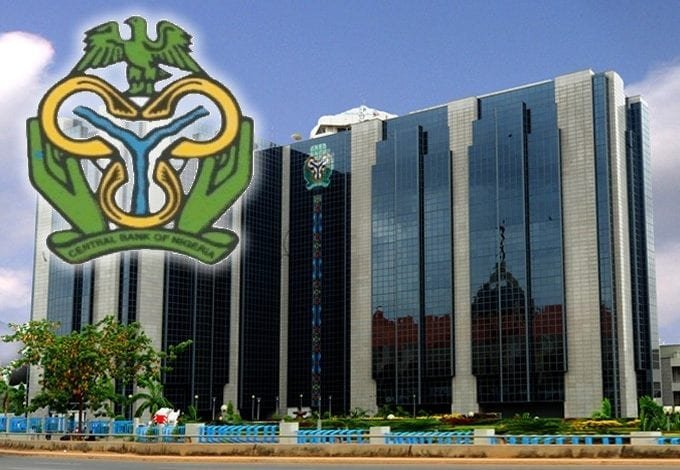


The Central Bank of Nigeria (CBN) on Friday introduced new regulatory requirements for non-security virtual assets, including stablecoins and digital payment tokens.
The apex bank disclosed that issuers of foreign currency-referenced stablecoins must maintain a minimum paid-up capital of ₦15 billion.
The framework is contained in the Regulations for the Operations of Non-Security Virtual Assets in Nigeria and covers licensing, capital adequacy, reserve management, consumer protection and reporting.
It applies to businesses involved in issuing, distributing, converting, transferring, safeguarding and settling regulated virtual assets.
The regulations, which took effect on November 5, 2026, are designed to bring stablecoins and other non-security virtual asset activities within a risk-based supervisory framework, while addressing concerns around financial stability, monetary policy, foreign exchange management, money laundering and consumer protection.
The bank said the framework was necessary to support innovation in digital payments, remittances and financial settlement without exposing Nigeria’s financial system to unmanaged risks.
A major feature of the regulations is the classification of stablecoins into two categories: Class 1, covering naira-referenced stablecoins, and Class 2, covering stablecoins linked to foreign currencies such as the United States dollar.
Under Section 15, issuers of naira-referenced stablecoins must maintain a minimum paid-up capital of ₦10 billion, while foreign currency-referenced stablecoin issuers are required to maintain ₦15 billion.
The CBN also stipulated a minimum paid-up capital of ₦1 billion for providers of other non-security virtual asset services.
The requirements apply to both local and foreign-backed operators seeking to serve the Nigerian market.
The regulations state that foreign issuers cannot claim exemption from Nigerian incorporation, licensing or capital requirements.
A foreign stablecoin issuer seeking to make its product available to Nigerians must operate through a Nigerian-incorporated entity holding the appropriate CBN licence.
The apex bank further requires licensed issuers to maintain adequate reserves to support the value and redemption of their tokens.
Under Section 24, stablecoin issuers must maintain at least 40 per cent of their total reserve pool in cash or eligible high-quality liquid assets.
For naira-backed stablecoins, an additional requirement is that at least 20 per cent of the total reserve pool must be maintained as a dedicated cash deposit with the CBN. The deposit cannot be withdrawn without the Bank’s prior written consent and does not attract interest.
The regulations also prohibit issuers from creating new stablecoin tokens without first receiving equivalent eligible reserve assets. This is intended to prevent the issuance of tokens without corresponding financial backing.
In addition, reserve assets must be separated from the issuer’s operational and corporate funds and held for the benefit of stablecoin holders. Issuers are generally prohibited from lending, pledging or using the reserves as collateral for borrowing.
The apex bank also introduced specific liquidity and redemption obligations, requiring issuers to demonstrate their capacity to meet customers’ requests for conversion and repayment, including during periods of financial stress.
The new framework also brings platform-facilitated peer-to-peer (P2P) virtual asset transactions under closer regulatory supervision.
Platforms facilitating such transactions, including matching buyers and sellers, providing escrow services and handling payment or settlement arrangements, must obtain the relevant CBN licence or authorisation and express approval for P2P operations.
The regulations require operators to establish customer identification and verification procedures, including matching customers’ identities and Bank Verification Numbers with the relevant payment accounts.
They must also put in place transaction-monitoring, fraud-prevention, sanctions-screening and suspicious-activity reporting systems.
For foreign currency-referenced stablecoins, the CBN has identified permitted uses including cross-border payments and remittances, international commerce, trade settlement and the holding or transfer of foreign currency value, subject to applicable regulatory requirements.
However, the bank retains the power to impose transaction limits, circulation thresholds, customer eligibility conditions and other safeguards where necessary to protect monetary policy, financial stability and foreign exchange management.
The regulations also require Class 2 issuers to maintain operational liquidity that is legally and operationally accessible to meet redemption requests and payment obligations in Nigeria.
Each such issuer must appoint a Nigerian deposit money bank as a redemption agent.
Beyond capital and reserve requirements, the CBN has established extensive governance, operational, cybersecurity and compliance obligations for regulated operators.
These include anti-money laundering, counter-terrorist financing and counter-proliferation financing measures, customer due diligence, record-keeping and regulatory reporting.
The Bank is also empowered to suspend or revoke licences where operators breach the regulations, provide misleading information, become insolvent or engage in activities outside their approved scope.
Where an issuer’s licence is revoked, the CBN may appoint a Special Purpose Administrator to oversee orderly redemption and the application of reserve assets for holders.
The regulations, however, distinguish between non-security virtual assets under the CBN’s jurisdiction and security virtual assets, investment contracts and other capital market products regulated by the Securities and Exchange Commission (SEC).
The framework is consistent with the Presidential Executive Order on Virtual Assets Coordination, 2026, which established a mechanism for cooperation among relevant government agencies to harmonise oversight of the country’s growing digital asset ecosystem.
The CBN said its objective is to encourage responsible innovation while protecting consumers, preserving monetary policy effectiveness and safeguarding the stability and integrity of Nigeria’s financial system.
The regulations also provide for a public register of licensed issuers and service providers, including details of their approved activities, regulated tokens and licence status.
The new requirements took effect on November 5, 2026, marking a significant step towards formalising the operations of stablecoin issuers and other non-security virtual asset businesses in Nigeria.