




The Federal Government and Lagos State have agreed to work in synergy to deliver stable, reliable electricity to the Lagos corridor, as part of the 24/7 Energy Zones pilot approved by President Bola Tinubu.
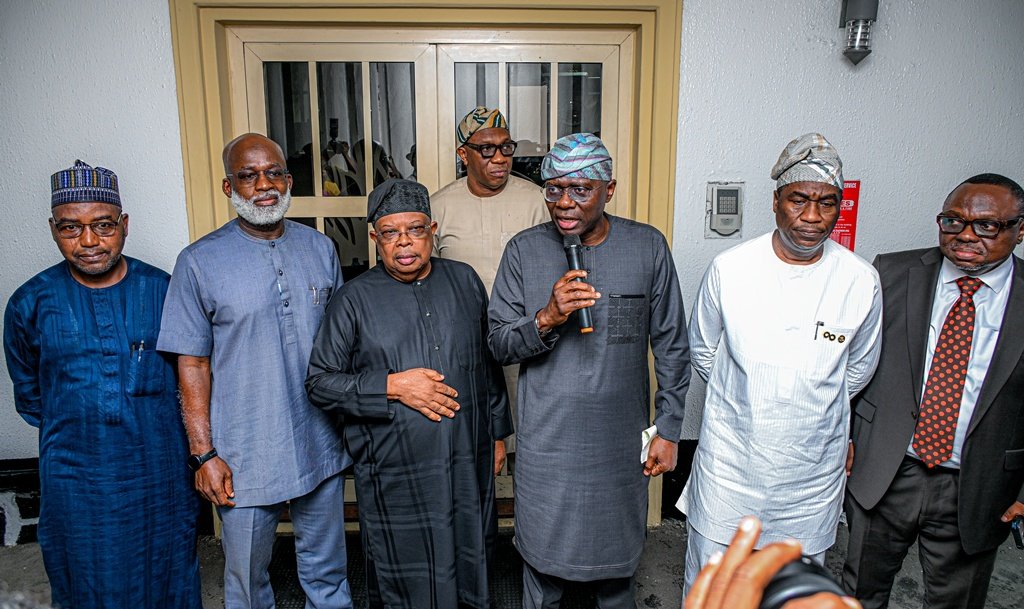
The agreement was sequel to a high-level technical session on Monday at Lagos House, Marina, between the Minister of Power, Joseph Tegbe, and Governor Babajide Sanwo-Olu, alongside top officials of the ministry.
The Energy Zones pilot is expected to start in Lagos and extend to the Abuja-Kaduna-Kano and Enugu-Port Harcourt corridors, giving it a path to scale across Nigeria’s major commercial and industrial hubs.
Speaking, Tegbe said the Ministry had engaged and secured commitments from the distribution companies to offtake more power and deliver steady and reliable electricity to customers along the Lagos corridor.
He expressed his readiness to work with Lagos on the grid stabilization, market liquidity, grid expansion, and governance and regulatory harmonization.
The Minister announced the constitution of a Joint Technical Committee to untangle knotty issues and propose next steps.
The committee is chaired by the Managing Director ofNigerian Independent System Operator Limited and co-chaired by the Permanent Secretary of Lagos State Ministry of Energy with members drawn from Nigerian Electricity Regulatory Commission, Transmission Company of
Nigeria, Rural Electricity Agency , Lagos State Electricity Regulatory Commission, Lagos Independent System Operator, Lagos State Electrification Agency, as well as the Office of the Minister of Power.
The technical committee will report to a Steering Committee chaired by the Governor and co-chaired by the Minister of Power, with the Special Adviser to the President on Power, the Permanent Secretary of the Federal Ministry of Power and the Lagos State Commissioner for Energy as members.
Governor Sanwo-Olu lauded the federal delegation for its seriousness, noting that since coming on board as Minister, Tegbe has shown the willingness and capacity to resolve lingering issues in the sector.
He emphasised the need to work out pragmatic solutions to make the sector work for Nigerians, and Lagosians in particular, creating a bankable, collaborative and competitive electricity market in Lagos.