


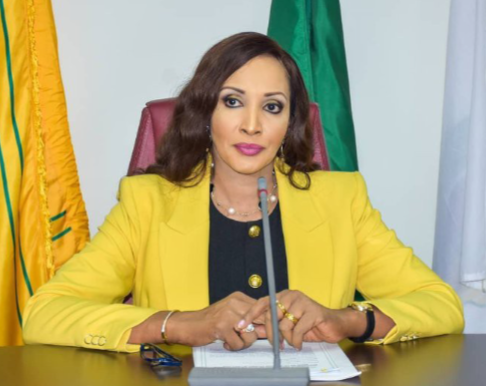


The Federal Government has warned foreign diplomatic missions and international organisations against making unsavoury remarks about Nigeria’s democracy as preparations for the 2027 general elections commence.
Minister of Foreign Affairs, Amb. Bianca Odumegwu-Ojukwu, gave the warning on Thursday during her first formal briefing with members of the Diplomatic Corps since assuming office.
She said President Bola Ahmed Tinubu remained committed to democracy and delivering peaceful, free, fair and credible elections.
Odumegwu-Ojukwu spoke at the Ministry of Foreign Affairs in Abuja, where she outlined Nigeria’s foreign policy priorities, called for stronger bilateral cooperation and urged foreign missions to respect established diplomatic channels in their dealings with the Nigerian Government.
Addressing the Diplomatic Corps, she said developments in Nigeria had regional and international implications, given the country’s position as Africa’s largest democracy.
“As the 2027 General Elections draw near, the Ministry of Foreign Affairs would request that Missions remain guided,” she said.
She added: “We would not accept unguarded comments, disparaging remarks, or unsolicited lectures on democracy from any country or international organization.”
According to her, the Tinubu administration was committed to democracy and delivering an election that would be peaceful, free, fair and credible in all ramifications.
She said the foreign policy direction of the Tinubu administration was anchored on four pillars: Demography, Development, Democracy and Diaspora.
She explained that the Demography pillar was designed to harness the potential of Nigeria’s youthful population through education, technology, innovation, entrepreneurship and skills development.
Development, she said, placed economic diplomacy at the centre of Nigeria’s international engagement, with emphasis on trade, investment, infrastructure, agriculture, energy and technology.
Democracy reflects the Government’s commitment to constitutional governance, strong institutions and the peaceful resolution of political differences, while Diaspora recognises Nigerians abroad as partners in investment, knowledge transfer and national development.
“These pillars place Nigeria and Nigerians at the center of our foreign policy,” she said.
Odumegwu-Ojukwu added that Nigeria would remain committed to its neighbours, the Economic Community of West African States (ECOWAS), Africa and the wider international community.
She described the country’s approach as “Nigeria centered, Africa conscious and globally engaged.”
The Minister said Nigeria would continue to exercise strategic autonomy in its international relations, stressing that the policy did not amount to isolation.
“We seek friendship and cooperation with all nations, but our positions and partnerships will be guided by our national interest, mutual respect, reciprocity and our international obligations,” she said.
According to her, strategic autonomy means preserving Nigeria’s sovereign right to determine the relationships and positions that best serve its people.
She urged diplomatic missions to deepen cooperation in trade, investment, security, education, technology, health and agriculture.
The Minister disclosed that the Ministry of Foreign Affairs was paying renewed attention to outstanding Joint Commissions and Bi-national Commissions, some of which had remained inactive due to administrative and logistical challenges.
She said the Ministry would work with diplomatic missions to revitalise the mechanisms and use them more effectively to advance bilateral cooperation.
“Ultimately, the strength of our diplomatic relationships should be measured not only by the warmth of our engagements, but by the tangible benefits they produce for our respective peoples,” she said.
Odumegwu-Ojukwu reminded members of the Diplomatic Corps that the Ministry of Foreign Affairs remained the official channel of communication between foreign missions and the Nigerian Government.
She said this included communications with the Presidency, Federal Ministries, Departments and Agencies, as well as other government institutions.
The Minister requested diplomatic missions to route official communications and requests intended for these institutions through the Ministry.
She explained that the arrangement was not designed to impede access or create unnecessary bureaucracy, but to ensure proper coordination, consistency and effective follow-up.
“The Ministry is not an obstacle between you and the Nigerian Government; we are your bridge to the Nigerian Government,” she said.
She further called for reciprocity, noting that Nigerian diplomatic missions abroad were expected to respect the diplomatic channels of their host governments.
The Minister acknowledged the importance of efficient diplomatic and consular services, saying the Ministry must justify the confidence placed in it by foreign missions.
She directed attention to the prompt handling of Notes Verbales and other diplomatic correspondence from missions.
Odumegwu-Ojukwu said concerns regarding the authenticity of a Note Verbale should be directed to the Ministry for clarification.
She also assured the Diplomatic Corps that issues brought to the attention of the Director of Consular and Migration Affairs would receive appropriate attention.
Requests for authentication and legalisation of documents, she said, would be handled as promptly as possible.
The Minister appealed to foreign missions to review their visa processes for Nigerian applicants.
Acknowledging the sovereign right of every country to determine its visa policy, she said excessively long waiting periods created difficulties for legitimate travellers, students, businesspersons and families.
She encouraged greater efficiency, transparency and responsiveness in visa processing.
Odumegwu-Ojukwu commended foreign governments for their cooperation in processing Agrément for Nigeria’s ambassadorial nominees.
She said the prompt attention accorded the requests demonstrated the goodwill characterising Nigeria’s international relations.
On Nigeria’s part, she disclosed that the Government was taking steps to facilitate the effective commencement of duties by Ambassadors and High Commissioners accredited to Nigeria.
This, she said, would include greater regularity in the presentation of Letters of Credence to enable Heads of Mission to begin their representational responsibilities without administrative delays.
The Minister assured members of the Diplomatic Corps that the safety and wellbeing of foreign diplomats remained a priority for the Nigerian Government.
She said Nigeria remained conscious of its obligations under the Vienna Conventions, including the protection of diplomatic and consular personnel, their families, premises and property.
Odumegwu-Ojukwu urged missions to promptly report security concerns or other issues affecting their stay in Nigeria.
She said the Ministry would engage relevant government and security agencies to ensure that legitimate concerns were addressed.
“We want you to feel safe, enjoy your assignments and ultimately leave Nigeria with positive memories of our country and our people,” she said.
The Minister described cultural exchange as an important instrument for strengthening friendship and understanding among nations.
She said Nigeria’s cultural richness and the diversity represented by foreign missions provided opportunities for greater people-to-people engagement.
Referring to the Diplomatic Bazaar organised by the Ministry, she said the event demonstrated how cultural exchange could promote friendship and understanding.
She added that the Ministry would continue to encourage cultural and social engagements that would allow members of the Diplomatic Corps to experience Nigeria while showcasing the best of their respective countries.
The Minister said Nigeria remained open to trade, investment, tourism, technology, knowledge and meaningful partnerships.
She stressed that such engagements must be based on reciprocity, sovereign equality and mutual respect.
According to her, conflicts, terrorism, climate change, cyber insecurity, irregular migration and economic uncertainty underscored the need for countries to work together.
“Nigeria will therefore continue to champion dialogue, multilateralism and peaceful resolution of disputes,” she said.
She reaffirmed Nigeria’s active participation in ECOWAS, the African Union, the United Nations, the Commonwealth and other international institutions.
She also said Nigeria would continue to advocate an international system in which Africa’s voice was heard and the continent participated meaningfully in shaping global decisions.
Odumegwu-Ojukwu urged members of the Diplomatic Corps to work closely with the Ministry to deepen trade and investment, strengthen cooperation on peace and security, advance education, health and technological innovation, and create greater opportunities for their respective peoples.
She described the briefing as an opportunity for candid conversation, renewed understanding and stronger partnership between the Ministry and foreign missions.
The Minister said the Ministry’s doors and appropriate channels remained open to diplomatic missions seeking clarification, assistance or government intervention.
She urged them to engage constructively and resolve issues through dialogue, established diplomatic channels and mutual respect.