




The Federal Government has approved the creation of a new inter-agency committee to end conflicting economic projections across its ministries and agencies.
The decision was taken at the Economic Management Team meeting in Abuja on Monday, where it also reviewed developments in the economy and strategies to accelerate growth in agriculture, manufacturing, trade and investment.
The new committee will harmonise projections on crude oil prices and production, exchange rates, inflation and non-oil revenues used by fiscal and monetary authorities.
According to the EMT, the move was sequel to a joint budget retreat and technical validation workshop which identified inconsistencies in assumptions adopted by government agencies as one of the factors contributing to budget under-performance.
The committee is also expected to address discrepancies in the way key economic indicators are reported within government, to external stakeholders and to the public.
The EMT said the economy recorded real GDP growth of 4.43 per cent year-on-year in the second quarter of 2026, describing it as the strongest quarterly performance since the third quarter of 2024.
It also noted that the country’s external reserves had risen to more than $54 billion in early September, while the naira had strengthened to the N1,300 range against the US dollar.
The team further noted that FTSE Russell is scheduled to reclassify Nigeria from “Unclassified” to “Frontier Market” status from September 21, 2026, marking the country’s return to the index after about three years.
Commenting on fiscal sustainability, the EMT said public debt remained below 40 per cent of GDP, while Nigeria’s sovereign credit outlook from Moody’s had improved from stable to positive.
The team said Nigeria’s economy, measured on a purchasing-power-parity basis, was valued at more than $2.2 trillion, arguing that this demonstrated the country’s economic potential as it pursues a $1 trillion nominal GDP target by 2030.
The EMT also approved revised terms of reference for its operations, expanding its mandate to include regular macroeconomic performance reviews, stronger coordination between fiscal and monetary authorities, monitoring of Renewed Hope Agenda priorities and periodic assessment of the Federal Government’s financing requirements.
Under the new arrangement, the team will meet monthly and conduct at least two strategic sector reviews at each sitting.
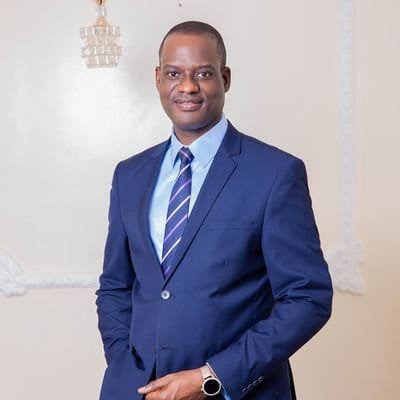
The Ministry of Finance, Taiwo Oyedele, was also designated as the coordinating custodian for national economic data, while relevant government agencies will remain responsible for producing their respective datasets.
The EMT said the arrangement was intended to improve the consistency and reliability of official economic statistics.
The team reviewed measures aimed at increasing agriculture’s contribution to the government’s ambition of building a $1 trillion economy by 2030.
The strategy includes efforts to reduce post-harvest losses, expand processing and mechanisation, improve export compliance and ensure that capital releases are better aligned with planting seasons.
The EMT also considered financing measures for agriculture, including the planned recapitalisation of the Bank of Agriculture and the introduction of a new credit window for smallholder farmers.
It set an ambition to increase agriculture’s share of private-sector credit to 10 per cent by 2030.
The team also assessed preparations for Nigeria to host the Creative Africa Nexus (CANEX) in November 2026 and the Intra-African Trade Fair (IATF) in November 2027, both in Lagos.
The Federal Ministry of Finance was tasked with coordinating funding and customs facilitation for the events, in collaboration with the Ministry of Industry, Trade and Investment.
The government said the events are expected to attract exhibitors, international buyers and, in the case of IATF, African heads of state, with significant trade and investment opportunities projected.
Speaking on the decisions, the Minister of Finance and Coordinating Minister of the Economy said the harmonisation of economic assumptions would improve the credibility of government planning.
“Today’s decisions tighten the link between the numbers we plan with and the actual outturns,” the minister said.
He added that having a single set of assumptions across fiscal and monetary authorities would reduce unexpected deviations in the budget and strengthen planning for investors and citizens.