


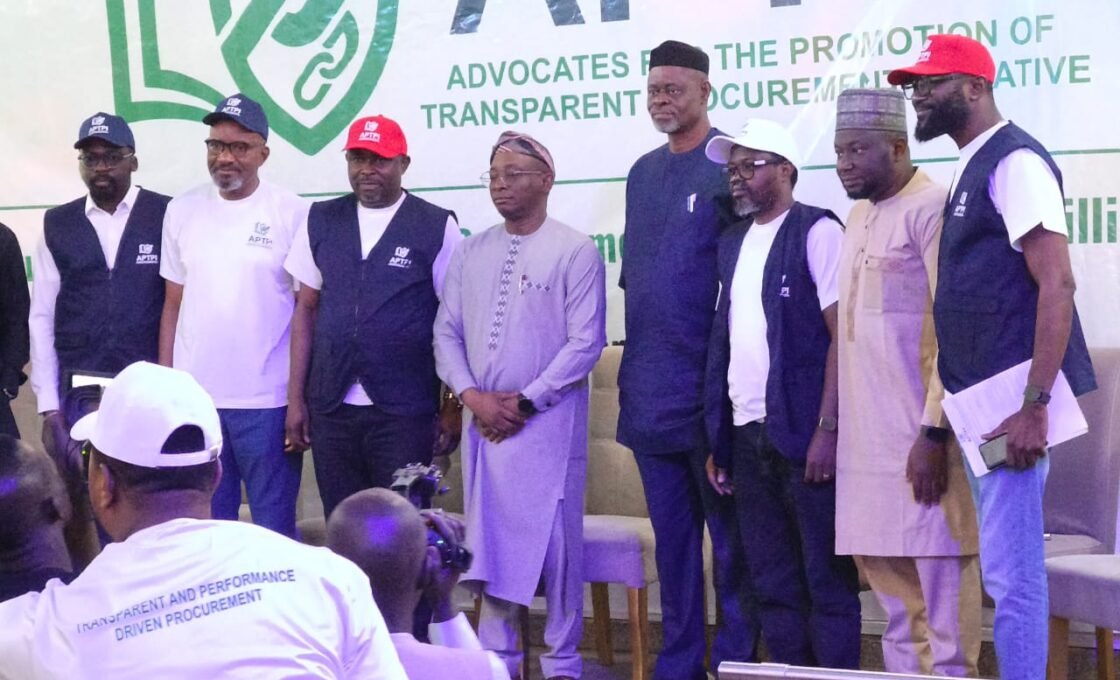


The Bureau of Public Procurement, BPP, has saved the Federal Government about N1.5 trillion in 17 months through tighter procurement controls, improved benchmarking and reforms aimed at curbing waste.
The Director-General of the Bureau, Dr. Adebowale Adedokun, disclosed this on Wednesday in Abuja at the launch of the Advocates for the Promotion of Transparent Procurement Initiatives, APTPI.
The event was held under the theme, “Promoting Transparency, Value for Money and Accountability in Public Procurement.”
Giving a breakdown, Adedokun said the bureau saved N1.1 trillion in 11 months of 2025, while another N400 billion was saved in the first six months of 2026.
He noted that the reforms are part of efforts to ensure transparency, accountability and value for money in public procurement across Ministries, Departments and Agencies.
According to him, the latest figures underscored the impact of procurement reforms, noting that the N1.1 trillion saved in 2025 represented a substantial portion of the approximately N2.2 trillion saved through government procurement between 2007 and 2025.
He added: “We needed to adjust to our policies, we needed to adjust to what we’re doing. In 11 months, take N1.1 trillion out of the N2.2 trillion in 20 years. That’s significant. Just trying to reform, only in 11 months of 2025, we saved N1.1 trillion. In just 11 months.
“Between just in the first half of this year, if I’m correct, already I’ve clocked close to N400 billion in what would have been lost in the first half of the year up to June, close to N400 billion as a result of benchmarking and putting the right stoppers in naira, in dollars and in euros.
He also attributed the savings to the increasing digitalisation of procurement, disclosing that the BPP no longer accepts manually submitted documents.
“Already today, nobody sends documents to BPP manually anymore. We won’t accept it. So this can be anywhere now and submit virtually. So this is reducing the opportunity for people to manipulate the processes as we continue.”
He stated that the electronic process would reduce opportunities for manipulation and make procurement procedures more transparent and easier to monitor.
He said the bureau was also discouraging excessive reliance on selective tendering, urging government agencies to advertise contracts where appropriate rather than seek approval for selective procurement.
Adedokun acknowledged that the reforms would take time to fully transform the procurement system, stressing the need for sustained institutional changes and greater compliance by government agencies.
He also implored civil society organisations to expand their monitoring activities to state and local governments, arguing that a significant proportion of public funds was controlled at the sub-national level.
“The BPP is also working towards a National Procurement Strategy designed to establish minimum procurement standards across the federal, state and local governments,” he said.
Adedokun said the framework would be particularly important for projects financed through loans guaranteed by the Federal Government, including borrowing from international financial institutions.
He argued that such projects should be subjected to appropriate procurement standards to ensure that borrowed funds were properly utilised.
The BPP chief further called for stronger partnerships with civil society, professional organisations and international development partners to sustain procurement reforms.
He disclosed that the bureau had successfully conducted an international competitive bidding exercise entirely online, attracting bidders from 40 countries without requiring them to travel to Nigeria.
Earlier, APTPI sought stronger oversight of procurement under the N68.3 trillion 2026 budget, particularly given the approximately N32.2 trillion allocated to capital expenditure.
The Secretary to the APTPI Board, Ayorinde Dola-Johnson, said the central concern should not only be the amount government spends but the value Nigerians receive from such expenditure.
He warned that weaknesses in procurement could result in inflated costs, abandoned projects, poor-quality infrastructure, unnecessary contract variations and other forms of waste.
Johnson said APTPI was established to promote what he described as “constructive accountability”, bringing together government institutions, citizens, procurement professionals, researchers and civil society.
He said the organisation would focus on independent monitoring, policy advocacy, citizen participation, open contracting and procurement risk analysis rather than simply criticising government agencies.
He called for closer cooperation among the BPP, National Assembly, anti-corruption agencies, Auditor-General, development partners, private sector and civil society to strengthen public procurement.
He said APTPI would remain non-partisan and evidence-driven, with its success measured by the procurement problems it helped prevent and the improvements it contributed to in public spending.