




The Accountant-General of the Federation, Shamseldeen Ogunjimi, has told the House of Representatives that the alleged fake Presidential Foreign Investment Promotion Council, PFIPC, sought a ₦27.4 billion establishment grant after using a forged State House memo to secure government recognition.
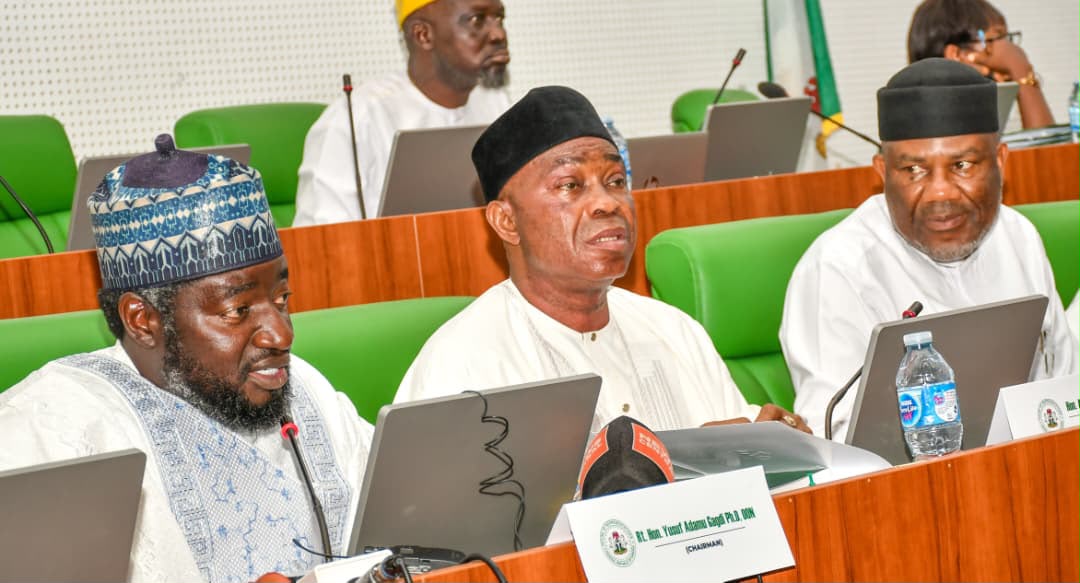
Ogunjimi made the disclosure on Monday while appearing before the House Ad Hoc Committee investigating the establishment and operations of the controversial body.
He said his office processed some administrative requests from the organisation in line with procedure, but did not release any public funds.
According to the AGF, the Office of the Accountant-General first received correspondence in November 2024.
“A letter dated November 7, 2024, bearing a State House reference number, requested the creation of an administrative code for the Presidential Economic Advisory Council to facilitate budgeting, accounting and financial reporting,” he said.
He said the request appeared legitimate and was processed accordingly. The administrative code was created and approval was communicated to the State House, with a copy forwarded to the Auditor-General for the Federation.
More Requests, No Money
Following the code approval, Ogunjimi said the treasury received additional requests from the purported council. These included applications for self-accounting status, deployment of personnel, opening of Treasury Single Account and domiciliary accounts, and requests for funding.
“Despite processing some of the administrative requests, no funds were released under salaries, overhead, capital, or any form of intervention or special allocation to the council,” he told lawmakers.
He further disclosed that the organisation requested an establishment grant of ₦27.4 billion, but the application was rejected because there was no budgetary provision to support the request.
He also told the committee that although the Central Bank of Nigeria (CBN) opened two domiciliary accounts for the organisation to receive inflows, the accounts never became operational because the necessary regulatory conditions for their activation were not fulfilled.
The lawmakers questioned how the purported agency successfully navigated several layers of government bureaucracy without raising suspicion.
Responding, Ogunjimi revealed that the correspondence upon which his office acted was later discovered to be fraudulent.
Hre said: “The letter that was received by the treasury was respectfully addressed as coming from the State House.That letter was never issued by the State House.”
The lawmakers also sought explanations on how civil servants originally deployed to the Office of the Chief Economic Adviser to the President eventually became attached to the purported council without the knowledge of the Office of the Accountant-General.
Ogunjimi explained that two treasury officers posted to the Office of the Chief Economic Adviser in 2010 and 2013 remained there after the office was allegedly taken over by the new council, but no formal communication was sent to notify his office of any institutional change.
“It was never assumed or written to us that those two officers were being taken over.
“The staff also never reported to the office to say that another council had taken over the office and the name had changed.
“As far as I was concerned, we were dealing with a new agency, not the Office of the Chief Economic Adviser,” he said.
He further disclosed that when the purported council later requested the deployment of five additional officers, the treasury approved only three after determining that the size of the organisation did not justify the number requested.
“It was when all this matter came to light that I got to know that two of our staff were actually working or being absorbed by the agency.
“We never knew. We believed, based on the records available to us, that those officers were still with the Office of the Chief Economic Adviser,” he added.
The House committee is investigating allegations that forged presidential approvals, counterfeit State House correspondence, fake Acts of the National Assembly and other falsified government documents were used to establish and operate both the Presidential Foreign Investment Promotion Council and the Presidential Economic Advisory Council.