




Nigeria must change how it measures success in the electricity sector, the Minister of Power, Chief Joseph Tegbe, has said
He spoke at the National Stakeholders Engagement Workshop hosted by the Rural Electrification Agency (REA) in Abuja, where he also said counting megawatts, power lines, or household connections is not enough.
He maintained that the true measure of success is what electricity enables.
He implored stakeholders to ask new questions: Can a farmer irrigate more land? Can a rice mill process more? Can a cold room keep fish fresh? Can a cassava processor reduce waste? Can young people start agro-processing businesses in their communities?
Electricity only transforms an economy when it powers productivity, the Minister affirmed, stressing that that is why the government’s Productive Use of Energy agenda is important.
He explained that it connects energy to agriculture, industry, jobs, food security, climate resilience and rural development.
During the event hosted by the Rural Electrification Agency in partnership with the Economic Community of West African States and the Global Off-Grid Lighting Association (GOGLA) under the theme, “Unlocking and Scaling the Sustainable Adoption of Productive Use of Energy Technologies Across Nigeria: Harmonising Financing Opportunities and Policy Frameworks”, the minister emphasized that the current administration is shifting the focus of electrification from mere infrastructure to tangible economic empowerment.
He stated:”Our approach to energy diversification under the administration of President Bola Ahmed Tinubu reflects a simple but profound truth: rural electrification is no longer about extending wires into communities. It is about extending opportunity. It is about creating prosperity. It is about enabling enterprise. It is about transforming electricity from a social service into an economic catalyst.”
He lamented the high rate of post-harvest losses driven by energy deficits.
He added: “Nigeria possesses one of Africa’s largest agricultural economies. Our farmers are industrious; our land is fertile; and our domestic market is vast. Yet far too much agricultural value is still lost between harvest and market due to challenges that transcend agricultural into energy challenges.”
“We lose crops because there is insufficient cold storage. We lose income because processing capacity remains inadequate. We lose jobs because raw produce leaves our farms without value addition. We lose competitiveness because production costs remain unnecessarily high. We lose opportunities because energy-intensive productive equipment remains beyond the reach of many rural enterprises.”
He noted that the PUE agenda seeks to solve these exact challenges, providing a compelling business case where energy-efficient equipment leads to lower operating costs, increased productivity, and higher incomes for farmers.
Speaking, the Managing Director of the Rural Electrification Agency (REA), Dr. Abba Aliyu, called for improved synergy and collaboration between the agency, other Ministries, Departments, and Agencies (MDAs), and development partners.
He noted that collaboration at the design stage, rather than during deployment, will optimize the use of funds and help develop replicable systems.
“Projects are managed by a project team. They are scoped, budgeted, delivered, and closed. Nigeria has had many such projects in the energy and agriculture space, some successful, some not, and the communities they were designed to serve have lived with the results of both. What we are trying to build today is something different: a system.”
“Systems do not end when the funding cycle closes. They endure because the institutions that make them work have authority, political backing, and a coordination mechanism that holds them together over time. That is what this Alignment is designed to be, and that is what this workshop series is designed to produce,” Aliyu said.
He called for sustained support and improved electricity connections, noting that small-scale agriculture and Micro, Small, and Medium Enterprises (MSMEs) are not the marginal story of Nigeria’s food system, but the main story.
“Our job, the job of every institution in this room, is to build the system that takes their individual, fragmented output and connects it into something the nation can count on.”
“This workshop is designed to bring every institution, every agency, and every private sector partner in this room together not to present to each other, but to look honestly at our collective strengths, agree on who is best placed to do what, and allocate roles with a single purpose of sustained impact the kind that continues when the funding ends because the system we build together is strong enough to carry it,” he said.
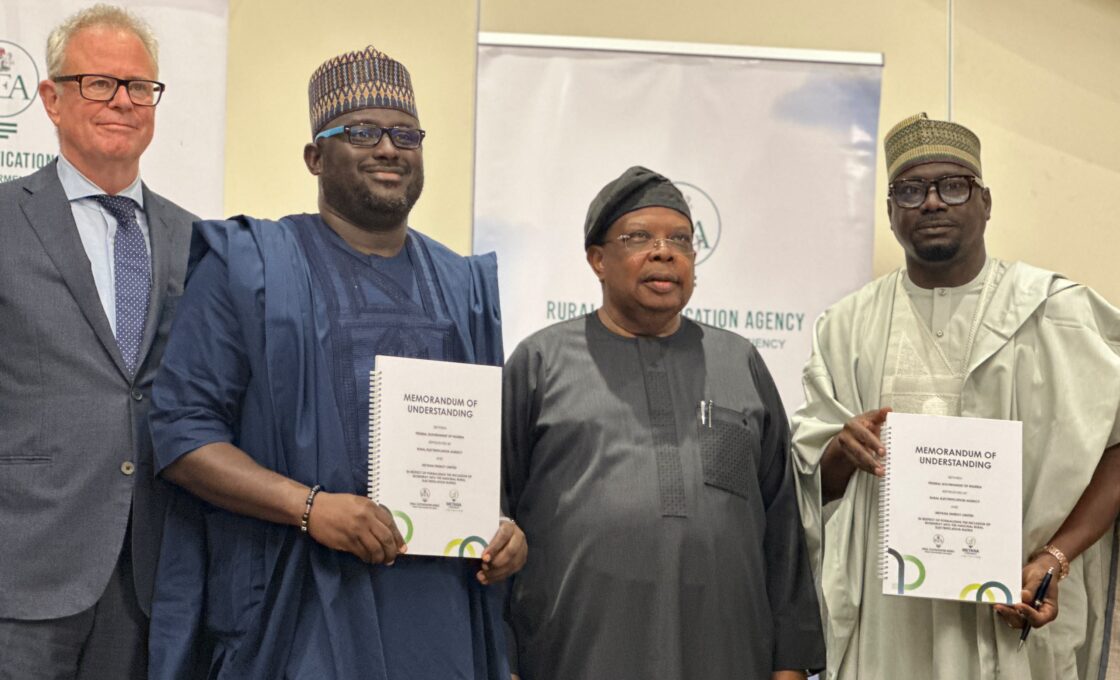
He also signed strategic Memoranda of Understanding (MoUs) with seven organizations across various sectors designed to bridge the gap between energy access and productive economic output.
The signatories included the Agricultural Agenda Nigeria Initiative (AANI), Federal Housing Authority Energy Distribution Limited (FHAEDL), Meyana Energy Ltd, MOPO Nigeria Ltd, NG Electometer Ltd, Ubuntu Energy, and the Youth Sustainable Development Network LTD/GTE.
The Senior Advisor and Coordinator for the Economic Community of West African States (ECOWAS) Regional Off-Grid Electricity Access Project (ROGEAP), Elhadji Sylla expressed appreciation to the Federal Government for its continued collaboration in boosting regional electrification.
He noted that electricity access must move beyond mere household use to active economic application.
“Electricity is strategic in reducing poverty, but renewable energy, particularly solar energy, will serve as a key catalyst for accelerating universal access.”
“Through the Regional Off-Grid Electricity Access Project, we aim to establish and leverage the off-grid solar market. We believe that energy must be put to work,” Sylla added.