


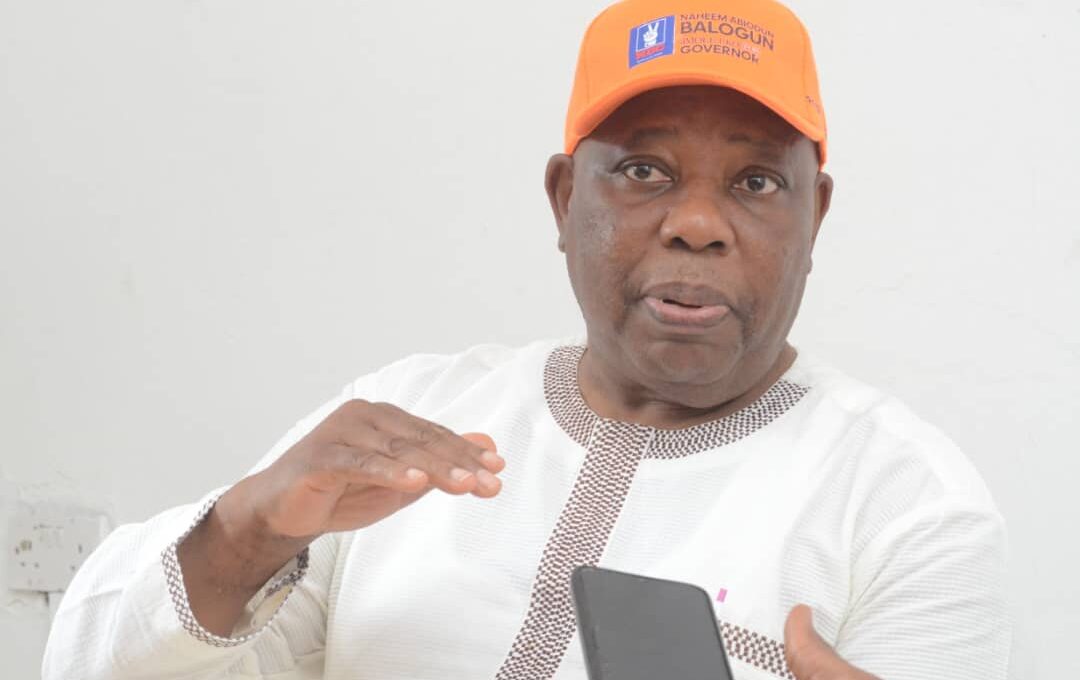


The Nigeria Democratic Congress, NDC, will drive inclusive development in Lagos if it wins the 2027 governorship election.
Besides, its agenda will focus on unity, entrepreneurship, industrialisation, job creation, infrastructure, healthcare, sustainable energy, business growth, quality education, and security.
The NDC governorship candidate in Lagos, Naheem Balogun, said he is committed to raising the living standards of residents through targeted socio-economic programmes.
According to him, he left his comfort zone in the United States to enter politics and serve Lagosians still living in poverty despite the state’s huge resources.
“We have enormous resources in Lagos, yet many people are still at the edge of poverty,” he said. “I came into politics to bring the greatest good to the greatest number of people.”
He added that he will soon unveil his manifesto and development blueprint aimed at making Lagos the first or second largest economy in Africa.
He lamented that the current pace of development does not match the state’s potential.
“When I was growing up, I spent most of my adult life in Nigeria. I know how Lagos used to be. But it’s very different from what we have now,” he said.
The NDC said its reforms will be built on policies that create jobs, improve infrastructure, and strengthen security across the state.
He said the state has declined under 26 years of the same political leadership and needs a new direction.
“If you call ten people and interview them, I would say probably eight out of that ten will tell you that Lagos is not the way it used to be. Especially the poverty level, the unemployment, the traffic, the trash, all the potholes,” he said.
Balogun, who contested several elections under the Peoples Democratic Party since 2015, said he has remained in the race because of his concern for the people.
“Though every time I always come close to winning the election. But that’s not the issue. The issue right now is that the way Lagos is right now is not okay,” he said.
He lamented the disappearance of the middle class, which he said once formed a bridge between the poor and the elite.
“Lagos used to have three tiers. You have the middle class, you have the poor, you have the elite. Now, we don’t have that in Nigeria anymore. You’re either poor or you’re rich. We don’t have the middle class anymore,” he said.
Balogun argued that Lagos should have moved beyond its current challenges. He cited the 2025 budget of about N4.4 trillion and the state’s Internally Generated Revenue as evidence.
“The government is taxing the people in the state, but they are not getting anything back in terms of social amenities. I look at it, the amount of resources coming to the state, the IGR and the budgets. This year, Lagos budgeted I believe around N4.4 trillion. Out of that N4.4 trillion, they budgeted less than 5% for education. That couldn’t be,” he said.
He said infrastructure is lacking across the state. Roads are bad, hospitals are in poor shape, and refuse is not regularly cleared.
To feel the pulse of the people, Balogun said he deliberately leaves his cars and uses public transport.
“Sometimes, I would travel from Surulere to Mushin. It’s not that I don’t have cars, I have three cars, but I would travel from Surulere to Mushin just to see how the people are suffering. The best way to gauge what the government is doing is when you go to the markets, go on public transport, talk to the people in the market, and you see how it is,” he said.
Balogun said the APC government has continued to claim that Lagos is doing well, but the reality on the ground tells a different story. He put youth unemployment at between 20% and 25%.
“This APC government has been telling us that Lagos is doing good. But the actual fact, if you look around and ask people, most people don’t believe that, because the poverty rate in the state is seen in the mass unemployment. The kids go to school, there’s no employment,” he said.
He believes he can do better, having contested twice for the State Assembly, twice for the House of Representatives, and also for the Senate.
“I know I can do better. These people have been in power for over 26 years, and instead of the state moving up, we’re going south. So I think I have a better plan of moving Lagos forward,” he said.
Balogun said community policing is key to reducing crime in a mega city like Lagos.
“For you to effectively deal with organised crime or criminal activities, you have to do community policing. Community policing is the best way to actually eradicate. You might not completely eradicate crimes, at least you slow it down to minimum, maybe 5%, 10%,” he said.
“If you have police on the beat that know his or her area, it’s difficult for somebody from outside to come into any neighbourhood without any help from that neighbourhood to come and steal something from it. Somebody from that neighbourhood will know everybody within that area.”