


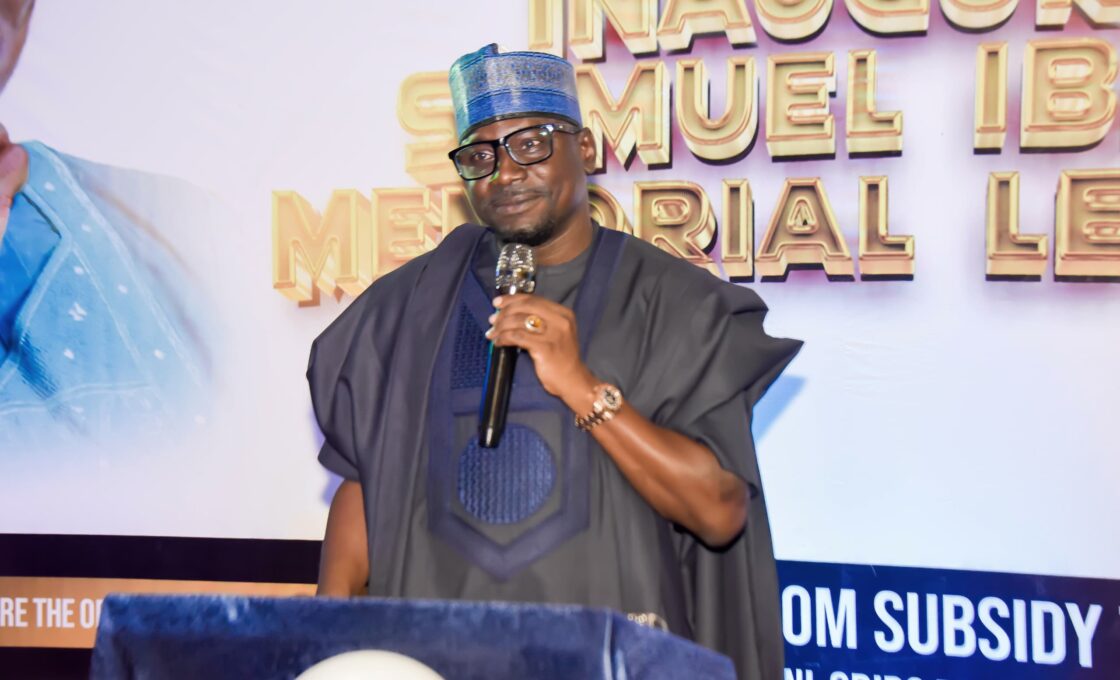


The real transformation of Nigeria’s power sector will come from moving public funds away from subsidizing inefficiencies and channeling them into private investment, the Managing Director of the Rural Electrification Agency, REA, Dr.Abba Aliyu, has said.
Aliyu, who said this in a keynote on “From Subsidy to Solvency: Can Mini-Grids De-risk Nigeria’s Power Sector?”, Dr Abba challenged the traditional perception of decentralized energy in Nigeria.
Mini grids are no longer just household rural electrification projects, he said, adding that they now represent a highly viable commercial model for electricity delivery capable of de-risking Nigeria’s power sector and attracting massive private capital.
“Too often, mini-grids are viewed only as rural electrification projects,” the REA MD stated.
“In reality, they represent a new commercial model for electricity delivery. They are built around verified demand, use digital revenue collection, cut down losses, and give investors more certainty over cash flows. In other words, they reduce investment risk,” he explained.
According to him, this model makes it easier to attract private capital into the sector and deliver reliable power faster, especially to underserved communities.
He said while Nigeria’s electricity challenges are frequently diagnosed as an infrastructure deficit, they are equally a financial challenge.
He noted that REA is pivoting toward building an electricity market that global and local investors can trust.
“The future of public financing should not be to subsidise inefficiency but to de-risk investment. Public resources should catalyse private capital, not replace it,” he said.
To amplify the commercial scalability of this model, the MD shared the REA’s impressive track record hitherto.
Under his leadership, the agency has successfully deployed nearly 200 isolated mini-grids and delivered over 164,000 mini-grid connections across the country.
In addition to this, approximately 1.4 million households and businesses have been connected via stand-alone solar systems, an achievement that has crystallised more than $1.2 billion in private-sector financing commitments.
He also disclosed that the REA is now expanding into urban and peri-urban networks by partnering with mainstream electricity Distribution Companies (DisCos) to develop 48 interconnected mini-grids.
This ambitious initiative, he said, will inject approximately 288 MW of clean generation and battery storage directly into existing distribution networks.
“This demonstrates that decentralised energy is not competing with the grid, it is strengthening it,” Abba explained.
“The question before our generation is how government support can create a market that ultimately requires less government support. That is the transition from subsidy to solvency,” he said.
He also envisioned a future where communities are transformed into centers of production rather than mere consumption, all powered by a resilient, investment-driven market that future generations can inherit with confidence.
In her welcome remarks, Miss Shindara Ibiyemi, Managing Director of NewsDirect TV expressed profound gratitude to the dignitaries, family, and friends gathered to honor her late father, Prince (Dr.) Samuel Ibiyemi, three years after his passing.
She shared how her transition from a shy individual to confidently leading a subsidiary of the NewsDirect Media Group stands as a direct testament to her father’s mentorship.
“He never left anyone he came across the same; under his guidance and influence, you simply became a better version of yourself,” she said.
She noted that it was entirely fitting for the inaugural lecture to focus on the energy sector, given her father’s distinguished career as a journalist who was deeply passionate about the industry.
The memorial lecture also served as the official launch of the Samuel Folorunsho Ibiyemi Foundation.
According to her, the foundation aims to institutionalize the legendary generosity of the late editor, popularly known as Editor Gburugburu, by creating a sustainable structure to uplift more lives.