


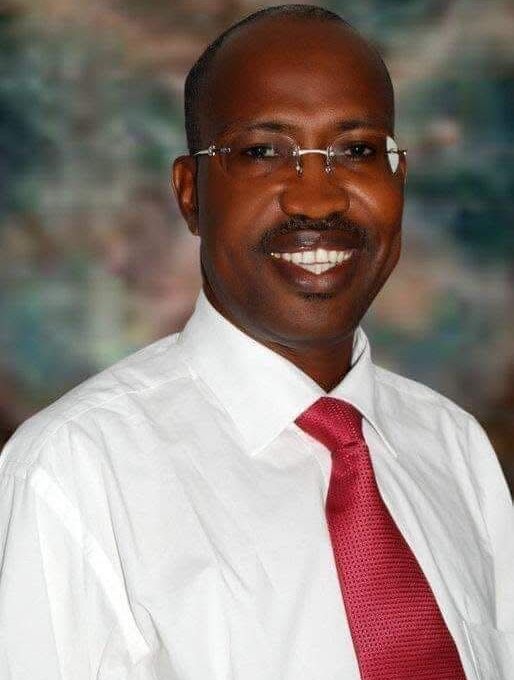


By Zira Maigadi (Wali Michika, Pekei Ka Michika)
The Nigerian 1999 constitution as amended provided for three tiers of government viz: Federal Government of Nigeria, States Government including FCT and the Local Government Councils. The drafters of the constitution had in mind the need to diversify development and to bring government presence closer to the grass root.
Before the advent of the 1999 constitution, Local Government Councils have been in existence but in different form. Prior to independence, two tiers of government were in place, Central Government and Regional Government with each region having its own government (executive) and legislature.
Native Authority Administration was also in place but without constitutional provision. It was more or less customary/colonial administration.
After independence, this system continued but this time in the form of Federal Government, States Government and Local Government.In 1976, there was a significant reform in the local government system.
Although the structure of government remained the same, local government council administration was strengthened with the introduction of elected chairman (executive) and councilors (legislative arm).
Departments such as finance, works/public utilities, health, education and sanitations were introduced to strengthen the local government administration.
As per the local government reforms, the local government became self-accounting with federation account allocations (FAAC) paid directly to the local governments in addition to other sources local revenue.
From this period the local government council functioned just like a replica of what is obtainable at the state level. It is worthy to note that physical development was undertaken at every nook and corners of the country as various local government engaged in the construction of well, drainages, rural roads, education, primary health care etc.
The tiers of government and the local government system remained the same until the enactment of the 1999 constitution. Section 7 of the constitution makes provision as to the creation, existence structure, composition, finance and functions of a democratically elected local government councils.
The fourth schedule section 2 provides for the functions of the local government councils to include (i) provision and maintenance of primary, adult and vocational education, (ii) development of agriculture and natural resources other than exploitation of mineral resources, (iii)provision and maintenance of health services and such other functions as may be conferred on a local government council by the house of assembly.
However, the constitution provided concurrent and similar provisions conferring authority on both the national assembly and the states houses of assembly. Section 7 (vi) (a) provides that the national assembly shall make provisions for statutory allocations of public revenue to local councils in the federation. In similar vein section 7 (vi) (b) provides that the House of Assembly of a state shall make provisions for statutory allocation of public revenue to local government councils within a state.
These two provisions have rendered local government councils ineffective as various state house of assembly continue to make various provisions mostly deductions from the local government councils federation accounts allocations.
The constitution provided specific functions of the local government councils for which funds are allocated, but these funds are diverted under spurious enactments by the state houses of assembly.
The State House of Assembly is not required to legislate on the already legislated funds by the national assembly. The drafters of the 1999 constitutions no doubt had in mind the states internally generated revenue over which the state houses of assembly have the power to legislate and make laws on how to administer same.
This is the thinking of the supreme court of Nigeria when it delivered judgement mandating the direct remittances of local government funds to the local government council accounts as it used to be before the 1999 constitution.
As a result of these ambiguities and reckless enactment of laws authorizing deductions from the local government council revenue by the various State Houses of Assembly in conjunction with the Executive Branch, the local government councils faced dearth of revenue to execute its primary functions.
As a matter of fact, most local government councils could not pay its staff salary not to talk of any meaningful development. The state government faced with severe criticism and coupled with the supreme court judgement increased its allocation to the local government areas and offset the backlog of salaries.
In most states it is alleged that joint State-Local Government Account (JAC) is operated, into which federation account allocations due to local government councils are paid and from which disbursements are made based on another revenue allocation formula by the state.
It is further alleged that in such revenue allocation meetings, the local government council chairmen and treasurers are not privy to what was received from FAAC in respect of their council areas. An amount is declared as available for sharing after various deductions that are mostly imposed.
In most instances the declared remaining balances can hardly pay salaries thus depriving the local government of the intended rural development. In some states substantial amount is deducted for capital expenditure and security vote.
The state assumes ownership of such projects even when the funding is from the JAC. Meanwhile, most states do not share its internally generated revenue with the local government councils.
Between 2019 and 2025, the federal accounts allocation committee distributed the sum of seventy nine trillion, seven hundred and fifty five billion, two hundred and forty one million, one hundred and ninety three thousand, three hundred and ninety one naira twenty kobo (=N=79,755,241,193,391.20) only (Office of the Accountant General web site- https://oagf.gov.ng/publications/faac-report/?filter_year_tags=2025).
The breakdown is as follows: Federal Government received =N=29,540,114,337,414.80 representing 37.04%, States Government =N=31,718,709,909,298.90 or 39.77% and Local Government Councils =N=18,496,416,946,677.50 or 23.19%.
With this colossal amounts shared among the three tiers of governments, one would expect an even development across Nigeria. The state government combined with the local government councils took about 62.96% which ordinarily should be enough to transform the states and the Local Government Councils.
It has been observed that FAAC recorded an upward increase over the years with a surprising corresponding decrease in the provision of basic life facilities at the states and local council areas.
For example, in 2019, the states and local council areas received two trillion, two hundred and fifteen billion, five hundred and fifty three million, eighty thousand, two hundred and fifty six naira eighty two kobo only (=N= 2,215,553,080,256.82) and one trillion, six hundred and sixty nine billion, seven hundred and eighty nine million, seven hundred and forty seven thousand, nine hundred and ninety four naira, sixty eight kobo only (=N=1,669,789,747,994.68) respectively and by 2025 they received thirty one trillion, seven hundred and eighteen billion, seven hundred and nine million, nine hundred and nine thousand, two hundred and ninety eight naira ninety kobo only (=N= 31,718,709,909,298.90) and eighteen trillion, four hundred and fourty six billion, four hundred and sixteen million, nine hundred and fourty six thousand, six hundred and seventy seven naira fifty kobo only (=N= 18,496,416,946,677.50) which represent a growth rate of 1,331.64% and 1,007.71% respectively.
While we take cognizance of inflation over the years, the inflation rate could not wipe out the astronomical growth recorded by FAAC revenue shared to the three tiers of government.
To elucidate the underutilization of the FAAC revenue, FAAC allocations to local government councils in Abia, Adamawa, Borno, Taraba and Kano states are reproduced below.
Borno State
The state, inflow from FAAC allocations was never interrupted by the activities of Bako Haram even when most of the Borno northern local government councils have been without any semblance of governance due to the devastating effects of terrorism.
Local government council areas collected a total sum of six hundred and twenty billion, one hundred and twenty-three million, seven hundred and ninety-four thousand, two hundred and sixty naira ninety-seven kobo only (=620,123,794, 260.97) between 2017 and 2025.
Figures from the National Bureau of Statistics indicated that the state has a very low literacy rate of 23.63%, fertility rate of 4.25% and accessibility to clean water is 32.30%. However, the FAAC funds were being received by the state government and the local government councils.
The question is where were these funds applied? Did the affected Local Councils used the funds in developing the IDP camps?
Taraba State
Taraba state has witnessed its own share of insecurity even though not up to the magnitude of Borno state. The LGCs also collected the sum of four hundred and fifteen billion, one hundred and eighty eight million, four hundred and fifty two thousand, one hundred and ninety naira fourty three kobo only (=N=415,188,452,190.43) within the period under review.
Regrettably, Taraba is reported to be low in infrastructural development. Statistics from the National Bureau of statistics indicated that the state recorded fertility rate of 4.49%, accessibility to clean water is as low as 23.62% but has a high literacy rate of 72%.
How were these funds applied? Is it in tandem with the provisions of the constitution?
Adamawa State
Adamawa state within the period had pockets of attacks by the bako haram and other bandits particularly in the northern zone.
The state local government councils collected the sum of five hundred and eleven billion, fouty four million, four hundred and seventy-seven thousand, one hundred and thirty-nine naira seventy kobo only (=511,044, 477,139.70) within the period of review.
Adamawa State witnessed a better level of development when compared to its neighboring states.
However, there is infrastructural deficit in the local councils in spite of the huge resources from the FAAC. Data from National Bureau of statistics revealed that fertility rate in the state is 3.28%, accessibility to clean water is 37.68%, meaning majority of the people do not have access to clean drinking water.
The literacy rate is 55.82%, which is above the national average. This raises the question: Have resources been applied judiciously for the benefit of rural areas?
Kano State
By far Kano State Local Government Council received the highest allocations from the FAAC. They received over one trillion, one hundred and fourty five billion, ninety-two million, eight hundred and seventeen thousand, six hundred and fourty eight naira, fourty seven kobo only (=N=1,145,092,817,648.47) within a period of 8 years.
Does this amount reflect or translate to meaningful development within the local government areas? Were the Local Councils accountable? The state has a fertility rate of 3.88%, accessibility to clean water is 65.28% while illiteracy is 38.08% (National Bureau of statistics portal)
Abia State
During the corresponding period, Abia state Local Government Councils received the total sum of six hundred and six eight billion, six hundred and twenty-four million, five hundred and seventy two thousand, three hundred and sixty one naira sixty eight kobo only (=N=668,624, 572,361.68).
Data from the National Bureau of Statistics showed that the state has fertility rate of 6.53%, literacy rate of 94.24% and accessibility to clean water is 87.85%. These figures are no doubt better than all the northern states.
Although the state has impressive statistics, it still can improve better particularly on its health provision.
Table 5 Abia state Local Government Councils FAAC
The Operations Of The JAC (Joint Accounts Committee)
In most states, a JAC account is opened with one of the commercial banks into which all the FAAC allocation in favour of local government councils in the state is paid.
Another allocation Committee is established usually headed by the Commissioner for Local Government and Chieftaincy Affairs with the Permanent Secretary, Director of Finance and the Local Government Council Chairmen as members.
In most cases the chairmen are not privy to the total amount in their favour from the federation account. The question is can a State Committee override the FAAC allocations? Of course not, but most states hide under the provisions of S 7 vi (b) which in my opinion is provided in respect of internally generated revenue.
It is in line with this reasoning that the Supreme Court of Nigeria in a landmark judgement on July 11, 2024 granted full financial autonomy to all the 774 local government councils nationwide. The Court ordered the FAAC to pay directly to the Local Government councils bypassing the States JAC accounts.
The Court further declared as unconstitutional the use of the State-Local Government joint accounts.
However, and sadly, the supreme Court judgement is not yet fully implemented due to political exigency.
Way Forward
In order to comply with the extant provisions of the Constitutions, enhance accountability, transparency and service delivery at the grassroots and covering essential services such as primary education, local and feeder roads, healthcare services and improvement of life and the local economy, the need to revisit the operations of the state- local government joint account cannot to be over emphasized.
Accordingly, the following are recommended:
Immediate implementation of the supreme Court judgement of July 11, 2024 to the latter.
The government must monster the political will to enforce this judgement if not for the rule of law, it will assist in reigniting the process of even and rural development in the country.
Abolition Of The State-Local Government Joint Accounts In Nigeria
All Local government council should be directed to revert to the status quo prior to 1999. They are to recommence operating their accounts with the commercial banks into which their respective statutory allocation is paid.
The JAC account opened by the state government are to automatically close or rendered inactive.
Empowerment, training and retraining of local government audit department at the state level that will provide a real time audit functions on the local government finances with their report to the state house of assembly and the local government legislative arm.
The office of the Local Government Auditor General should be encouraged to perform his statutory functions of auditing the finances of the local government council.
This function if carried out effectively will serve as a deterrent to would be erring officials that may engage in funds diversion/mismanagement.
Amendment of the constitution in respect to S7 vi (b) to limit it to internally generated revenue of a state. This section should either be amended or abrogated completely as it is no longer relevant.
The provisions contained in S120 of the constitution suffices on the powers of the state assembly to legislate on state consolidated revenue via appropriation act.
Empowering the Local Government Council legislative arm to scrutinize the Local Councils finances and take remedial actions where needed.
The state Houses of Assembly should legislate on the powers of the local government legislative council in line with such provisions and functions of the state house of assembly.
The legislative arm of the local government councils should be seen to be involved in appropriation and oversight function on all local government council funds.
Citizens should take interest in asking questions regarding the revenue and its application in line with the Freedom of Information Act. This will compel the council official and the state government to act in the best interest of the council and ensuring accountability and transparency.
Involving the EFCC in ascertaining the utilization of FAAC allocation to the local government councils as it was done in 2023/4.
The zonal offices of the EFCC could be charged with this responsibility. This would no doubt brings about sanity, accountability and accelerate development.