




By Votapwa Felix
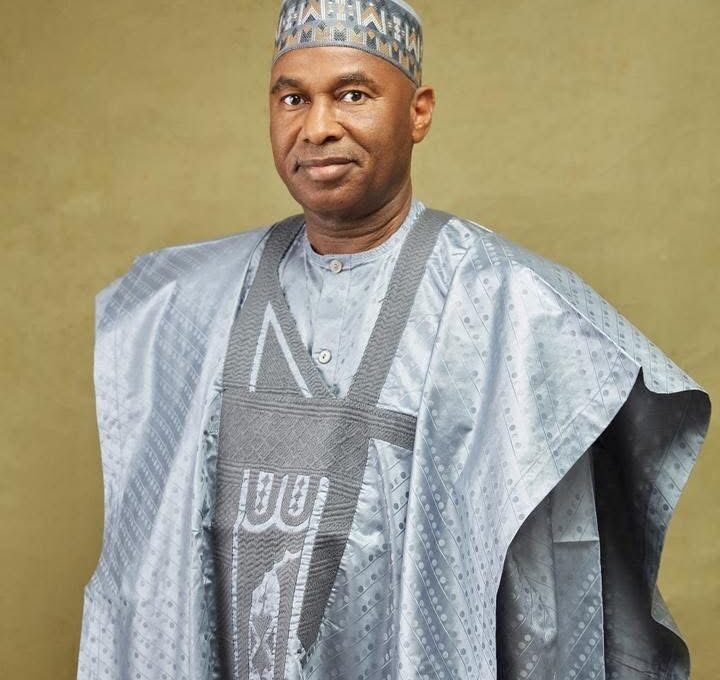
On Thursday, April 16, 2026, in Yola, the capital of Adamawa State, Ahmed Galadima Aminu formally declared his intention to run for the office of governor of Adamawa State on the platform of the All Progressives Congress (APC).
That declaration was not just a routine political announcement; it marked the beginning of a serious and demanding journey. It is a journey that requires extensive consultation, unwavering commitment, grassroots endorsement, stakeholder consensus, and a mature spirit of give and take.
In his speech, Galadima made two critical and far reaching statements. First, he pledged to continue and sustain the unprecedented development brought to Adamawa State by Governor Ahmadu Umaru Fintiri. Second, he assured the people of Adamawa that he would not disappoint them.
These are not mere political promises; they are weighty commitments that speak directly to continuity, trust, and accountability, three elements that will define the credibility of any aspiring leader in the current political climate.
Galadima’s journey will, without doubt, be both smooth and challenging at the same time. This duality is characteristic of Adamawa politics, where ambition must be matched with resilience, and popularity must be tested through structure, alliances, and public trust.
Political success in the state is never handed over; it is negotiated, built, and earned over time.
A key factor in this journey is the acceptance and support of the masses. In this regard, Galadima has already demonstrated an encouraging start. Many observers did not anticipate the size and enthusiasm of the crowd that received him and escorted him to his campaign office for his official declaration. That moment was more than symbolic. It was an early indication of grassroots connection and public goodwill.
However, beyond the optics of crowd mobilisation lies a deeper narrative that many, especially some younger politicians, may not fully appreciate. Tijjani is widely known as a man who does not unnecessarily flaunt his achievements. His impact has often been quiet but far reaching.
Across Adamawa State and the wider northern region, numerous young people have benefited from opportunities linked to his influence, including PTDF scholarships, academic training, professional development programmes, and access to contracts and economic opportunities.
These interventions have contributed to human capital development and economic empowerment in ways that are not always visible in the public domain but are deeply felt by beneficiaries.
In my own zone, the Numan Federation, I can confidently point to several individuals who have directly benefited from such opportunities. These are real people with real stories, evidence of a track record that goes beyond rhetoric.
This kind of background is significant because leadership is not only about promises; it is also about proven capacity to uplift others.
As a potential governor, I am confident that Tijjani Ahmed Galadima Aminu possesses the qualities to be a true son of Adamawa, one who will work with and for all, regardless of background, political leaning, or social status. Inclusive leadership will be crucial in a diverse state like Adamawa, where unity and balance must be carefully maintained.
It is also important to address the wave of unnecessary sentiment and speculation already emerging in some quarters. Such reactions often stem from a misunderstanding of how the political process works. No individual or group can impose a candidate on the people.
The political process is structured, competitive, and guided by established rules and stakeholder engagement. Aspirants must subject themselves to the process, build consensus, and earn legitimacy through acceptable channels.
On Galadima’s second major statement, his commitment to sustaining and continuing the projects and legacy of Governor Ahmadu Umaru Fintiri, there is no ambiguity about its importance.
Continuity in governance is not just desirable; it is essential. Adamawa State has witnessed significant strides in infrastructure, social services, and governance under the current administration. Abrupt policy reversals or abandonment of ongoing projects would not only stall progress but also waste valuable public resources.
Therefore, sustaining the Fintiri legacy is not merely a political talking point; it is a responsibility. It reflects an understanding that development is a continuum, and that every administration must build upon the foundations laid by its predecessor rather than dismantle them.
Ultimately, Tijjani Ahmed Galadima Aminu represents more than an individual ambition; he represents what can be described as an Adamawa project, an aspiration anchored in continuity, inclusiveness, and measurable impact.
His candidacy, if pursued with discipline and sincerity, has the potential to resonate with the good people of Adamawa State who seek stability, progress, and responsible leadership.
Votapwa Felix writes from Numan, Adamawa State.