


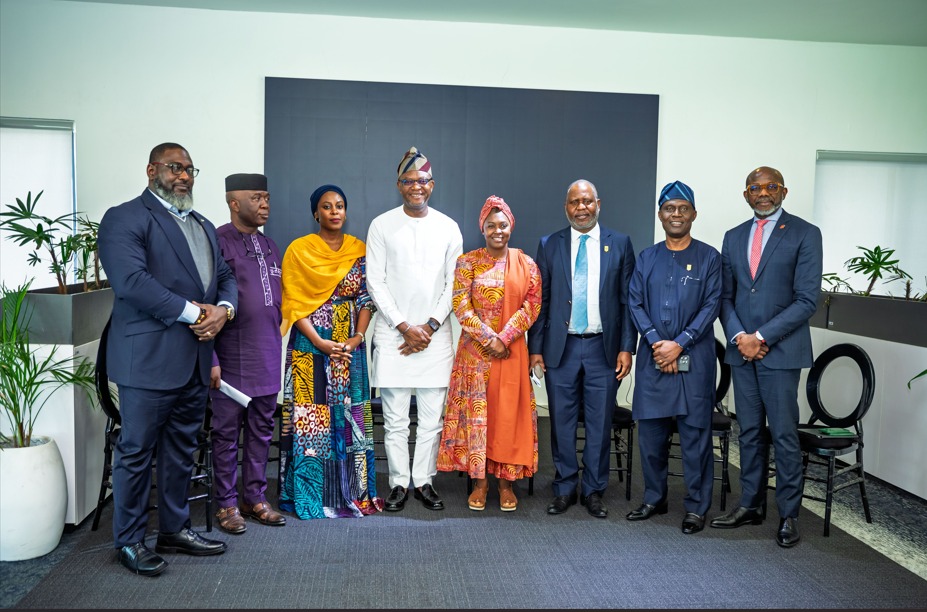


Dr. Tayo Aduloju, Chief Executive Officer of the Nigerian Economic Summit Group (NESG), has urged stakeholders to critically evaluate existing strategies and align efforts toward shifting Nigeria’s human capital trajectory in a sustainable and impactful way.
Aduloju spoke at a recent human capital development forum convened by NESG where he also called for a moment of reflection on the scale and urgency of national challenge.
“This moment requires us to consider our next steps carefully,” he said.
He emphasised the import of transparency, shared ownership, and cross-sector collaboration, noting that the insights presented demand a coordinated and deliberate response.
The forum featured a dialogue with business and development leaders.
NESG is the Coordinating Secretariat for the Private Sector Partnership Group (PSPG) under the National Human Capital Development (HCD) programme.
In response, the National Economic Council (NEC) launched the National HCD Programme to strengthen investment in people and improve key development outcomes.
The programme focuses on three core thematic areas; health, education and skills, and labour force participation and livelihoods, recognising that early and sustained investments, particularly in foundational stages of life, are essential to improving long-term productivity and national competitiveness, Ayanyinka Ayanlowo,Head, Strategic Communications and Advocacy, NESG, said in a statement on Tuesday.
Speaking,Ms. Rukaiya El-Rufai, Special Adviser to the President on National Economic Council (NEC) and Climate Change/National HCD Coordinator, underscored the urgency of strengthening Nigeria’s human capital as the foundation for economic transformation.
With Nigeria projected to become one of the world’s most populous countries by 2050, she emphasised that sustained investment in health, education, and skills is critical to improving productivity, reducing poverty, and achieving the country’s long-term economic ambitions.
She further explained that the HCD 2.0 framework represents a strategic refinement focused on measurable outcomes rather than outputs, prioritising health, education and skills, and livelihoods, while mainstreaming gender inclusion, climate resilience, and digital and financial inclusion.
She also highlighted strengthened governance structures under the NEC, the introduction of a dedicated HCD budget line in 2026, and plans for a national data dashboard to drive accountability.
Emphasising sustainability and scale, she called for stronger private sector collaboration through targeted programme accelerators such as Adopt-a-School, primary healthcare support, and digital learning initiatives.
Key takeaways from the dialogue with business and development leaders include financial inclusion is a critical enabler of human capital development, particularly for MSMEs, job creation, and economic participation.
Other issues from the dialogue include
“low public awareness of both development challenges and existing interventions;poor coordination across stakeholders results in fragmented and siloed efforts as well as
persistent data gaps, delayed data releases, and weak accountability systems limit effective planning and tracking.
“Nigeria’s challenge lies more in implementation and execution than in the absence of policies.The private sector’s core operations—not just Corporate Social Responsibility —are vital drivers of economic growth and human capital outcomes.
“MSMEs remain the largest source of employment and hold significant potential to reduce unemployment if properly supported.
“A shift from job-seeking to job creation, especially among youth, is necessary.Programmes like NYSC require restructuring to better support skills development and entrepreneurship.
“Nigerian youth are capable but constrained by limited opportunities and weak support systems.Monitoring and evaluation systems remain weak due to funding and capacity gaps,” among other issues.”
The statement further explained that the National Human Capital Development Programme is a strategic initiative designed to accelerate Nigeria’s economic growth by investing in its people.