


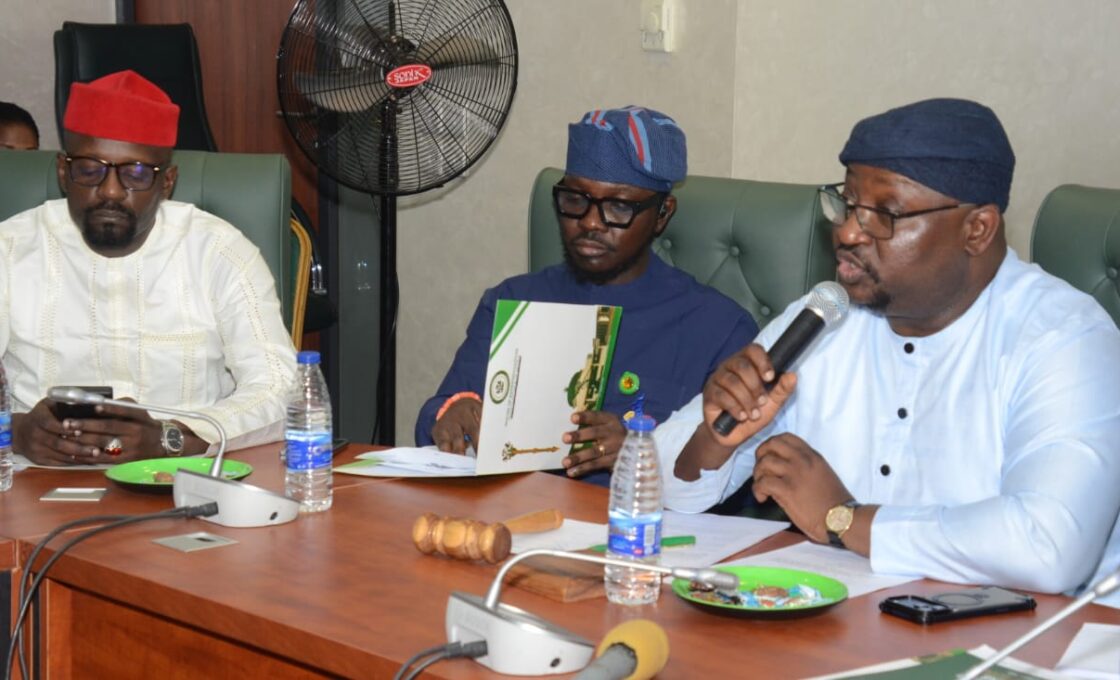


The House of Representatives has speed up its investigation into alleged export revenue gaps, querying the Nigeria Customs Service (NCS), Central Bank of Nigeria (CBN) and Nigerian Ports Authority (NPA) over inconsistencies and incomplete records in the pre-shipment inspection and crude oil export value chain.
The Chairman of the House Ad-hoc Committee on Investigation of Pre-Shipment Inspection of Exports and the Non-Remittance of Crude Oil Proceeds, Seyi Sowunmi, issued the query during the resumed investigative hearing on Wednesday.
Expressing dissatisfaction with the submissions made by the agencies, Sowunmi said the documents presented before the panel were neither comprehensive nor up to date.
He stressed that the committee required detailed records to properly determine whether revenue due to the federation had been fully accounted for.
He added:“We are not satisfied with the level of documentation before this committee,” he said. “We need complete and updated records to enable us ascertain where the gaps are and how to address them.”
He directed the agencies to submit fresh and exhaustive documentation and informed them that new dates would be communicated for their reappearance before the panel.
Speaking during the session, representatives of the agencies outlined their statutory roles in the export process, particularly as it relates to the pre-shipment inspection regime for oil and non-oil exports.
Deputy Comptroller-General Caroline Diagwan, who appeared on behalf of the Comptroller-General of Customs, Bashir Adeniyi, explained that the Customs Service’s responsibility begins with the receipt of the Nigeria Export Proceeds (NXP) form, alongside the Clean Certificate of Inspection and relevant export permits.
He added:“Our role in export is to ensure that the NXP form and accompanying documents correspond with the goods physically presented for shipment.
“We conduct examination and physical inspection, and once everything tallies, exportation proceeds.” Diagwan clarified, however, that the Service does not collect export duties nor track payments made to government.
“We do not collect export duties and we are not in a position to determine how much is paid into government coffers. That responsibility does not fall within our mandate,” she stated, adding that controllers at oil and gas export commands render monthly operational returns to Customs headquarters.
The Central Bank of Nigeria said its involvement in the pre-shipment inspection framework is largely administrative.
Representing the CBN Governor, Yemi Cardoso, Director Dr. Musa Nakurji explained that under the Pre-Shipment Inspection Act of 1992, the bank does not appoint inspection agents but oversees the automated Trade Monitoring System through which exporters initiate Form NXP via their commercial banks.
He said:“The process is fully automated. We do not manually transmit documents to Customs. The Service accesses the system directly.”
According to him, once a licensed pre-inspection agent verifies the quantity, quality and value of goods meant for export, a Clean Certificate of Inspection is issued prior to shipment.
General Manager, Tariff, of the NPA, Ibrahim Lukman, who represented the Managing Director, Dr. Abubakar Dantsoho, said the Authority’s role is limited to port management and terminal operations.
According to him, the NPA deploys personnel to export terminals to monitor activities and collaborate with other government agencies within its statutory mandate but does not directly handle revenue collection.
The committee maintained that while each agency had outlined its functions, there remained unanswered questions regarding revenue tracking and remittances within the export value chain.
Sowunmi, in his closing remarks, stressed that the investigation was aimed at identifying and closing loopholes responsible for revenue shortfalls.
“Part of what Mr. President is determined to achieve is ensuring that every kobo that accrues to this nation is properly accounted for. This committee will do its part to ensure transparency and accountability,” he said.
The panel ruled that all concerned agencies must submit comprehensive records as requested and appear on dates to be communicated formally.
He also directed that any official representing the head of an agency must present a written letter of authorisation empowering them to speak on behalf of their institution at subsequent hearings.