




By Mallam Ibrahim Agunbiade
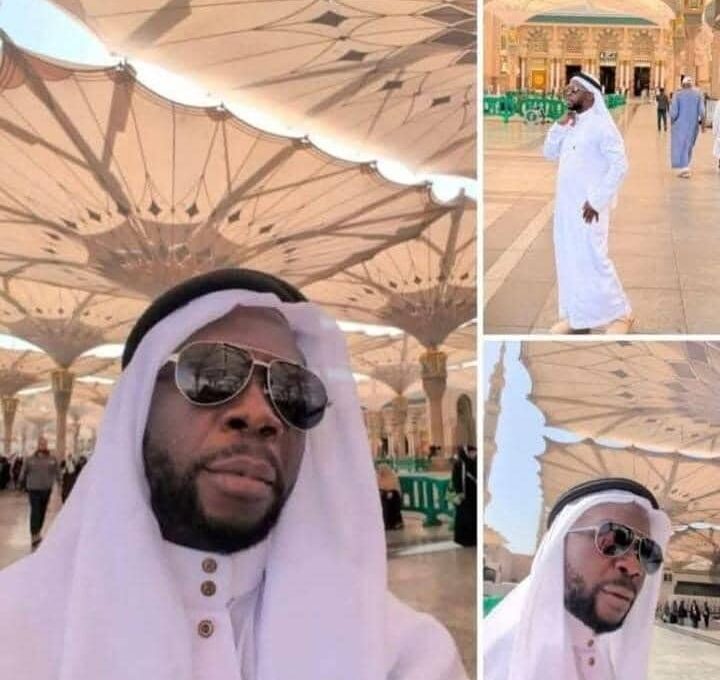
The recent public disclosure by Prophet Israel Oladele Ogundipe, Shepherd in Charge of Genesis Global, concerning his visit to Makkah and Madinah for Umrah has generated serious concern within the Muslim community.
This issue is not about interfaith hostility or religious intolerance. It is about preserving the sanctity of Islamic rites clearly defined by the Qur’an and the Sunnah.
Hajj and Umrah are not cultural visits or spiritual tourism. They are exclusive acts of worship legislated for Muslims. Allah says in the Qur’an:
“O you who believe! Indeed the polytheists are impure, so let them not approach Al-Masjid Al-Haram after this year.” (Qur’an 9:28)
Scholars have consistently understood this verse to mean that non-Muslims are not permitted to enter the sacred precinct of Makkah. Furthermore, Allah states:
“And Hajj to the House is a duty owed to Allah by people who are able to undertake it.” (Qur’an 3:97)
This obligation applies to Muslims who affirm the testimony of faith, La ilaha illa Allah, Muhammadur Rasulullah. Hajj is one of the five pillars of Islam, as the Prophet Muhammad (peace be upon him) said:
“Islam is built upon five…” (Sahih al-Bukhari and Sahih Muslim)
Without Islam, the rites of Hajj and Umrah have no validity. The Prophet (peace be upon him) also declared during his lifetime that no polytheist would perform Hajj after the ninth year of Hijrah (Sahih al-Bukhari).
Therefore, participation in these rites requires clear and genuine adherence to Islam.
This development raises important administrative questions for the National Hajj Commission of Nigeria (NAHCON). The Commission bears the responsibility of ensuring that only qualified Muslims are granted access to perform Hajj or Umrah under its supervision.
Screening procedures must go beyond verbal recitation or superficial documentation. For public figures or individuals with established religious identities outside Islam, there must be proper verification of conversion where applicable. If a person has genuinely embraced Islam, that conversion should be clear, documented, and confirmed through recognized Islamic authorities.
Failure to conduct thorough screening risks creating confusion, undermining the sanctity of the holy sites, and provoking avoidable religious tension.
Islam encourages peaceful coexistence and mutual respect among people of different faiths. However, coexistence does not mean dissolving doctrinal boundaries or permitting participation in acts of worship reserved for adherents of a particular faith.
The sanctity of Makkah and Madinah is divinely established. Protecting that sanctity is not an act of intolerance but an obligation grounded in Islamic law.
NAHCON is therefore urged to strengthen its profiling and verification processes, particularly for high-profile applicants. A structured and transparent screening mechanism will help prevent future controversies and uphold the integrity of Islamic rites.
The preservation of Hajj and Umrah as exclusively Islamic acts of worship must remain non-negotiable.
Mallam Ibrahim Agunbiade
Taalib Jami’ei, Islamic Propagation Rabwa, Saudi Arabia
agunbiadeib@gmail.com