


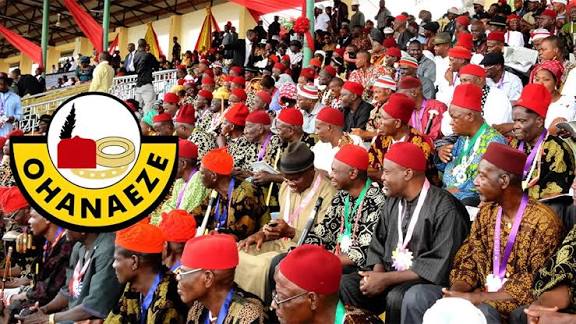


The apex Igbo socio-cultural organisation, Ohanaeze Ndigbo, has described as laughable and false claims suggesting that a supposed “screwdriver seller” in Onitsha could be the architect behind recent U.S. military actions in Nigeria.
Mazi Okechukwu Isiguzoro, Deputy President-General of Ohanaeze Ndigbo, in a statement warned that such assertions are irresponsible and capable of igniting ethnic rivalry and worsening tensions across the country.
He declared that Ndigbo will no longer tolerate being used as scapegoats in narratives allegedly shaped by international media conspiracies, reminiscent of the volatile period of 1966.
“It is imperative, in fulfilment of its moral obligation, to unequivocally convey a critical truth to the esteemed American media institution, The New York Times. We assert with unyielding clarity that the Igbo people are neither participants in nor complicit with President Donald Trump’s campaign against terror networks and the appalling acts of Christian genocide in Nigeria,” the statement read.
Commending the ongoing collaboration between the United States and the Federal Government of Nigeria under President Bola Ahmed Tinubu, Ohanaeze emphasized that no Igbo individual provided intelligence related to the U.S. bombing of ISIS terrorists in Sokoto on Christmas Day 2025.
The group expressed concern over what it described as the timing and framing of a New York Times publication, which allegedly suggested that an Onitsha-based screwdriver trader named Emeka supplied intelligence to President Trump through U.S. Republican lawmakers.
According to Ohanaeze, the report appears to be a calculated attempt to implicate Ndigbo in actions against Northern banditry linked to ISIS, thereby exposing Igbo residents in Northern Nigeria to danger.
“This narrative amounts to an insidious attempt to incite tribal hostility against the Igbo population. As a reputable newspaper, The New York Times should not allow itself to be misled by individuals, including Nigerian freelance photographer Taiwo Aina, to perpetuate this unfortunate anti-Igbo agenda,” the statement added.
Ohanaeze further clarified that the Igbo people are not the originators of petitions or narratives concerning Christian genocide in Nigeria, noting that several non-Igbo organisations, churches in Northern Nigeria, and diaspora-based Christian and civil rights groups are actively involved in the campaign.
The organisation questioned why The New York Times singled out Emeka, asking whether ulterior motives or the involvement of U.S. lobbyists were at play.
“It is crucial to state unequivocally that the Igbo people do not oppose U.S.–Nigeria cooperation in combating terrorism, nor do we resist efforts by U.S. lobbyists to improve Nigeria’s global image. However, this anti-Igbo international media conspiracy must cease, regardless of the parties involved or the consequences,” it stated.
Ohanaeze recalled the role international media played in branding the January 15, 1966 coup as an “Igbo coup,” which preceded the July 1966 counter-coup and pogroms against the Igbo.
“The echoes of the 1966 pogrom remain fresh in our collective memory. Since that era, the Igbo have been unjustly blamed for Nigeria’s problems. We hereby assert that never again shall Ndigbo serve as scapegoats,” the group warned.
Ohanaeze demanded an unreserved apology and immediate retraction from The New York Times, and urged Igbo civil rights organisations to refrain from commenting on U.S.–Nigeria security collaborations until the integrity of the Igbo community is fully restored.
The affirmed that the integrity, dignity, and unity of the Igbo people must be protected against unfounded allegations and narratives designed to undermine them.