


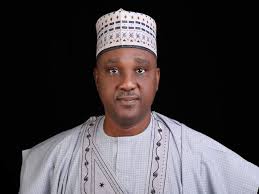


The Speaker of the House of Representatives, Rt. Hon. Abbas Tajudeen, has lamented Nigeria’s rising debt level.
He spoke at the 11th Annual Conference and General Assembly of the West Africa Association of Public Accounts Committees (WAAPAC), organised by the House of Representatives Committee on Public Accounts on Monday. The
Represented by the House Leader, Prof. Julius Ihonvbhere, Abbas announced that Nigeria’s total debt stock hit ₦149.39 trillion (about US$97 billion) in Q1 2025, up from ₦121.7 trillion in the same period last year.
According to him,the debt-to-Gross Domestic Product ratio has jumped to 52 percent, overshooting the statutory 40 percent threshold.
He said:“This breach of our debt ceiling highlights the strain on fiscal sustainability and underscores the need for stronger oversight and transparency in borrowing.”
He also noted that 35 percent of Africa’s debt is owed to Western private lenders, 39 percent to multilateral institutions, 13 percent to bilateral creditors, and 12 percent to China.
Abbas recommended a West African Parliamentary Debt Oversight Framework under WAAPAC to harmonise debt reporting, establish regional transparency standards, and empower legislatures with timely data for effective scrutiny.
He also advocated the need for borrowing to be focused strictly on infrastructure, education, healthcare, and job creation, insisting that “reckless debt that fuels consumption or corruption must be exposed and rejected.”
Speaking, Chairman of the House Public Accounts Committee, Rep. Bamidele Salam, disclosed that the committee had recovered more than ₦200 billion in lost revenues for the federal government in the past year.
In his earlier address, the Minister of Finance and Coordinating Minister of the Economy, Wale Edun, declared that Nigeria’s sweeping economic reforms are beginning to show tangible results, with debt becoming more manageable and investor interest returning.
He admitted that Nigeria, like many West African countries, continues to grapple with fiscal pressures, including high debt servicing obligations, limited revenue inflows, and growing public expenditure demands.
According to him, policy measures taken under President Bola Ahmed Tinubu’s administration are gradually reversing negative indicators and positioning the nation on a sustainable growth trajectory.
“Nigeria is at a turning point. Reforms are yielding measurable results in terms of investor confidence, reduced expenditure on fuel imports, improved energy self-sufficiency, and greater value addition within our economy,” Edun said.
Nigeria’s debt service-to-revenue ratio has fallen to around 60 percent in 2024, while the debt-to-GDP ratio stands at 38.8 percent, a level he described as comfortable by international standards, he added.
He further disclosed that government revenues rose by 34.7 percent in the first half of 2025 compared to the same period in 2024, thereby creating more fiscal room for investment in priority areas.
He attributed the improvements to difficult but necessary reforms, including the withdrawal of fuel subsidies, foreign exchange liberalisation, and the introduction of a comprehensive tax reform agenda designed to simplify compliance and gradually raise the nation’s tax-to-GDP ratio.
He emphasized that government’s role is to provide the enabling environment while private investment, which accounts for 90 percent of economic activity, drives growth.
“Government should act as a catalyst, not a competitor to the private sector. With strong fiscal discipline, we can unlock opportunities and promote inclusive growth that lifts millions out of poverty,” he noted.
Speaking on fiscal priorities, the Minister highlighted debt transparency, growth-oriented borrowing, domestic revenue mobilisation, and adherence to the Fiscal Responsibility Act. He assured that borrowing would be tied to viable projects with direct returns while avoiding unsustainable financing methods.
He also cautioned about global challenges, including shrinking aid, slowing trade, and high global interest rates, which complicate fiscal management for developing economies. He urged African nations to embrace reforms, technology, and digital systems to improve revenue collection.
He underscored the role of parliaments in ensuring fiscal accountability.
“A credible fiscal framework is a shared responsibility. Oversight by parliament, especially public accounts and finance committees, is essential for transparency and discipline,” he said.