


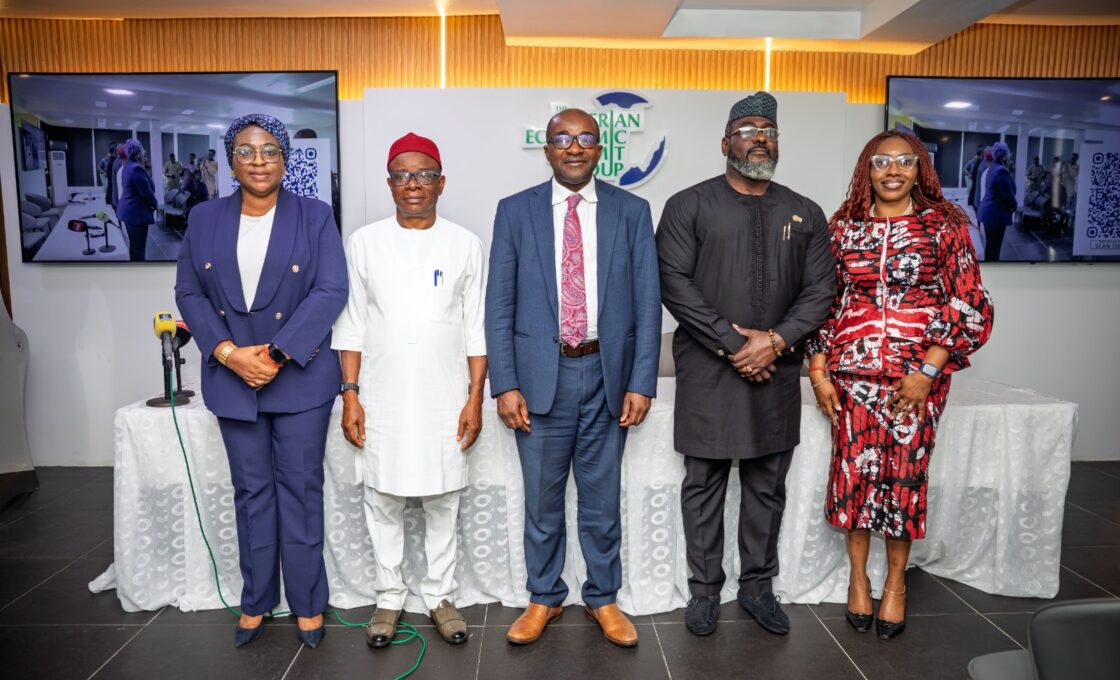


Nigeria needs industrialization, competitive infrastructure, inclusive growth, strong institutions, and bold investment strategies to stave off wobble economy, the Nigerian Economic Summit Group,NESG,has said.
Its chairman, Mr. Niyi Yusuf, who said this on Tuesday at a media briefing in Lagos, ahead of the 31st Nigerian Economic Summit (NES#31), acknowledged that the present administration had embarked on bold reforms, notably the removal of fuel subsidies and the harmonisation of foreign exchange over the past two years.
He added:”What is required now “is a second wave of reforms—structural, deliberate, and transformative—that move us from crisis management to long-term nation building.”
The new Tax Acts that would come into effect in 2026 are a good start, he said, stressing that the development explains the imperativeness of the reform.
The Nigerian Economic Summit Group, he said, has, through years of research, dialogue, and policy engagement, consistently highlighted the bottlenecks that constrain our growth.
He added:”Our reports on the business environment tell us that without industrialisation, competitive infrastructure, inclusive growth, strong institutions, and bold investment strategies, Nigeria will continue to circle the same mountain of low productivity and high vulnerability.”
According to him the forthcoming NES#31 has been structured around five sub-themes in a bid to address these economic challenges.
He said: “It is for this reason that NES#31 is structured around five sub-themes:First, Driving Industrialisation-led Growth, because no nation has created prosperity by consuming what others produce.
“We must shift from being import-dependent to becoming an economy that manufactures, adds value, and exports competitively.
“Second, Building Infrastructure for Competitiveness, because without power, efficient transport, broadband connectivity, resilient logistics and assured security, our industries cannot thrive. Infrastructure is the backbone of productivity.
“Third, Advancing Inclusion for Shared Growth, because reforms without inclusion deepen inequality. True prosperity means women, youth, small businesses, and underserved communities must all benefit from the growth story.
“Fourth, strengthening institutions for sustainable impact, because without rule of law, good governance, and policy continuity, even the best reforms collapse under the weight of weak institutions.
“And fifth, unlocking investment amid global trade shifts, because in this era of AfCFTA and shifting global supply chains, Nigeria must not be left behind.We must position ourselves as the destination of choice for capital, innovation, and enterprise.”
He added that these five priorities would be anchored on the strategic pillars of reforms, resilience, and results during the Summit in Abuja.
Speaking on the uniqueness of the Summit, Yusuf explained that it would provide a platform to dialogue, ask difficult questions and “hold ourselves accountable, and to chart the practical pathways that can turn reforms into results.”
“We will gather government leaders, private sector champions, development partners, and civil society voices.Together, we will shape the policies and partnerships that can transform this moment of fragile stability into a decade of sustainable prosperity.
“The choice before us is stark. We can either treat the reforms of today as an end in themselves and risk sliding back into fragility, or we can seize them as the foundation for a new Nigeria that is resilient, productive, inclusive, and globally competitive.”
Senator Abubakar Bagudu, Minister of Budget and Economic Planning,
said Nigeria is at a pivotal point, after embarkimg on bold and courageous reforms that are beginning to reshape the economy, restoring stability, and laying the groundwork for sustainable development.
Represented by Mr. Felix Okonkwo, Director, Macroeconomic Analysis Department, Federal Ministry of Budget and Economic Planning, Bagudu said the decisions of the Federal Government such as the removal of fuel subsidies and the unification of the foreign exchange rate are the key policy directions of the current administration.
He maintained that the Federal Government’s policy responses and economic interventions in fiscal policy are strategically aimed at strengthening revenue mobilisation, implementing bottom-up cash management, removing subsidies, and ensuring fiscal deficits are no longer financed through ways and means.
He added:”We are also prioritising monetary and fiscal policy coordination to stabilize inflation and exchange rates.Our revenue diversification strategy includes boosting non-oil revenue, supporting the manufacturing sector, and driving digital transformation.
“Our fiscal position is improving, our debt sustainability outlook is good, and we have begun to restore confidence in our business environment and economic management. Inflationary pressures, while still significant, are moderating as monetary and fiscal policies align.
“We are sustaining our public infrastructure investment initiatives in transport, power, and the digital economy to enhance competitiveness and productivity. Furthermore, we are implementing targeted programmes to support vulnerable populations, improve education and healthcare, and develop essential skills.”