


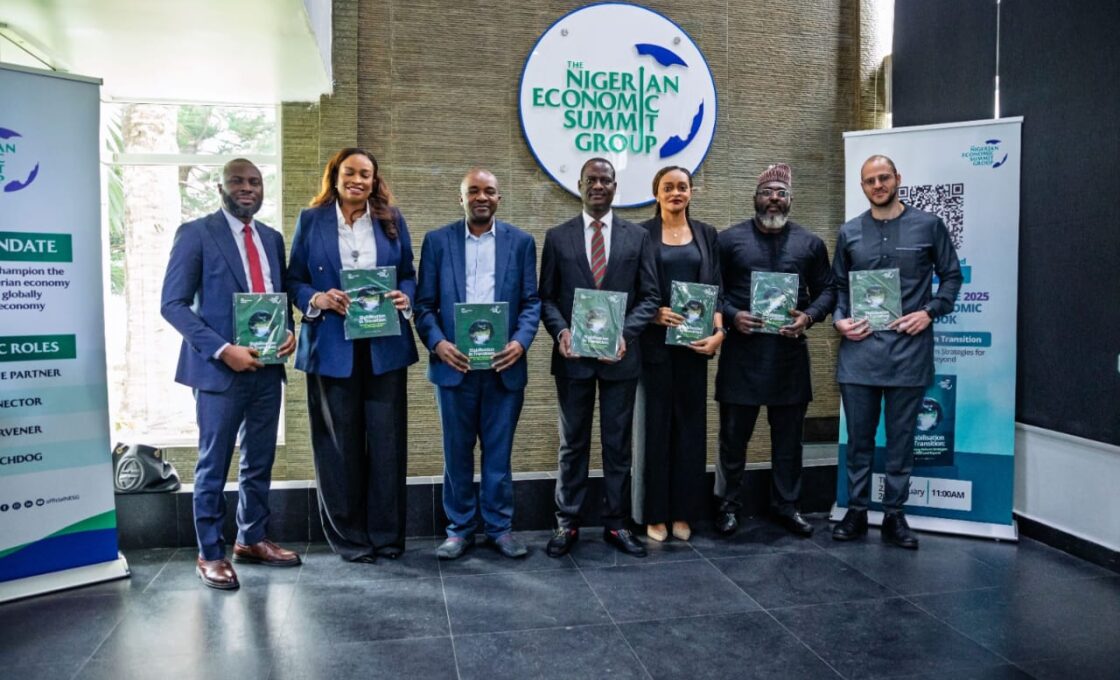


The Chairman,Nigerian Economic Summit Group(NESG),Mr. Niyi Yusuf,has reflected on the progress made in the country’s economy last year.
He spoke in his opening remarks on Thursday at the launch of the NESG’s 2025 Macroeconomic Outlook Report with the theme “Stabilisation in Transition: Rethinking Reform Strategies for 2025 and Beyond.”
According to him,last year marked a significant step toward economic transformation as key conditions began to stabilise.
He said:“However, there’s still much work to be done. Macroeconomic indicators show that Nigeria is yet to achieve full stability.
“Inflationary pressures, rising food prices, infrastructure deficits, and exchange rate depreciation remain persistent challenges.”
Speaking on key achievements, Yusuf stated,that Nigeria recorded a trade surplus of $8 billion in 2024, compared to $1 billion in 2023.
According to him,the country’s economy expanded by 3.2% in the first three quarters of 2024,up from 2.5% in the same period the previous year.
He said:”Despite these gains, inflation averaged 33.2% in 2024, driven by extreme climate conditions and rising food costs.
“Over 33 million Nigerians are now food insecure due to natural disasters and high food prices.”
He emphasised the need for cohesive policies,saying the optimal path to stabilisation requires a consolidation and alignment of monetary, fiscal, social safety, trade,and regulatory strategies.
This alignment,he said,will transition Nigeria to the consolidation ohase of its economic transformation roadmap, creating an improved policy environment and attracting investments in growth-enhancing sectors.
NESG Chief Executive Officer, Dr. Tayo Aduloju,emphasised the importance of governance and partnerships.
Aduloju said, “Nigeria must take itself seriously. Governance must be at the heart of our conversations.
“Strategic partnerships, collaboration, and coordination are critical for achieving the transformative shifts we need.
He also said the 2025 Macroeconomic Outlook Report serves as a roadmap for policymakers, business leaders, and stakeholders, charting the path toward economic stabilisation and inclusive growth.
He added:”The Report provides an in-depth analysis of Nigeria’s reform agenda, initiated in mid-2023, which aimed to tackle longstanding structural challenges and drive sustainable economic growth.
“As the Report underscores, the country is now at a critical juncture, with the focus shifting towards economic stabilisation while sustaining reform momentum.
Also speaking,Dr. Olusegun Omisakin, NESG’s Chief Economist and Director of Research, Nigerian Economic Summit Group(NESG), projected that a Gross Domestic Product(GDP) growth rate of 5.5% is achievable in 2025, if Nigeria continues with stability-focused reforms.
He cautioned that inefficient policy implementation and economic constraints could limit growth to 3.4%, and a reversal of reforms could see it drop to 2.7%.
He said, “The quality of policy execution in 2025 will determine whether Nigeria reaches its stabilisation goals or falls short.”
Dr. Omisakin also emphasised the importance of continuing the foreign exchange price discovery exercise initiated in 2023.
“Exchange rate stability will be crucial,” he said. “We believe operating at an exchange rate of ₦1,200 to $1 will significantly contribute to economic stability.”