




Tunde Sholanke
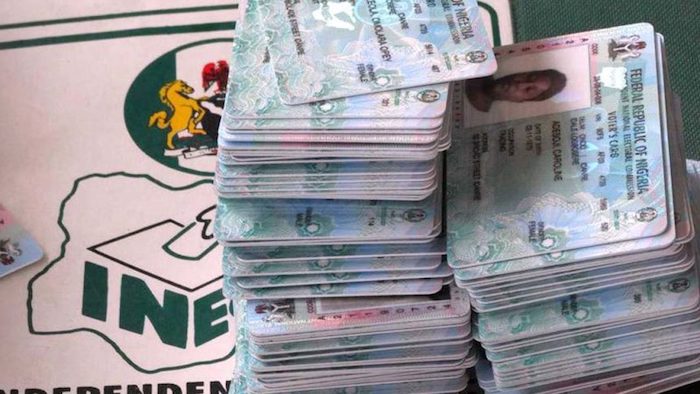
A Federal High Court, Abuja has ordered the Independent National Electoral Commission to allow two eligible Nigerians with Temporary Voter Cards to cast votes in the March 18 governorship and state houses of assembly elections.
Justice Egwuatu premised the order on the basis that the plaintiffs were duly registered and captured in INEC’s database.
The verdict was on a suit filed by two aggrieved Nigerians seeking the use of TVCs in the general elections in the absence of the Permanent Voter Cards, (PVCs).
INEC had insisted that only eligible voters with the PVCs would be allowed to vote in the 2023 presidential, governorship and parliamentary elections.
However,the plaintiffs, Kofoworola Olusegun and Wilson Allwell in the suit filed on February 8, marked FHC/ABJ/CS/180/2023, challenged the position of INEC in court.
The plaintiffs asked the court to grant a declaration that the plaintiff, having fulfilled all necessary legal requirements to register and having consequently been captured in it’s central database and manual, printed paper based record or hard copy format of INEC’s maintained register of voters, the plaintiff are entitled to vote using their TVC in the 2023 general elections.
They also prayed for an order compelling INEC to allow the plaintiff to vote using the TVC issued by INEC, the plaintiff having been duly captured in the national register of voter’s database.
According to Justice Egwuatu, the suit was not filed in a representative capacity.
“This suit having not been brought in a representative capacity, I find myself unable to grant any relief pursuant to prayer three of the plaintiffs application.”
The court held that there was no portion of the law, both the 1999 Constitution and the Electoral Act that states that it is only PVCs that could be used, but that the law under Section 47 provided for a voter’s card.
The plaintiffs had asked the court to determine,”Whether by the true construction and interpretation of section 10(2), 12(1) and 47 of the Electoral Act 2022; Section 77(2) and 132(5) of the 1999 constitution (as amended), and bearing in mind that the Bimodal Voters Accreditation System (BVAS) machine introduced by INEC only needs the thumbprint and/or facial recognition to accredit a voter.
“Whether a person whose name appears in the electronic format in INEC’s central database and manual, printed paper based record or hard copy format of the register of voters and has been assigned a Voter’s Identification Number (VIN), can be said to be entitled to be accredited to vote with his/her TVC in the general election to be conducted by the defendant.
“Whether such a person can, as a consequence of the defendant’s inabilities, actions and omission be disenfranchised of the right and entitlement to vote in the 2023 general election.