


Please share


The Central Bank of Nigeria has launched a new financial instrument ,“The 100 for 100 Policy on Production and Productivity”,aimed at boosting local production and productivity in various sectors of the economy.
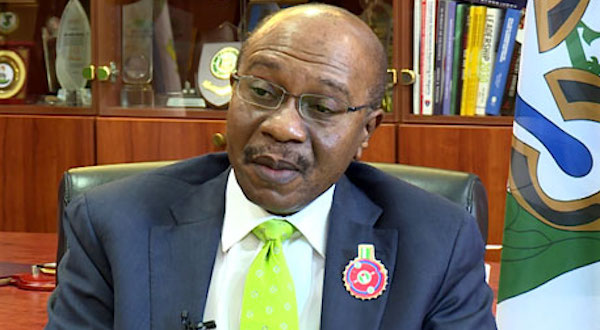
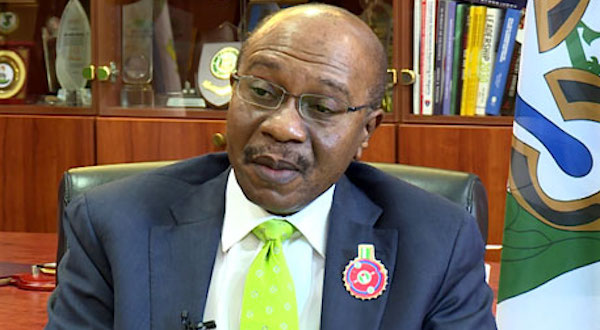
The governor of the apex bank,Godwin Emefiele, who disclosed this in Abuja during the official launch of the Central Bank Digital Currency also known as the eNaira,said the instrument will reverse Nigeria’s over reliance on imports.
According to him, the initiative was based on the conviction that with the right support, the country will begin to see a significant, measurable and verifiable increase in local production and productivity, reduction in certain imports, increase in non-oil exports, and improvements in the foreign exchange-generating capacity of the economy.
He added that under the policy, the apex bank will advertise, screen, scrutinize and financially support 100 targeted private sector companies in 100 days.
This, he said,would begin from November 1, this year, stressing that the apex bank will be rolling over every 100 days with new set of 100 companies, whose names will be published in National Dailies for Nigerians to verify and confirm
Working through banks, he said, the financial instrument will be available to their customers in critical areas to boost the production and productivity, and to immediately transform and jumpstart the productive base of the economy.
He also said:“After these 100 projects by companies in the first hundred days from November 1, we will take the next 100 companies/projects for another 100 days beginning February 1, 2022, and then another 100 companies for another 100 days beginning from May 1, 2022.The purpose of this instrument is to take further steps to reverse our over-reliance on imports.
“We believe that if we target and support the right companies and projects, we will see a significant, measurable and verifiable increase in local production and productivity, reduction in certain imports, increase in non-oil exports, and improvements in the foreign exchange-generating capacity of the economy.This, in my view, is the best and most sustainable way to address the Naira’s value whether in hard currency or digital eNaira through production, production and more production.”
Please share