

Please share


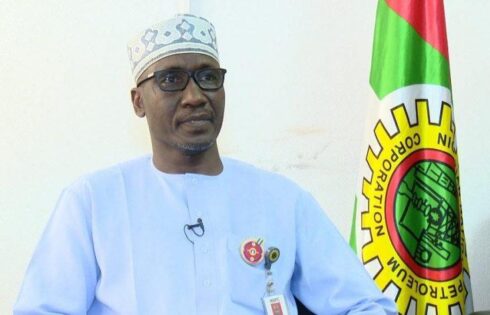
The Group Managing Director of the Nigerian National Petroleum Corporation (NNPC), Mallam Mele Kyari, has said that the signing of the Petroleum Industry Bill(PIB)into law by President Muhammadu Buhari is a booster to the strength of the corporation.
He spoke on Arise Television, said that the NNPC would become more efficient, much slimmer and more commercial national oil company at par with its contemporaries in other part of the world.
He expressed optimism that the company will do better under the new arrangement,adding that there was already a framework established by government, which would take care of the new transition within the timeframe of six months to incorporate and transfer assets, personnel among others.
He said while he recognises that the NNPC is a national oil company operating in a resource-dependent country, with some obligations to the people, the new law would effectively mean the deregulation of the sector.
Kyari stressed that a number of engagements have been going on to ensure a smooth transition to a fully deregulated market
He said when deregulation eventually happens, there would be safeguards against market manipulation to ensure the poor and vulnerable are not unduly exposed.
“The provision of the law is such that it recognises that subsidy will be out someday. But it didn’t say that we’ll do it tomorrow. So there are a number of balancing that we will do, there’s clearly a policy issue for government to say that I’m going to let go of this,” he explained.
Speaking on the possible impact of subsidy removal on ordinary Nigerians, the NNPC GMD admitted that eliminating the subsidy regime could have adverse consequences on the ordinary person if not properly managed.
He said certain conditions needed to be fulfilled by government before the policy action is taken.
He said there must be some arrangement to provide alternative for petroleum by making gas readily available to consumers at a more affordable prices.
He also said there’s need to put in place some structures that would stabilise prices to avoid exploitation of the ordinary people under the new regime.
Kyari said there are already ongoing engagements with stakeholders including labour on how to deal with the issue of subsidy in the new regime.
He said,”I think two things would play out, first of all, timing is everything in this conversation. When will that happen? Obviously it is not tomorrow and is there any engagement going on?Absolutely correct today because as we speak now there are a number of engagements that has been going on and there’s one element that is not resolved which is that will any removal of subsidy have adverse impact on the ordinary person?
“The answer is correct if you don’t manage it properly. And so what can you do about it. “
The NNPC GMD said, “With passage of the PIB into law, you must determine how you are going to transit out of this.
“Transition means you either set platform for market manipulation; do you have safeguards against potentially a transportation cost rises and is it going to affect some labour issues that you have to deal with? And so many other things that have happened in other jurisdictions.
“It’s not what you can do in one, three two months but obviously make up your mind that the market is going to determine the price of petroleum and then you must put up a process and that process is clearly determined by what us really practical today.”
He said, “As an insider, I know that Mr. President’s key concern around the price of petroleum is that how is this going to affect the ordinary person? How are we going to deal with it and what excuses do we have to make sure that we don’t sell at the prices we sell today and of course, this is a very obvious and germane concern but can you afford it?
“And that’s the other question we have to ask in the long term but in the short term those engagement must take place; the provision of the law is such that it recognizes that subsidy will be out someday but it didn’t say we will do it tomorrow.But I also agree as an insider that you do need to have some structures on ground to ensure that there’s no some form of adverse effects on the ordinary Nigerian and that includes stabilisation of how prices are fixed in the market so that you done have exploitation of the ordinary people.
Please share